All About the Kiss
Friday 5th
January 2026
|
|
Oh, Vienna
All About the Kiss |
|
|
|
We slept in this morning, not making it down for breakfast until after 10am. We ploughed our way through all the usual stuff plus a few new experiences.
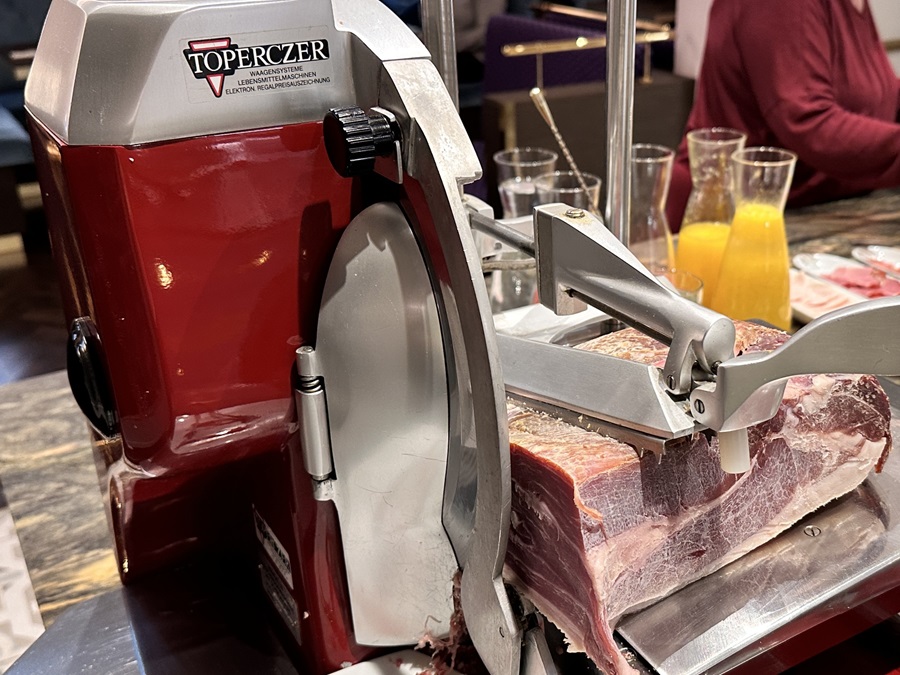
Today I used the meat slicer machine to thinly slice some ham for Julie. It reminded me of when my mother used to run a village shop. She had a similar contraption. Also for the first time I picked up a pot of hoummus, with some red pepper to dip into it. The sliced bell pepper was useless to scoop so I used a teaspoon. It was a very tasty hoummus. As I was about to enthusiastically scoop out another heaped spoonful I noticed something glisten in the dip. It was a shard of glass! I was so shocked. What if I had swallowed that?! I took the hoummus to the kitchen to find the waiter. At first I was going to strongly complain but I didn't. Instead I took him to one side and quietly whispered my discovery, suggesting they checked all the other pots before someone less forgiving finds more glass. In a way of compensation for my bad experience and for being so understnding the waiter brought out some sparkling wine for us and we go chatting. His name was Adrian, from Romania. We mentioned we had visited Brasov. His home town wasn't far from there. "did you visit Bran Castle?" he asked. "Of course" we replied "as well as the bear sanctuary". He was a nice guy and really appreciated that we hadn't created a fuss.
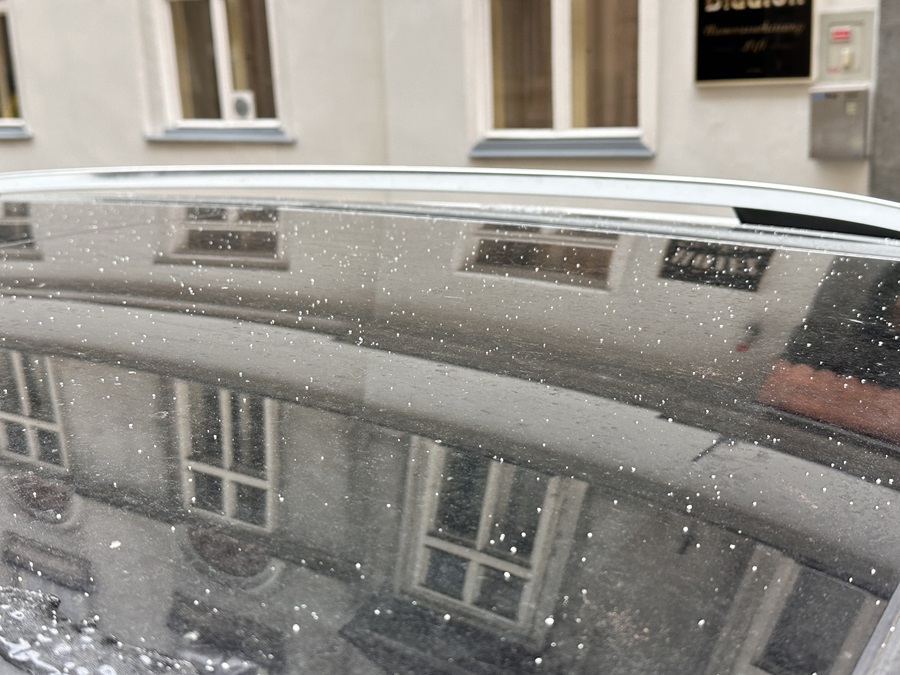
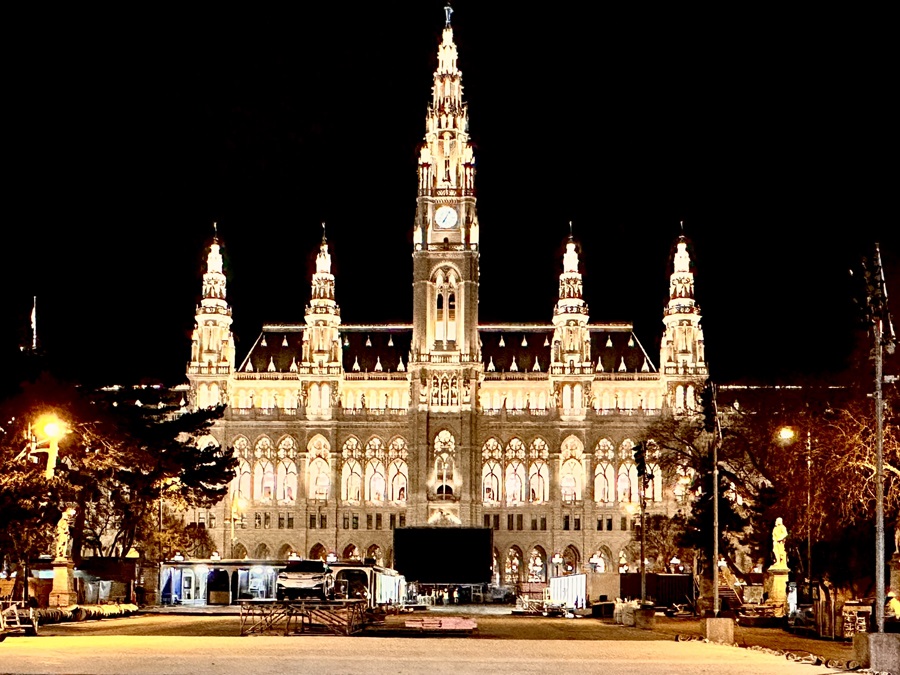
As we headed out for the day we had our first snow of the trip. Although we couldn't see it, only feel it on our faces and a dusting on the roof of a black car. The hotel's barman last night mentioned that Vienna doesn't often have heavy snow.
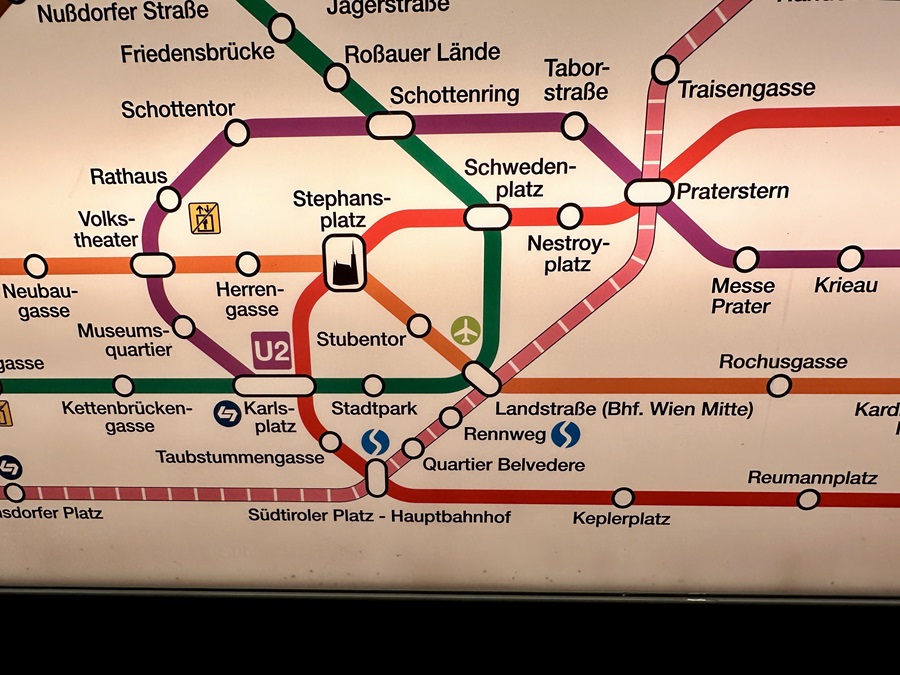
From the Rathaus we caught the U2 U-Bahn but took the opposite direction to our usual trajectory. Four stops later we reached Praterstern. We were here to visit Park Prater. It was once a royal hunting ground but in 1766 Emperor Josef II opened the park to the public. Almost immediately it became an park for leisure activities with swings, carousels and bowling alleys springing up and several inns to serve the increasing number of visitors.
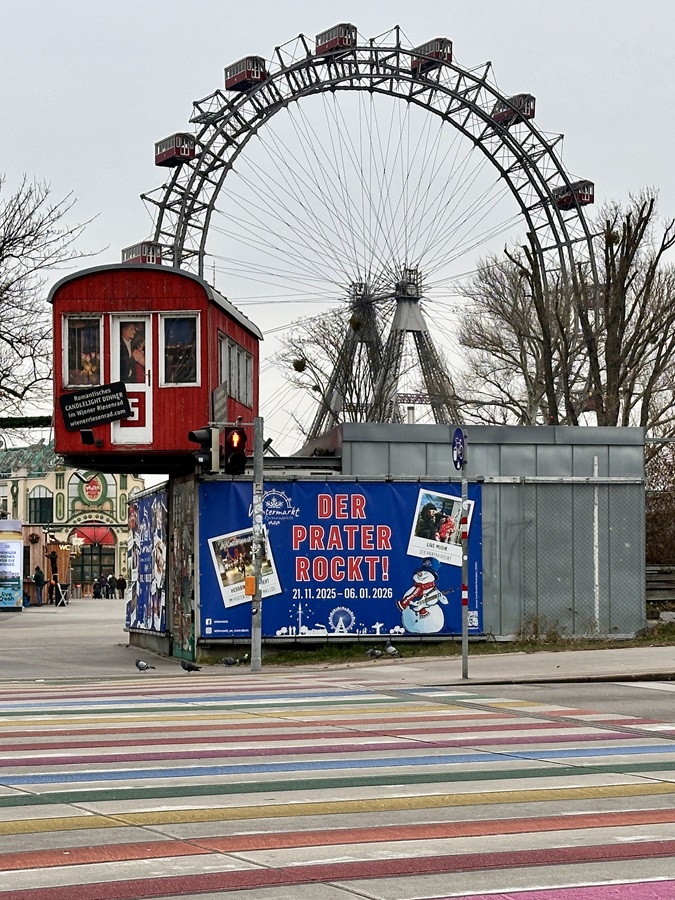
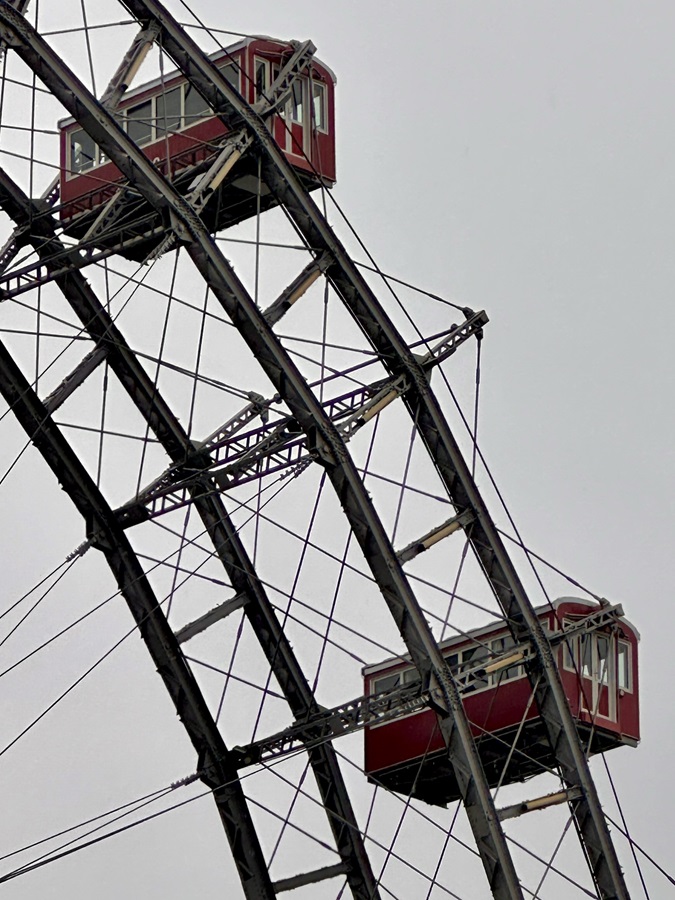
The amusement park officially opened in 1895. The attraction for our visit wasn't the big dipper thrill rides but the the large ferris wheel, known as Wiener Riesenrad. Originally built in 1897 but completely rebuilt in 1945 following damage druring the Second World War the ferris wheel is a Vienna landmark.
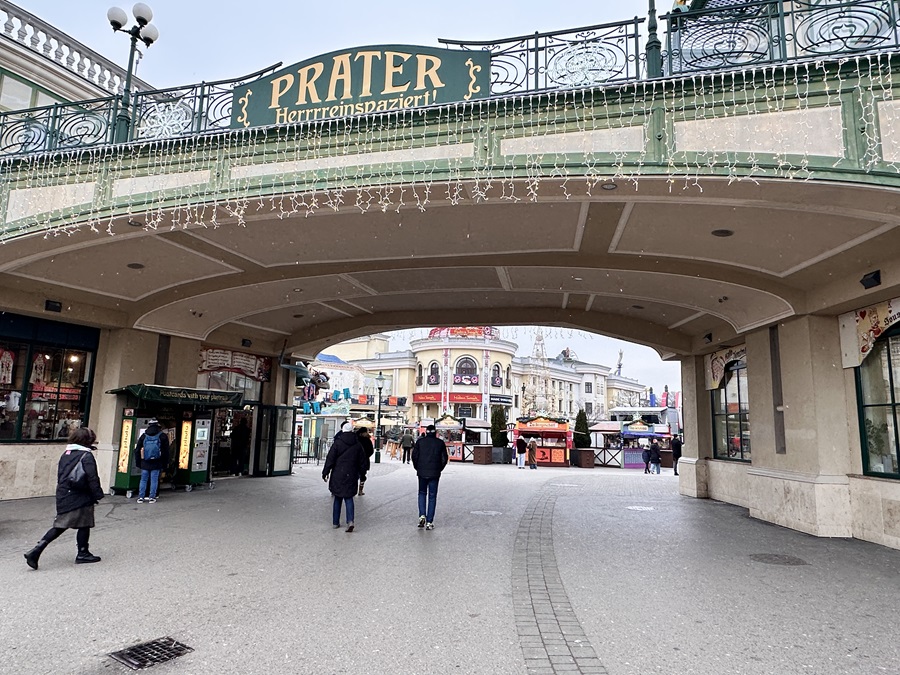
We entered the Wurstelprater amusement park through an underpass into a square that was reminiscent of Disneyland's Main Street. Perhaps Walt Disney and his imagineers were inspired by this place. It was free to enter, you simply paid per ride. Just to the right, in the main square, we found the ticket office for the ferris wheel.
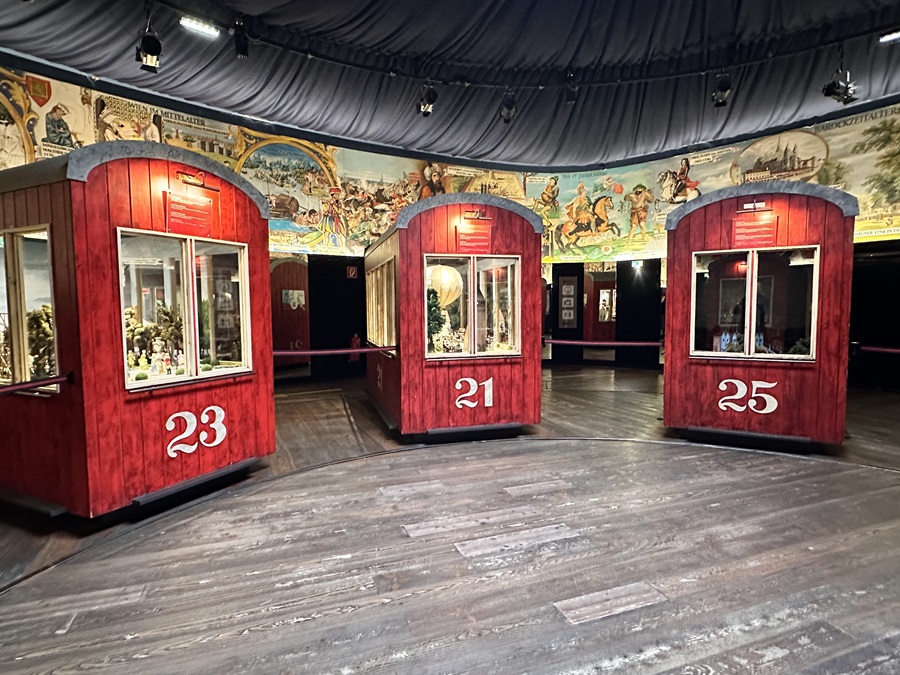
I was getting quite excited. Julie was less so. In the end she decided to sit this one out. Apparently some of the carriages were the original 1945 gondolas. It was remarkable to think they would have been old enought to have been featured in the 1949 film The Third Man. That may have influenced Julie's decision! "It all looks a bit rickety" she said. So, whilst I went on alone, she stayed on terra firma and watched the big wheel turning.
The ticket office had a reception area which I imagine during the height of summer would accomodate the long queues. Today was empty. Even so, there was still a small queue waiting to get on.
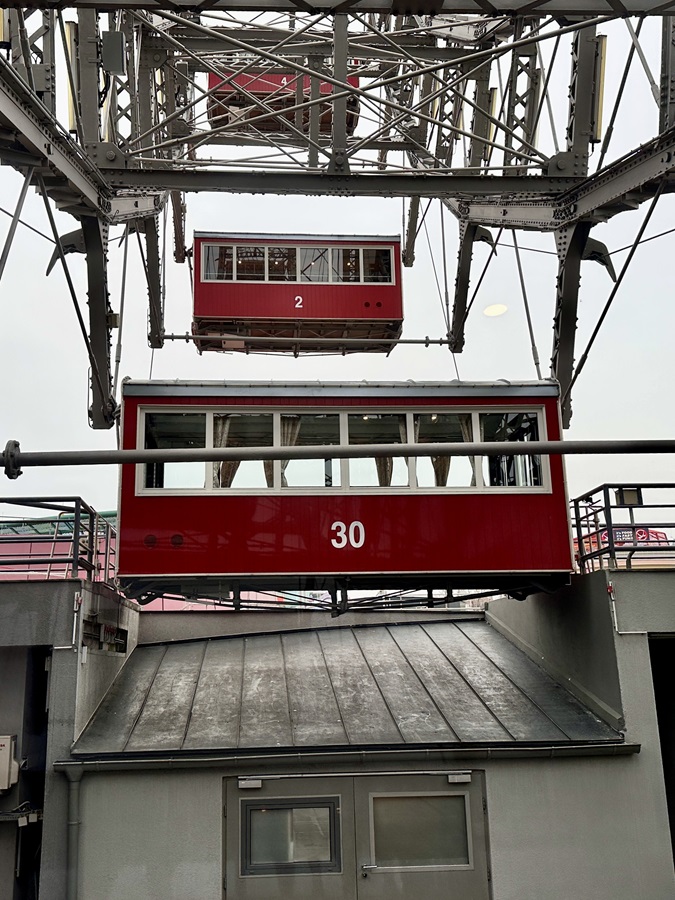
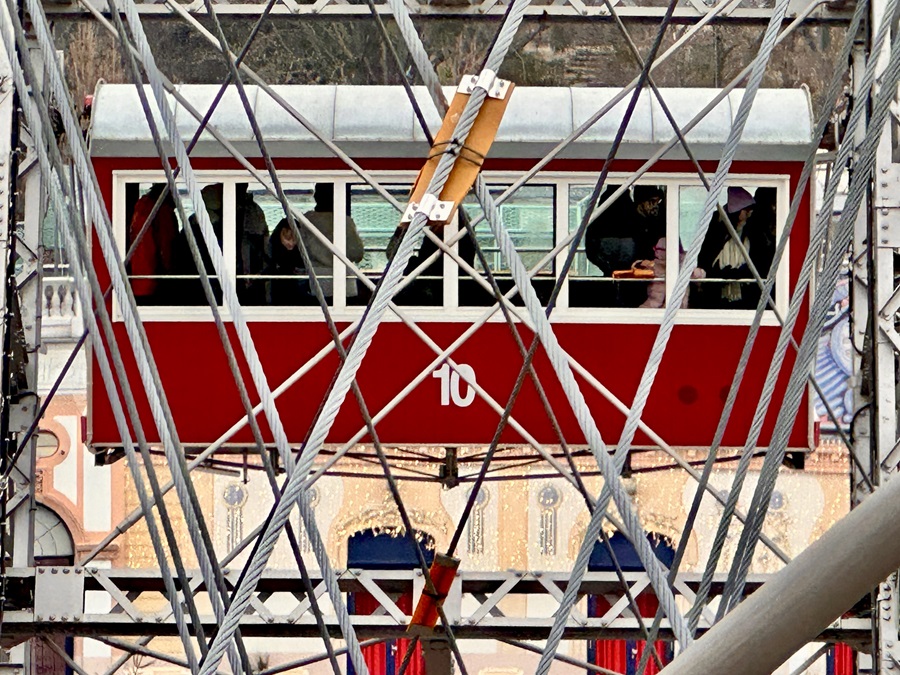
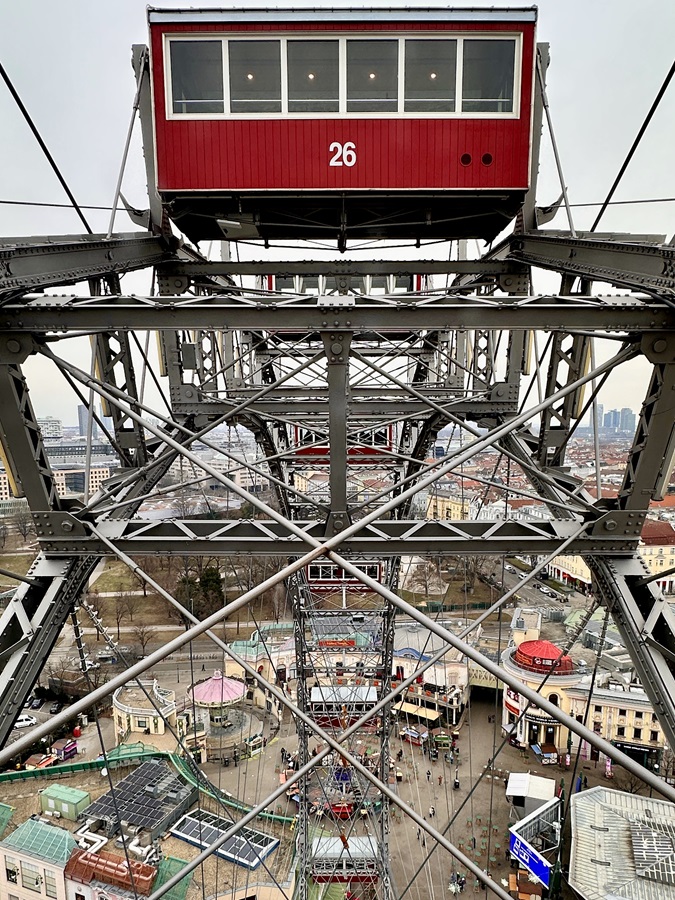
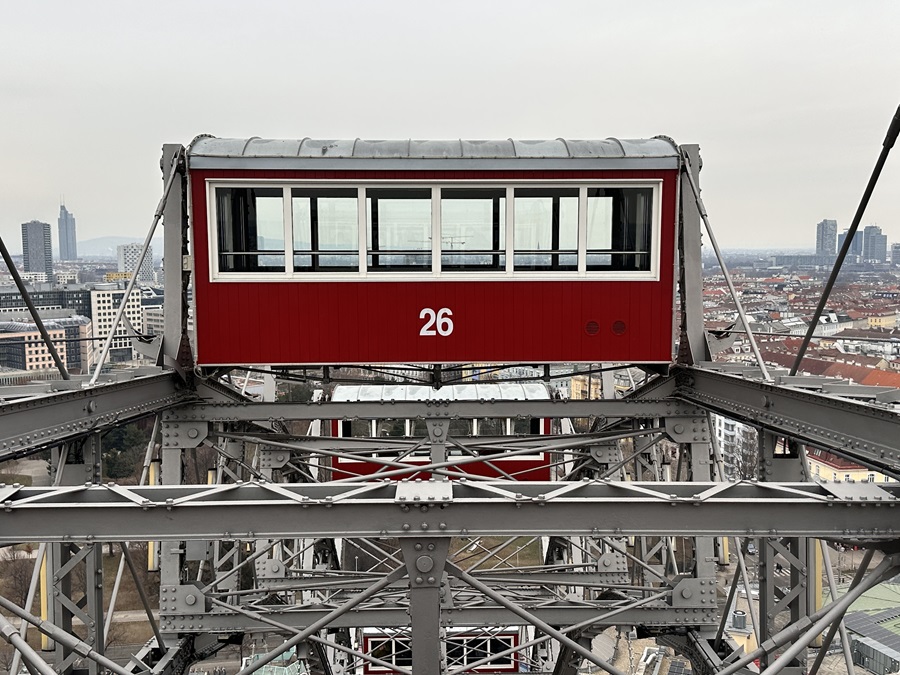
I patiently waited my turn as the big wheel slowly rotated. There were 15 carriages in total, numbered evenly up to 30. They filled them alternatively. I just missed getting onto number 24, then watched 26 go by, before getting onto number 28. Julie was waiting to catch a glimpse of me so I sent her a message of which number to watch out for.
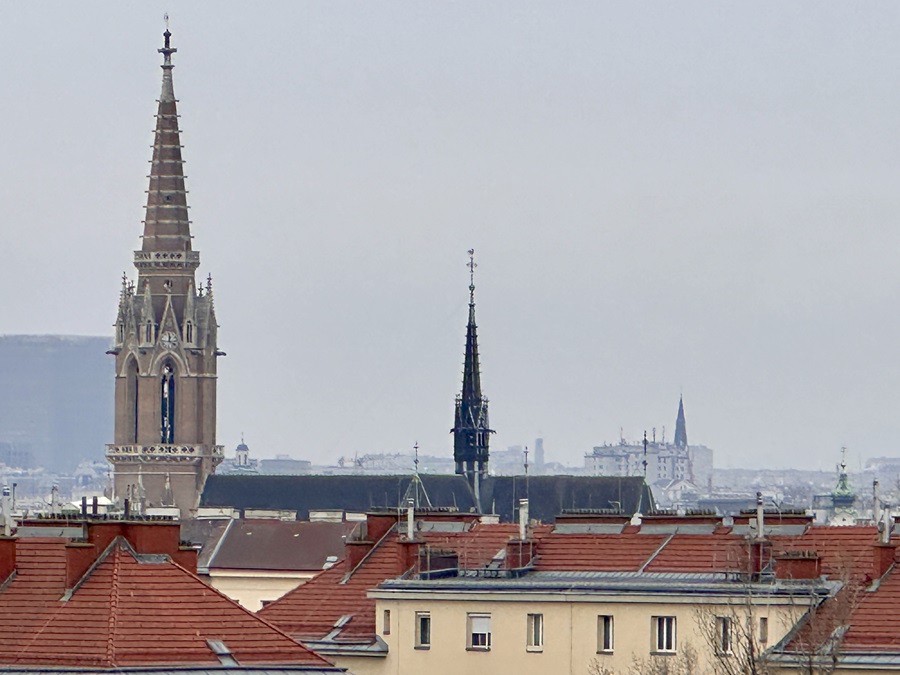
The ride began slowly as we gradually rose above the roof tops of Vienna, mostly spotting the various bell towers. I couldn't see the Anninger mountain range in the distance because it was quite an overcast day. The nearest church was the Parish Church of St. Othmar unter den Weißgerbern with its neo-Gothic brick tower and an accompanying smaller replica black tower rising from the roof. Apparently, inside the black tower, was a bell known as the death bell.
The view over the city didn't change much so after a minute I turned my attention to the ferris wheel itself. It was fascinating how it was held together by cables similar to the spokes of a bicycle wheel.
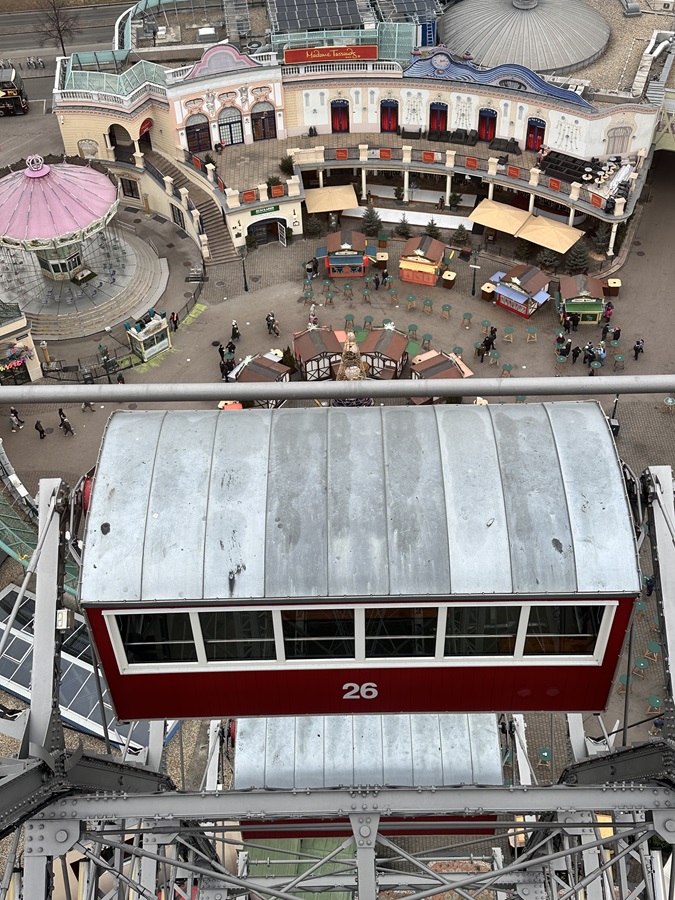
After 5 minutes the wheel was already reaching the top of its revolution. The focus then turned to the other side. Directly below was the Prater amusement park. I could see Julie's distinctive purple coat wandering around the square.
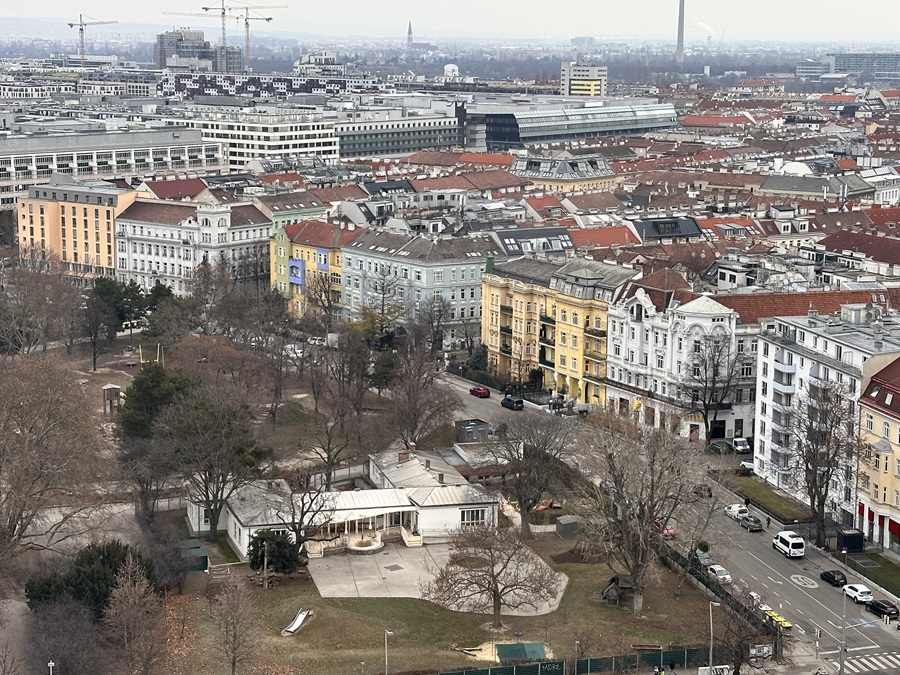
Further afield looking East I could see the grand town houses of the Leopoldstadt district. I was hoping to see the Danube, one of Europe's great rivers. I knew it wasn't far way, literally skirting the Prater park, but I just couldn't see it.
At the very top I was 64.75 metres above ground. It wasn't the tallest in the world when it was built, however, as its rivals were gradually dismantled it survived long enought to become the tallest in 1920 when a 100m tall ferris wheel in Paris was demolished. It valiantly held on to the title until 1985 when a ferris wheel in Japan was built.
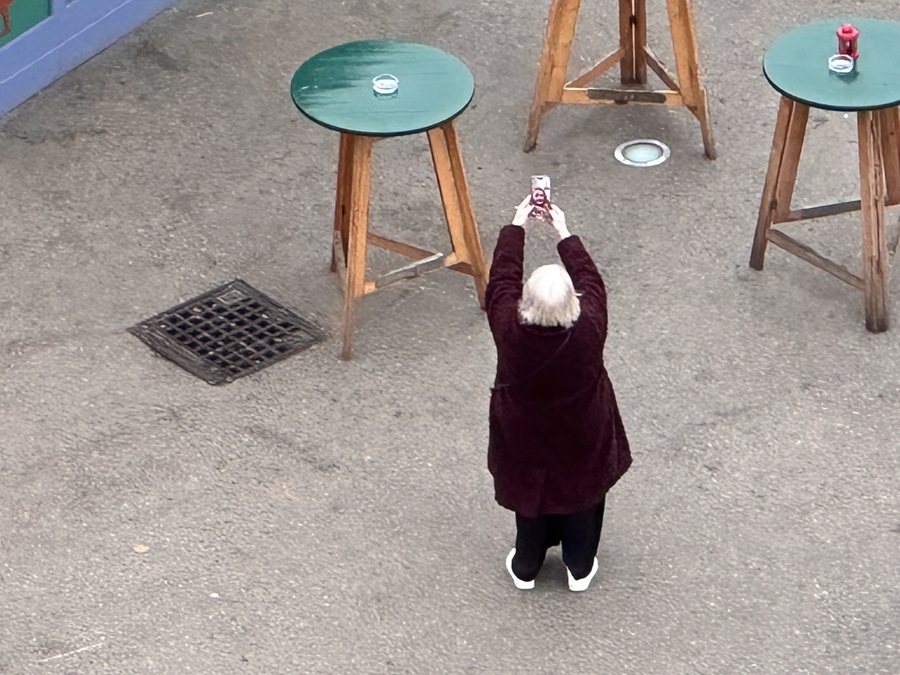
The next five minutes of the slow descent was spent waving at Julie, trying to catch her attention. Eventually she saw me and waved back. She even video-called Hannah to share in the moment!
The final quarter of the cycle felt like I was just waiting to get off. I had seen all there was to be seen and Julie had sent me a message to meet her in the Riesenrad cafe next to the ticket office.
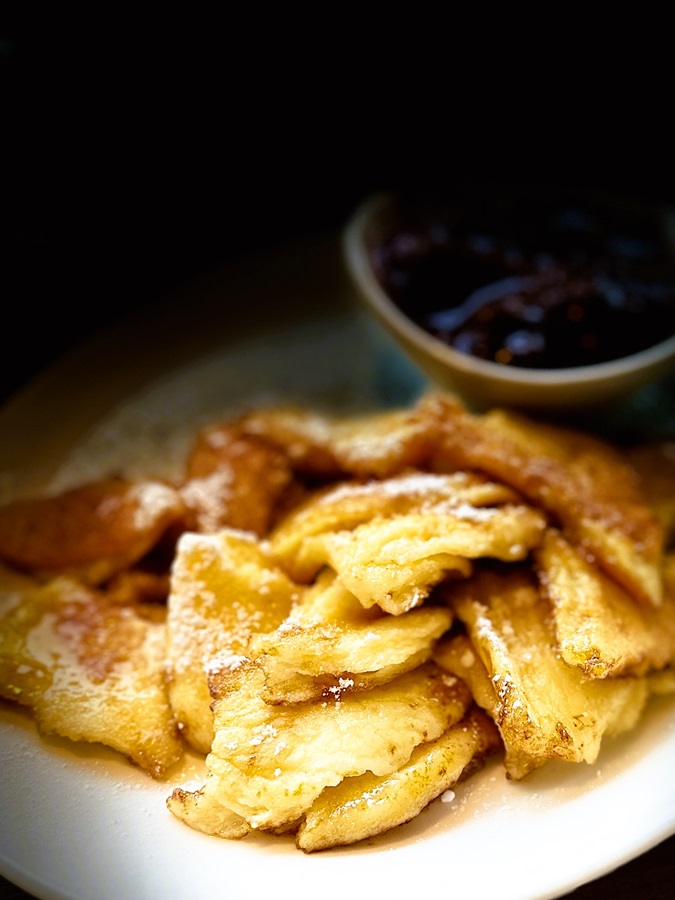
We shared a dish called Kaiserschmarrn, which translates as the Emperor's mess. Not that we were hungry, it was just because I wanted to try Kaiserschmarrn whilst in Vienna. The plate of torn fluffy pancakes, drizzled with a syrup and served with both a plum compote and an apple sauce lived up to the hype. It was so tasty and comforting. "I've got to try and make this at home!" I said.
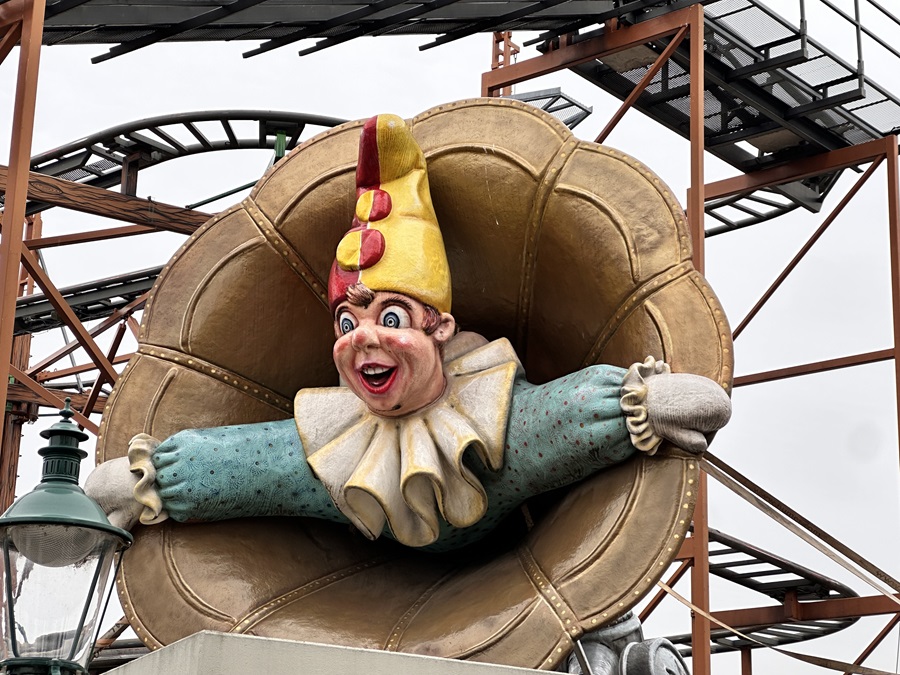
Moving on, we walked around the amusement park, looking at the various attractions, from the Dizzy Mouse roller coaster, to the Blue Planet where dinosaurs "come alive".
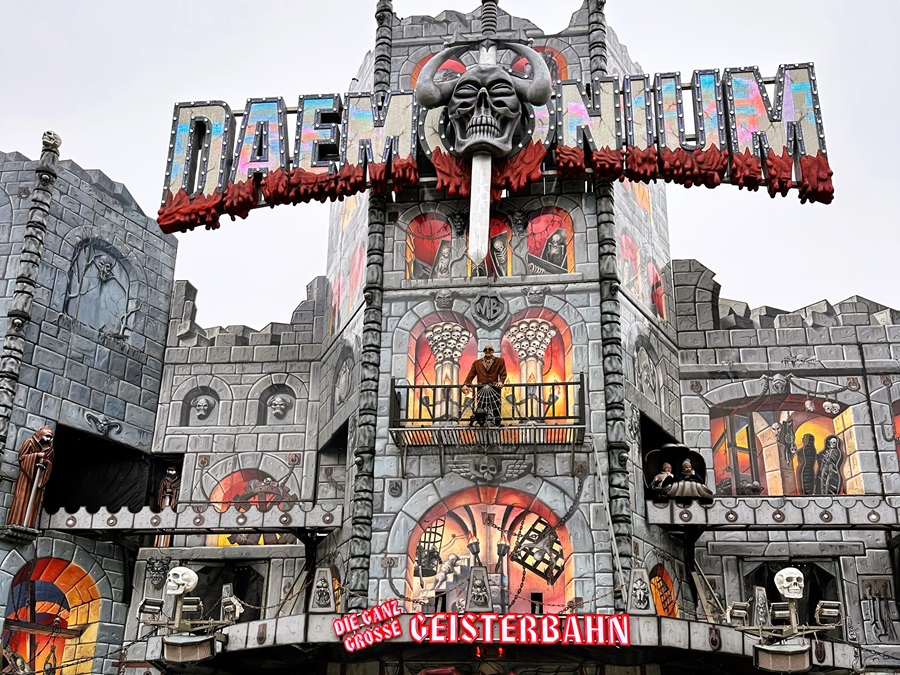
The Daemonium ghost train looked exciting but in the end we didn't go on any rides. It's an awful thing to admit but we're probably too old for that sort of thing. We headed out of the park back towards the city centre.
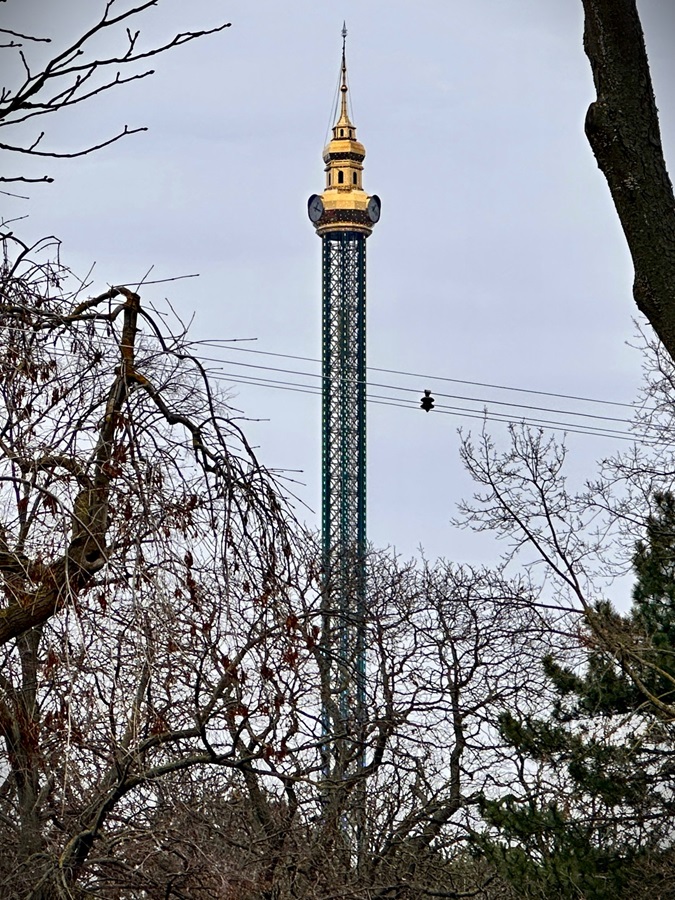
Having walked for quite some time we looked back towards the Prater. Other than the Riesenrad ferris wheel the other landmark we could see was the Praterturm, a death defying flying swing. Suspended chairs spun around whilst rising up a tower to a frightening height of 117 metres! It looked like it had been here for years, as long as the Riesenrad even, but it only opened in 2010.
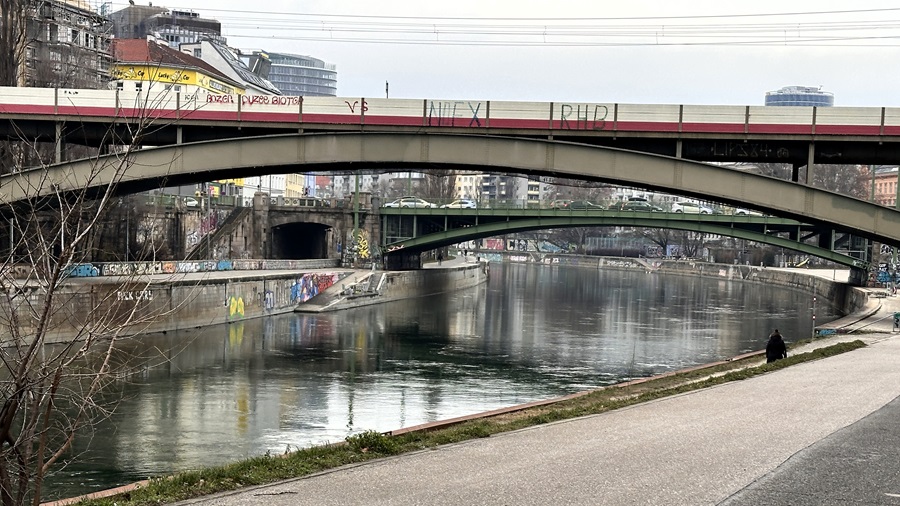
Before long we came to a river, it wasn't the Danube, but it sort of was. It was called the Donaukanal (Danube Canal). To the North of the city, at Döbling, the Danube branched off, creating this particular river, before rejoining the Danube 17km further South, essentially forming an island of the Leopoldstadt and Brigittenau districts. Ever since the 17th century, because it would often burst its banks they attempted to control the flow and by the end of the 19th century a lock and wier system had been put in place in Döblingwhich is still in use today. After crossing the canal over the Franzenbrücke road bridge we walked down a quiet street looking for the Hundertwasser Museum. Friedensreich Hundertwasser was an artist I was already familiar with. When Hannah was studying for her Art GCSE qualification I got quite interested in art. I even created a few pieces myself. One was a drizzle of grey and purple inspired by Jackson Pollock. Another was an imprint of my buttocks in yellow on orange. (not my finest hour!). The other was my favourite, an Onion Heart, in pink and purple inspired by Hundertwasser's multi-layered paintings. There were other places in Vienna where we could have visited this morning, like the Sigmund Freud museum, or the Snow Globe museum, (it was invented here) but I was actually super excited to visit the Hundertwasser museum.
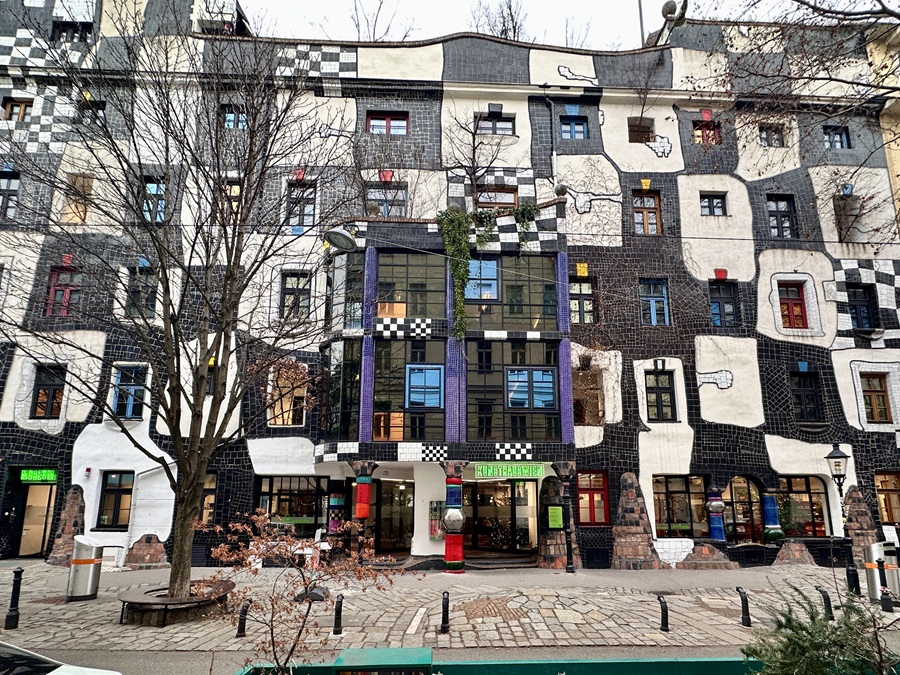
The Kunsthauswien (Vienna Art House - which housed the museum) was completed in 1985, a project Hundertwasser was passionate about. In 1977 he was invited by the Mayor of Vienna to design a building in his own vision after campaining about ecological architecture including roof forestation. The building he created certainly had an unique colourful non-linear style. It was slightly reminiscent of Gaudi's House in Barcelona.
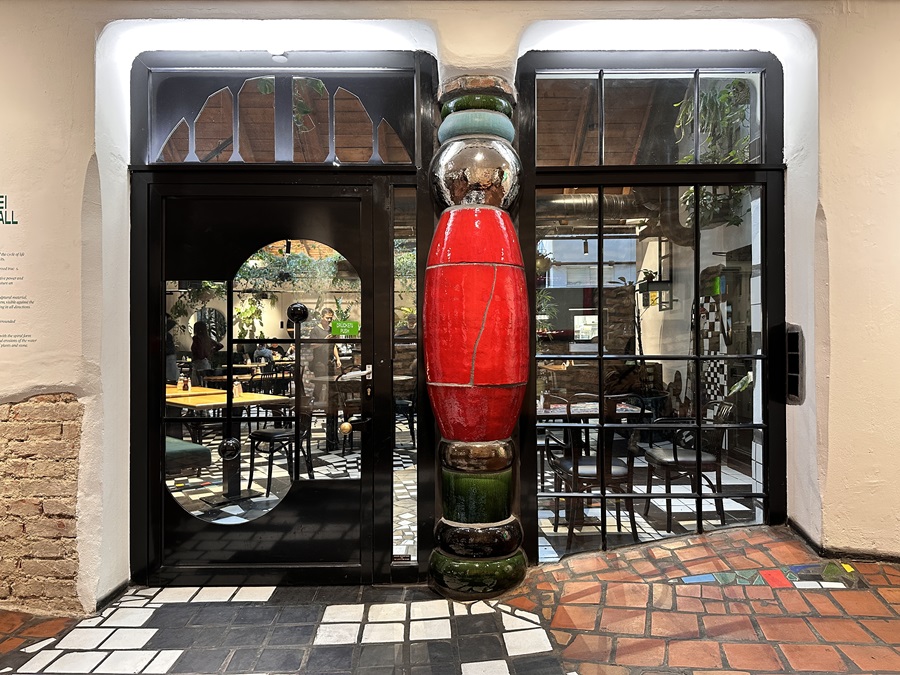
Inside continued the wavy theme, even the floor was undulating! Black and white chequered patterns were repeated throughout the reception. We noticed a cafe in the corner. After our half a hour walk we were feeling the cold and a nice warm drink was called for.
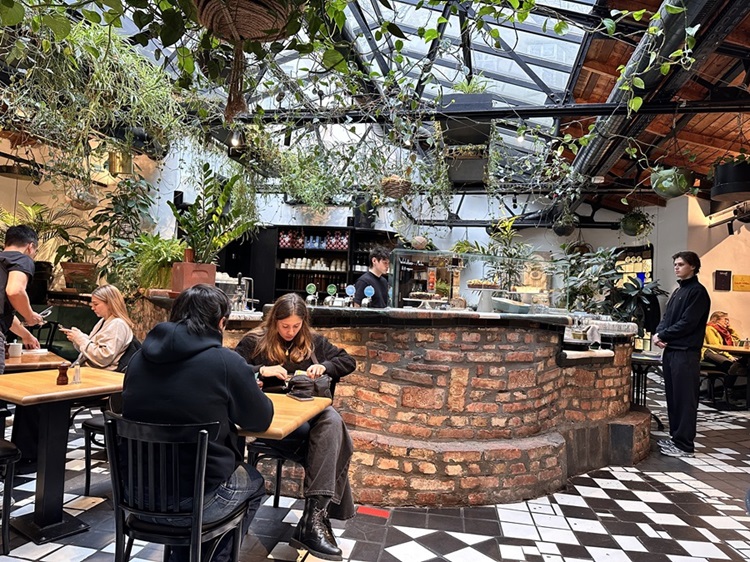
The cafe was bright and airy with a hanging garden above our heads. We had a look at the menu. We had no intention of eating anything but I was drawn to a dish described as Hundertwasser's favourite dish.
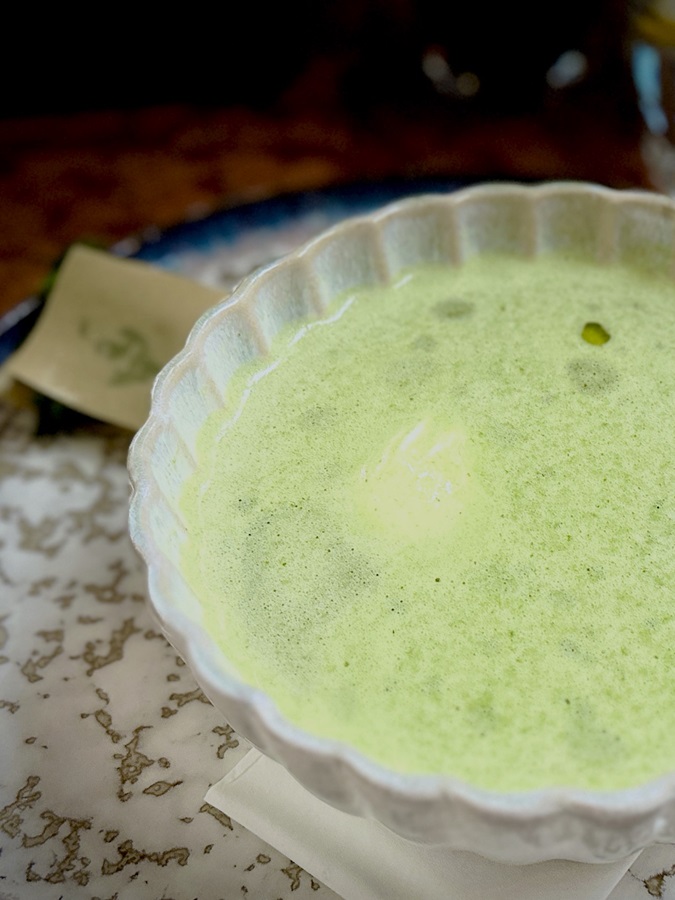
It was a nettle soup with a submerged "nettle pastry" and poached egg. It was my kind of dish and I simply couldn't resist trying it. It was an outstanding bowful of green goodness and cream. It was a very large bowl but I could have eaten another one quite easily.
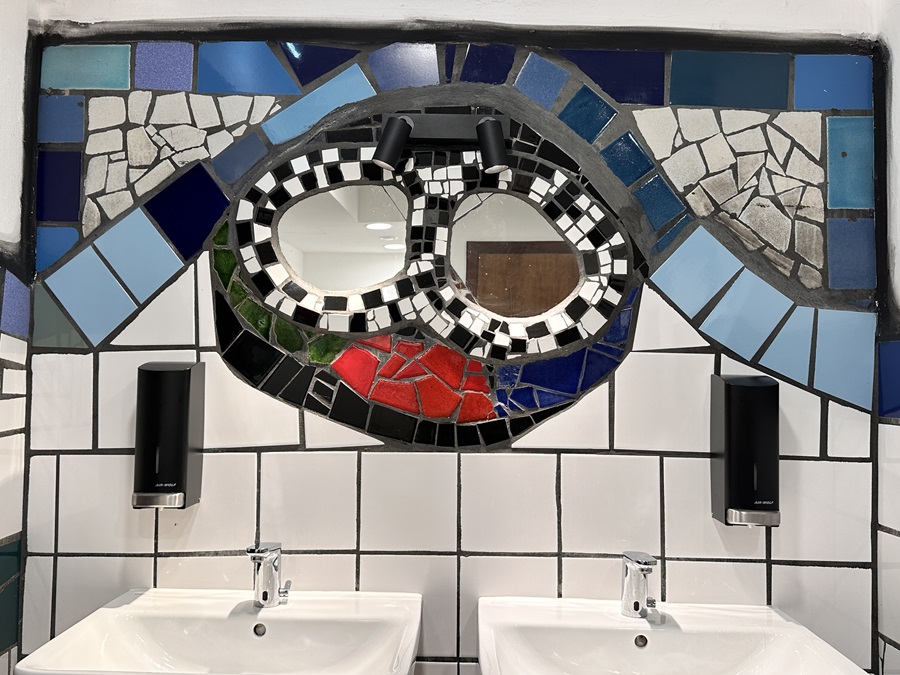
Before visiting the museum we both used the toilets and returned full of wonder at the quirky mosaic tile theme that continued inside. Julie decided against walking around the museum, opting instead to sit in reception and knit. So I paid for my entrance ticket and went solo.
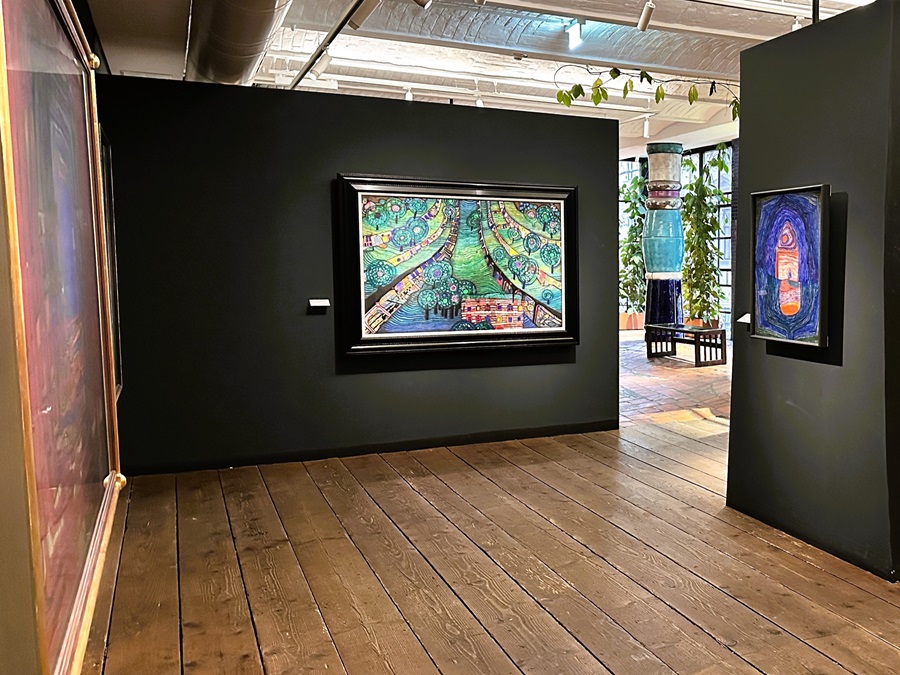
It was spread over three floors and contained Hundertwasser most important works. Julie did say "don't rush, take your time." so I did, making sure I studied every single one in detail.
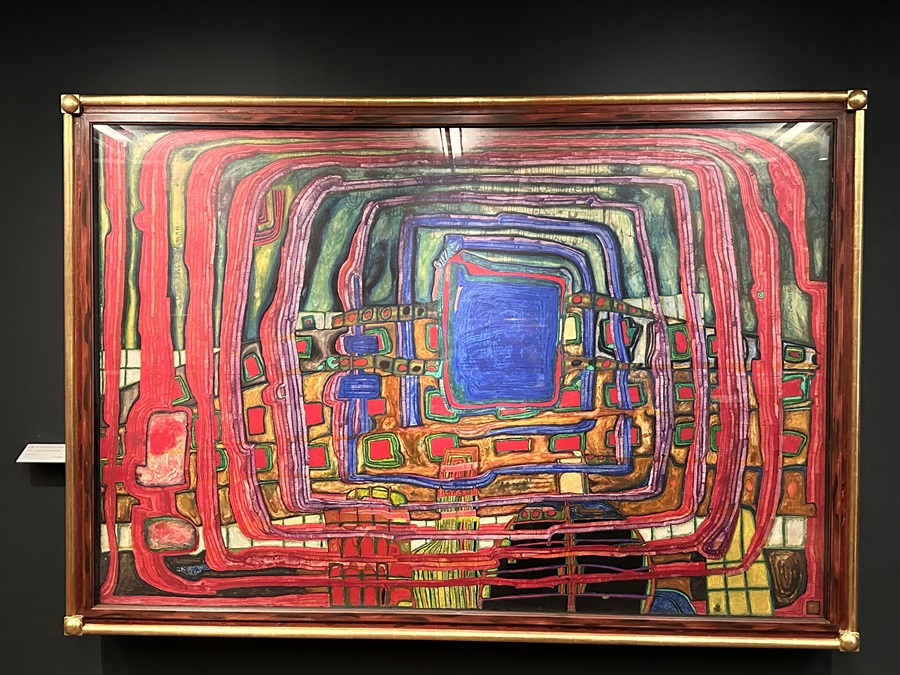
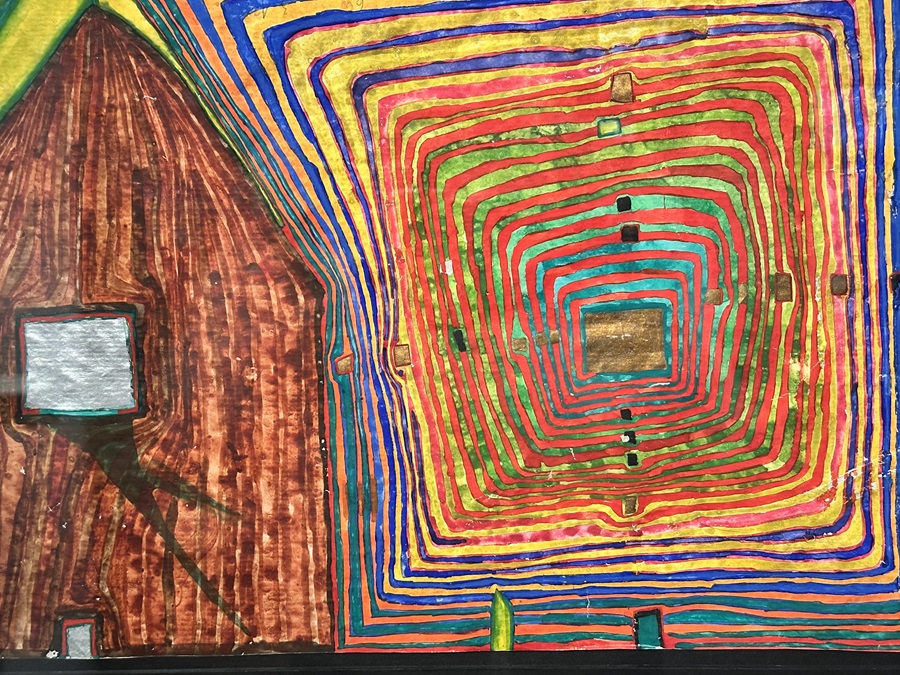
The first one I liked was translated as "The I Still Don't Know". Hundertwasser called his style of painting transautomatism where the viewers experience was his prority over the artistic. It was simple in many ways but the swirling concentric rings were hypnotic, drawing me in. After staring at it for too long I felt like I was falling into the sapphire at its heart. I literally had to shake my head to snap out of it.
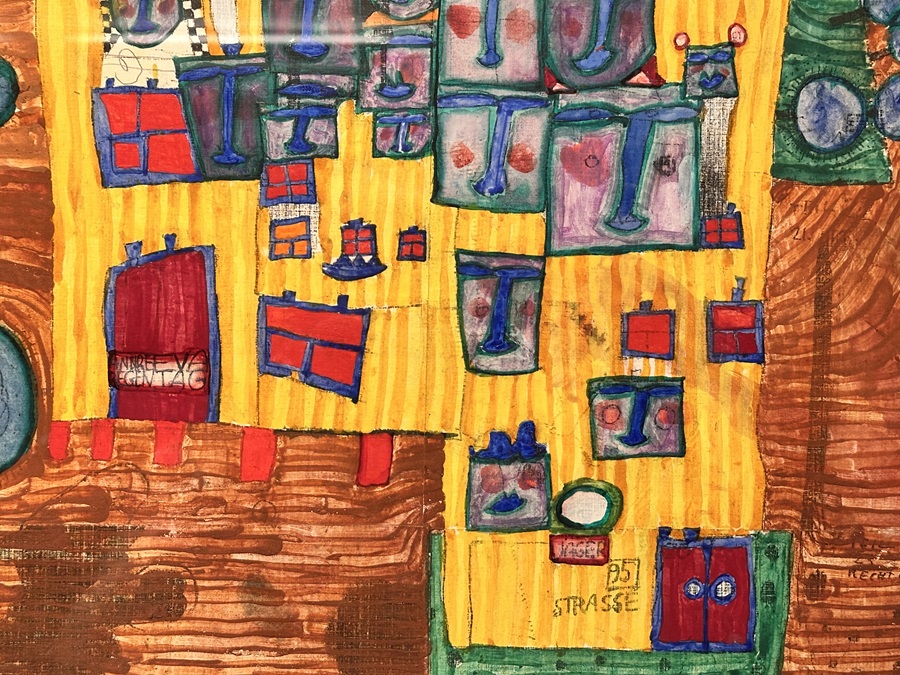
Next came "The 30 Day Fax Painting". It was a chaotic scene. There was a lot going on, too much to take in one glance. There were abstract figures, houses, trees, cars and not a straight line in sight. I focused on one section at a time, not trying to make sense of it because there was none, just enjoying the experience of looking.
Then came the ultimate "onion skin" painting called "The Neighbours - Spiralsun and Moonhouse" taking the spiral to the extreme next to a reddish brown barn with what appeared to be a swallow's tail sticking out of a window.
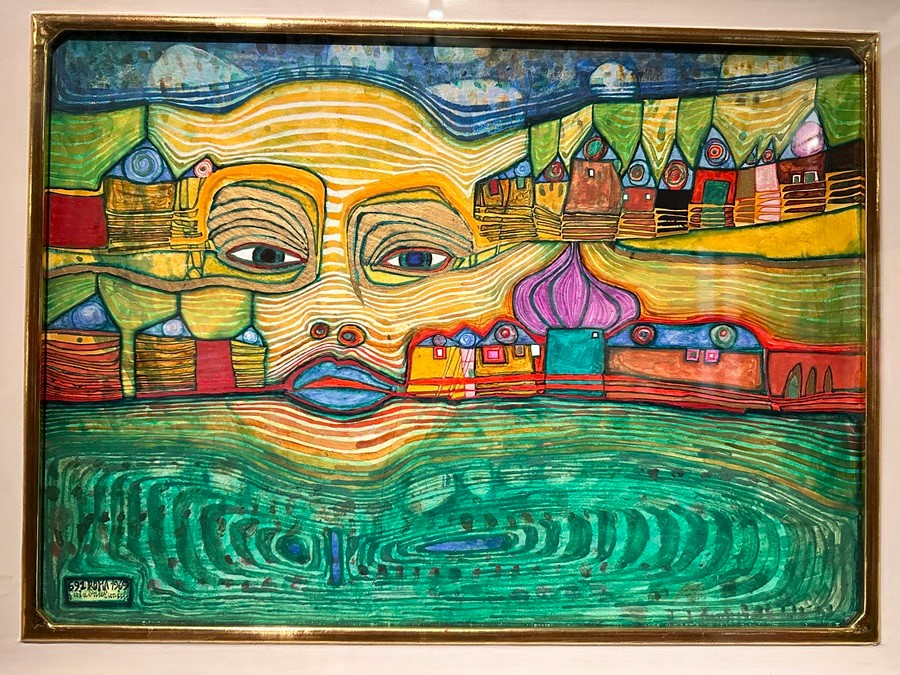
Then my favourite of the lot was called "Irinaland over the Balkans". The multi-layered lines were still there, along with onion domes of the Eastern Orthodox churches common in the Balkans. Then a face emerged from the landscape. The bright vivid colours woke up the senses.
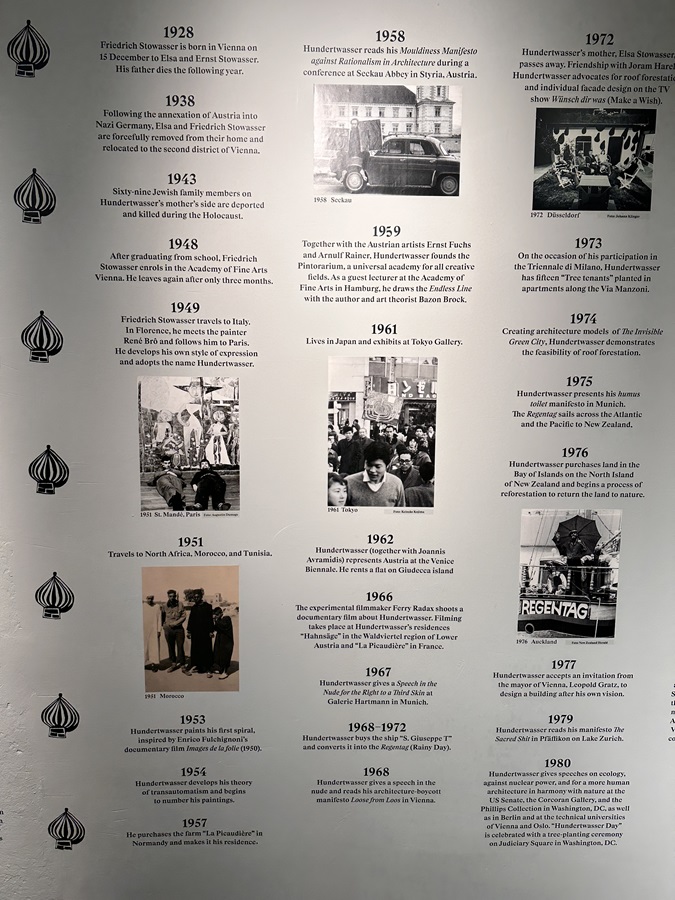
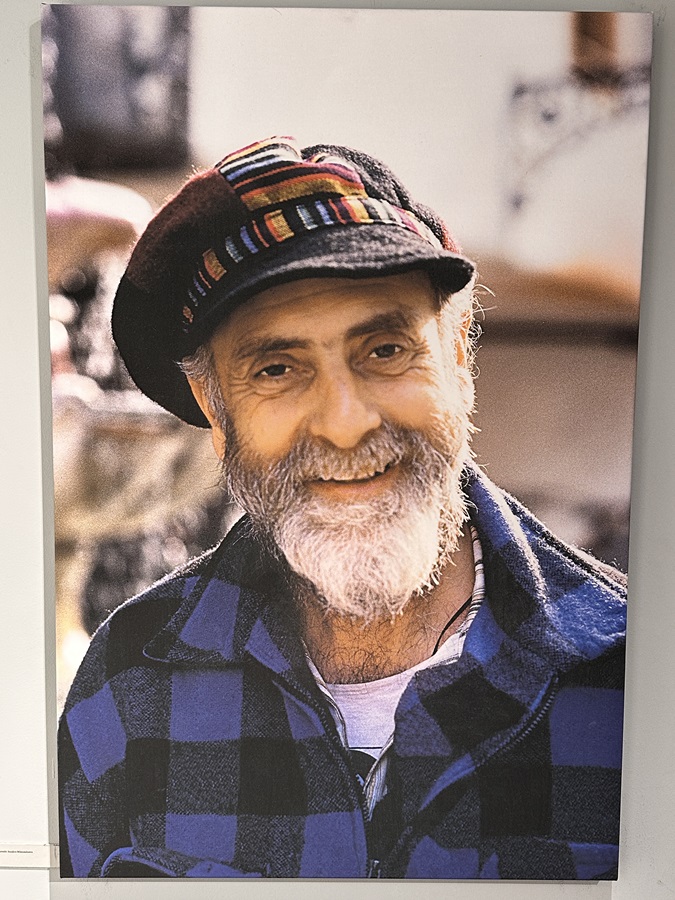
I had now completed the first floor but before leaving I stopped to read a wall of major events in his life that I rushed past when I started. He lived a fascinating life. He was born Friedensreich Stowasser in Vienna in 1928 to Jewish parents. His father died when he was a year old. Then after the annexation of Austria by Nazi Germany in 1938 he and his mother were forcibly moved to a ghetto in the 2nd district. They escaped deportation by posing as Christians. As a budding artist he moved to Paris when he was 21 years old and changed his name to Hundertwasser. In 1957 he buys a farm in Normandy and calls it home. In the early sixties moves to Japan to live, then towards the end of the decade he buys a boat, refurbishes it, naming it Regentag (Rainy Day) and eventually in 1975 the boat sails to New Zealand where he had bought some land and was reforesting it.
Despite being known as an artist he spent much of his time as an architect designing many buildings across the world. He died in 2000 from a heart attack whilst sailing across the Atlantic to New York on the cruise ship QE2.
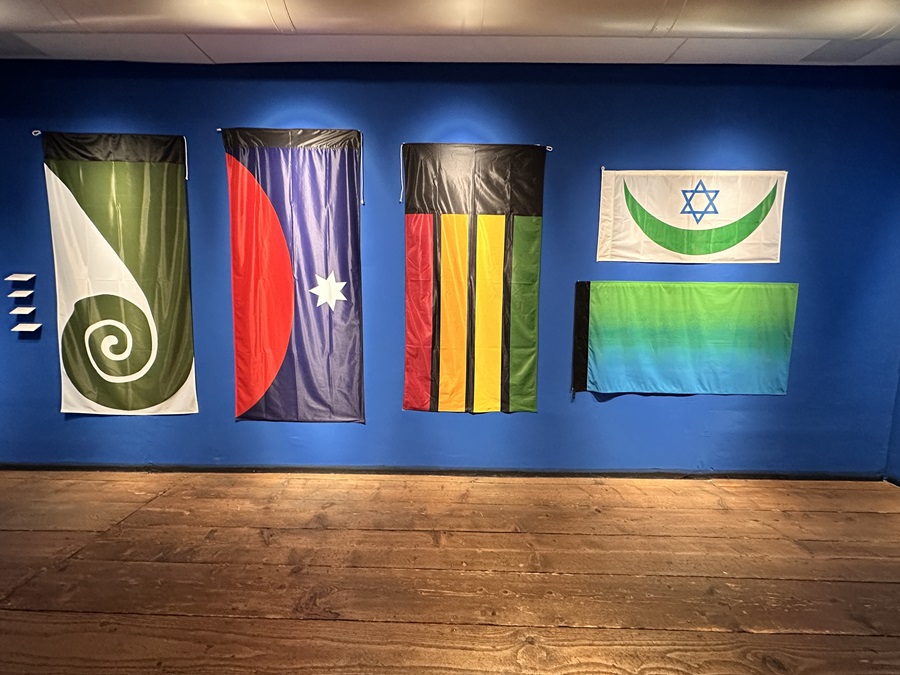
On the second floor it began with several flags he designed for various causes. I love a good flag. I think because there can't be any better than the Welsh dragon flag! An interesting one was the star of David and the crescent moon sharing the same space. This was his first "peace flag for the Holy Land". Following a few objections he tried again creating a flag where the blue colour of the star blends into the green colour of the moon. Thirty five years later and war rages in the Holy Land. On the left was his flag he offered to the Maori of New Zealand as an alterntaive to the very British colonial flag they currently use. Hundertwasser's Maori koru flag is popular in New Zealand but has never been adopted in any official capacity. He didn't just stop at New Zealand. He also designed a flag for Australia with a white star against a blue background above a red semi-circle. The one in the middle was a flag he designed for East Timor in support of their quest for independence. In 2002 Timor-Leste became a new sovereign nation when it separated from Indonesia. It's a shame they didn't use his flag.
In the next room a scale model of his ship Regentag was interesting to see. He apparently lived and painted on the boat for 10 years! It's now anchored in the Danube at Tulln, Austria and has been declared a national monument.
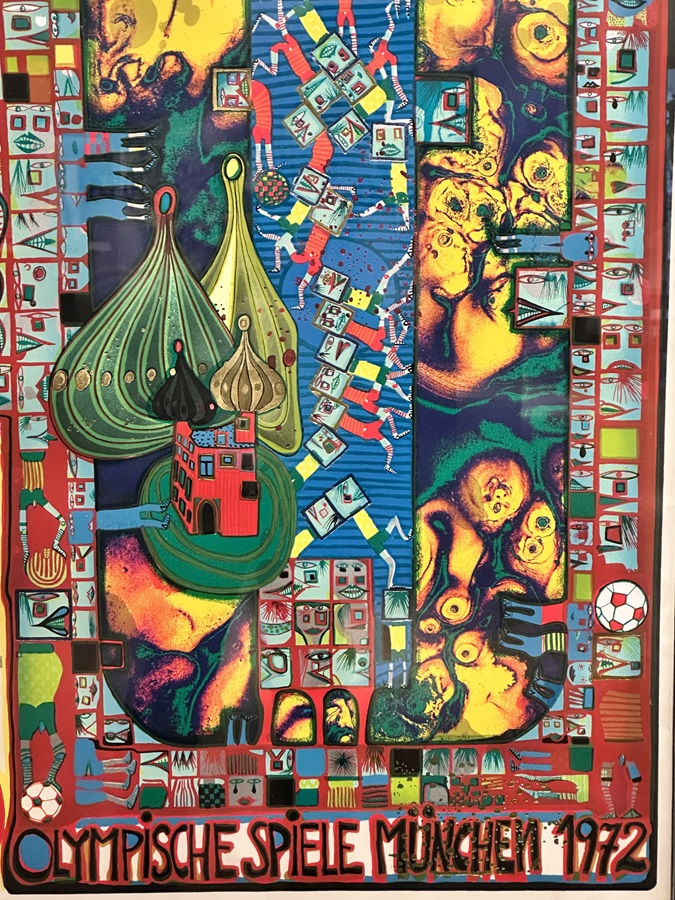
Up next were a series of printed graphic artwork, such as his famous promotional poster for the Munich Olympics in 1972.
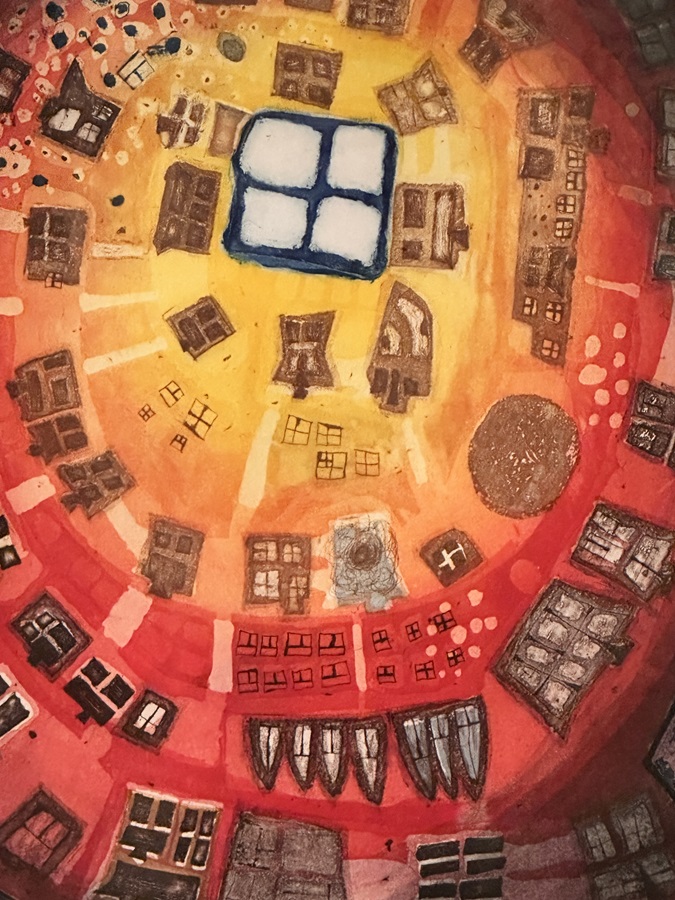
Another one was the "Window out of the pond - window into the pond". There were three colour variations printed in a limited edition release. This one in yellow and brown was like being at the bottom of a well looking up towards the sunlight.
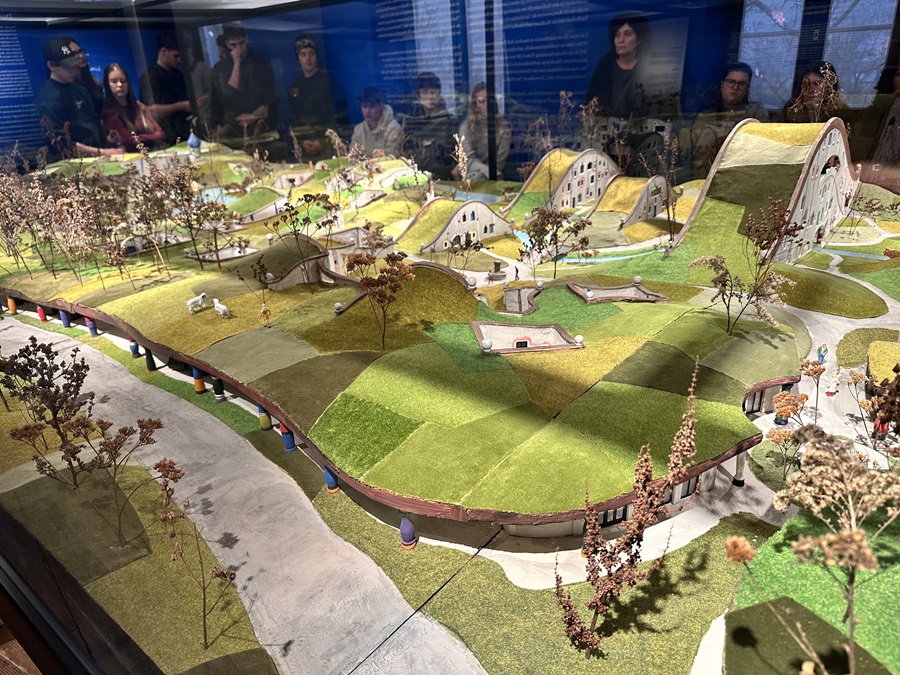
I then came across a large scale model of a project called In The Meadow Hills which he came up with the idea of creating a village with a minimal impact on the natural envrionment. It's a shame it never became a reality. That was the end of the second floor. There was a third floor, which I think was used for temporary exhibitions so I didn't bother having a look.
I rejoined Julie, leaving the Kunsthauswien and the museum and headed down Weissgerberstrasse walking through the stylish Weissgerberviertel district admiring the grand town houses. There were straight lines everywhere!
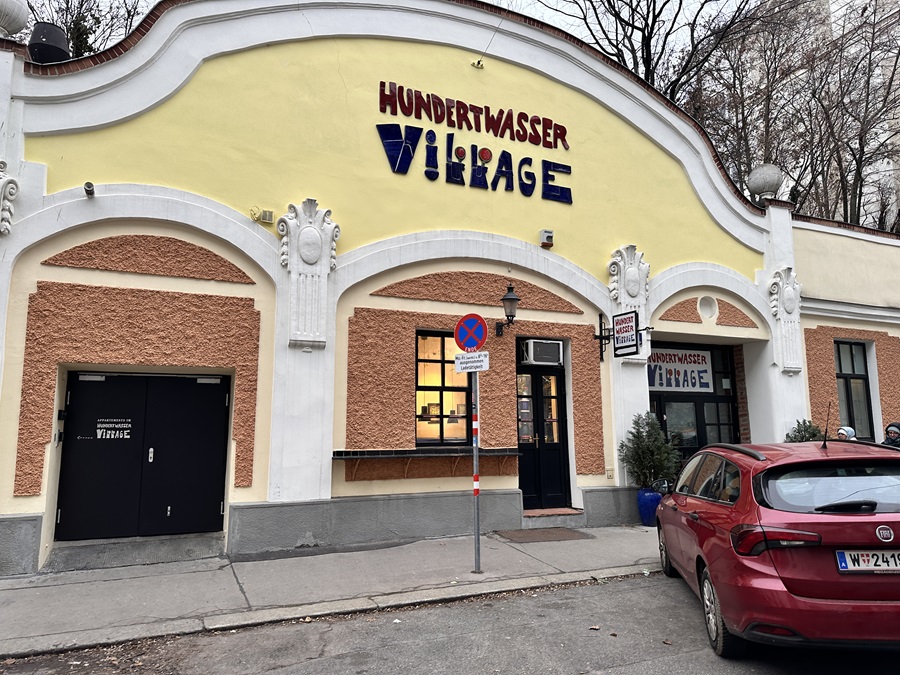
It wasn't long before the freestyle non-linear returned when we found another focus of his creativity, the "Village" and the "House".
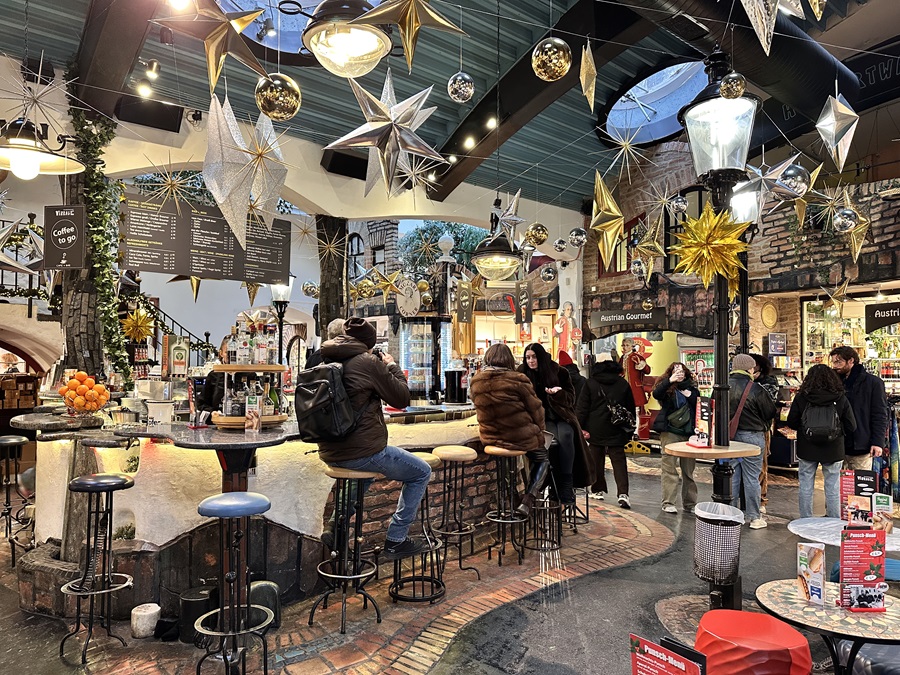
Inside Hundertwasser village was similar to Kunsthauswien with its uneven floors. There was a cafe in the middle and the space was filled with several artisan stalls.
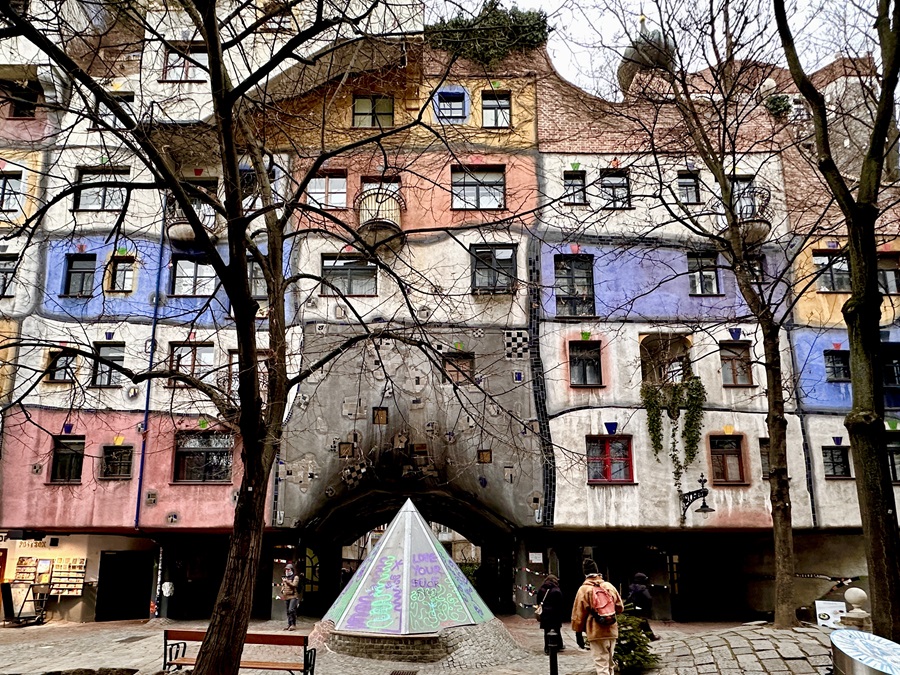
As we came out the other side we saw the apartment block he designed, a patchwork of colours, with an almost cave like entrance into an inner courtyard. There was also a rooftop garden. There wasn't anything else to see. You couldn't go inside, these were peoples homes.
Our next point of interest on the map was a Sports Direct store on Landstrasse Haptstrasse so I could find a football shirt. It took us fifteen minutes to walk there through some very uninspiring streets. We quickly found the Galleria shopping centre, then eventually found the store upstairs, only to find they didn't stock any football shirts! I felt so disappointed. It had been a complete waste of our time!
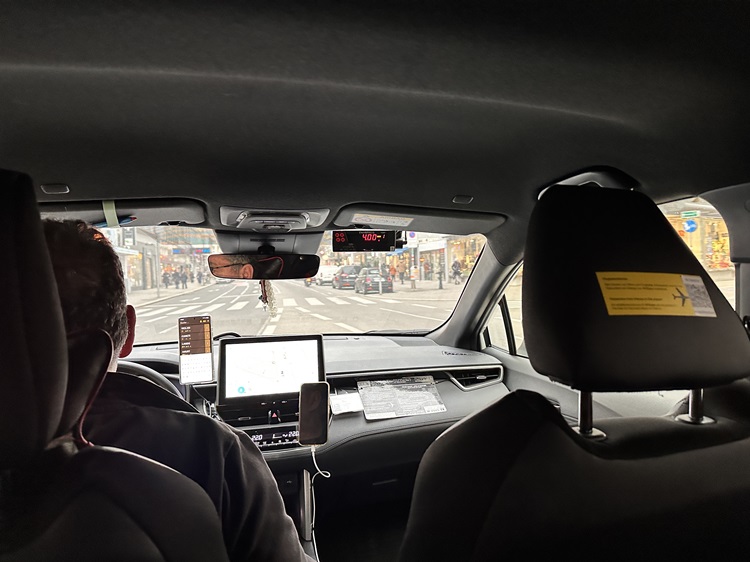
Fortunately, there was a taxi rank just outside the shopping centre. So we jumped in the back of the first cab and asked to be taken to the entrance to Schloss Belvedere. Thankfully he understood my pronounciation and knew where we meant.
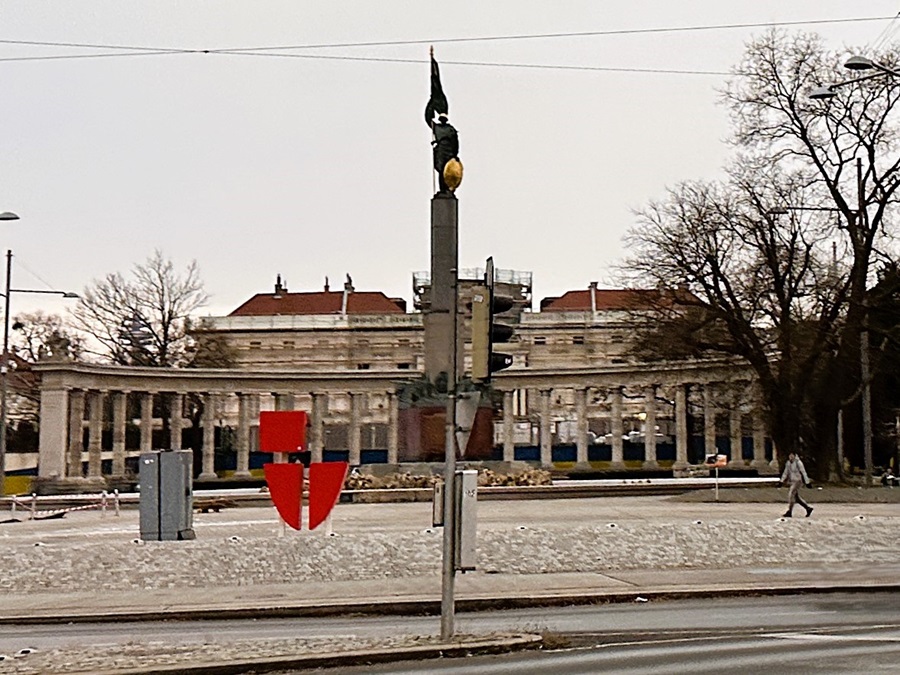
We were hoping to see something interesting on our way there but there wasn't much to write home about until we reached a bend in the road around Schwarzenbregplatz. What we could see was a statue on top of a tall pillar, called the Heroes' Monument of the Red Army. It was erected in 1945 by the Soviet Army to celebrate its role in the liberation of the city. In summer there would be an impressive fountain shooting high into the sky. The taxi driver delivered us to the entrance of Schloss Belvedere. I tried to pay the fee with my card but it wasn't working. Unfortunately I had no cash on me, so he had no choice but to make it work. After an awkward silence for what felt like a very long time we eventually had a succesful transaction.
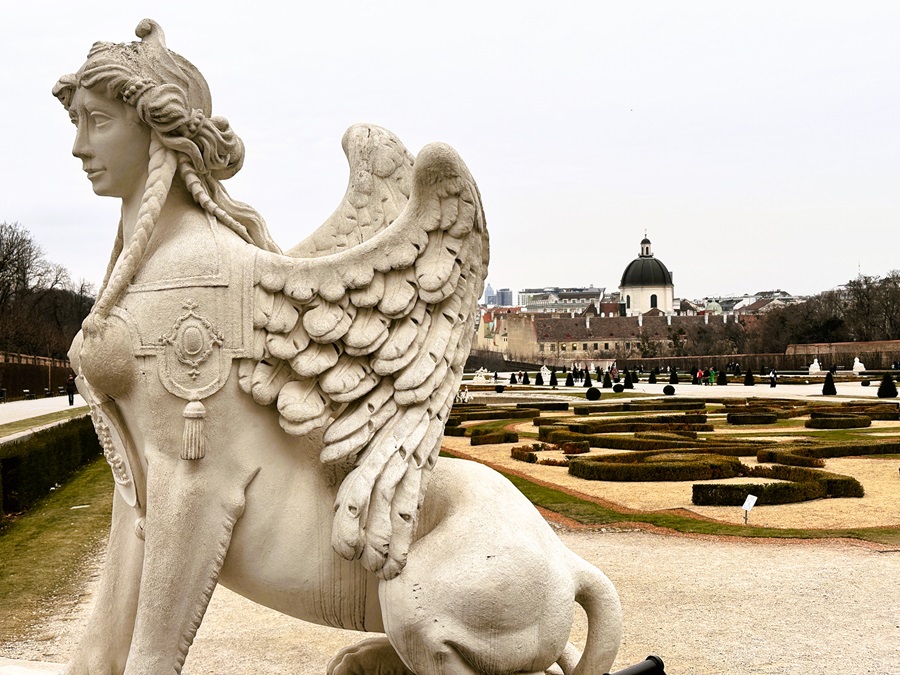
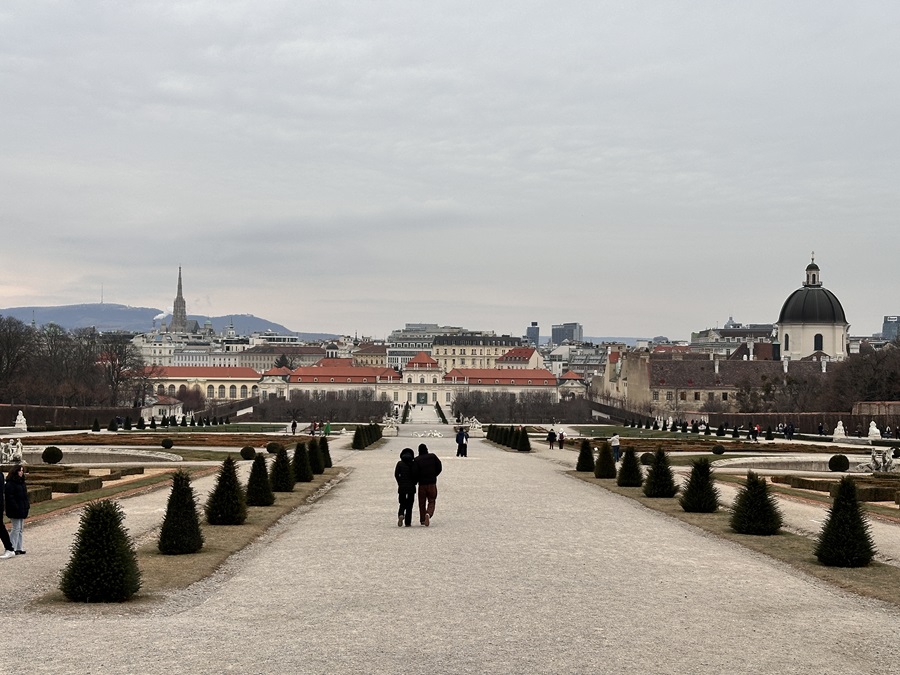
We had a 4:15pm time allocated slot to enter the museum but we were free to walk around the gardens. They looked impressive, filling the space between the Upper and Lower palaces but having already hit well over our 10,000 steps for the day we didn't feel like trapsing around aimlessly. We were almost an hour early but wandered over to the entrance. We overheard a woman arguing she should be allowed in despite her 6:30pm slot. The doorman categorically did not allow her to enter. His only concession was perhaps 10 minutes before your time but not three hours! So we returned to the main road and decided to have a drink somewhere whilst we waited.
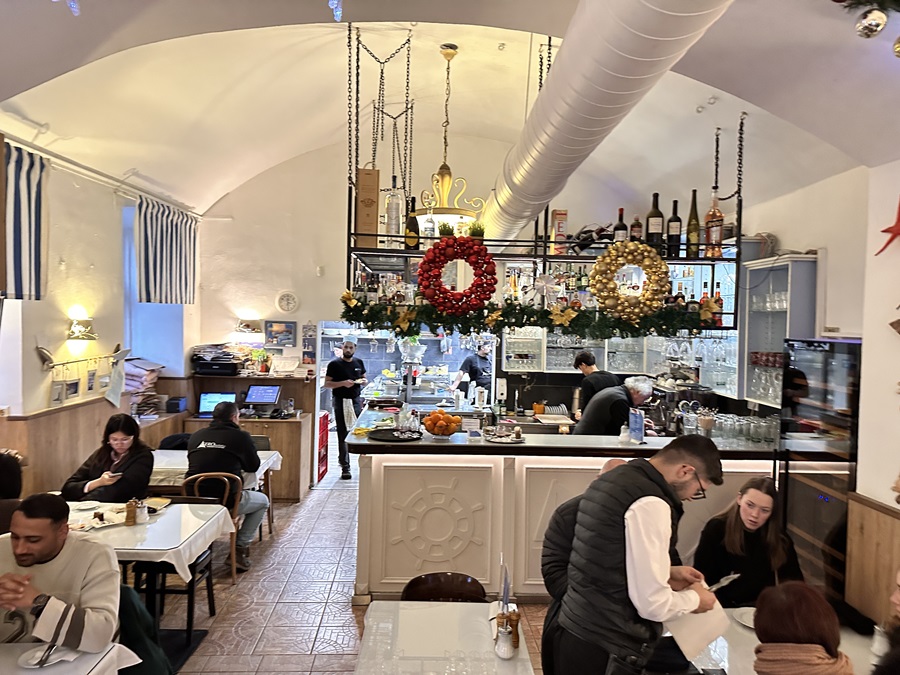
We crossed the road to a restaurant on the corner called the Art Corner. "Is it ok for just a drink?" we asked the the older gentleman who greeted us. "Of course" was his courteous reply with a mischevious twinkle in his eye. "You can do whatever you like here." The restaurant appeared to be split into two styles, a casual cafe and a posh dining room. We sat in the cafe nursing a glass of wine and a beer.
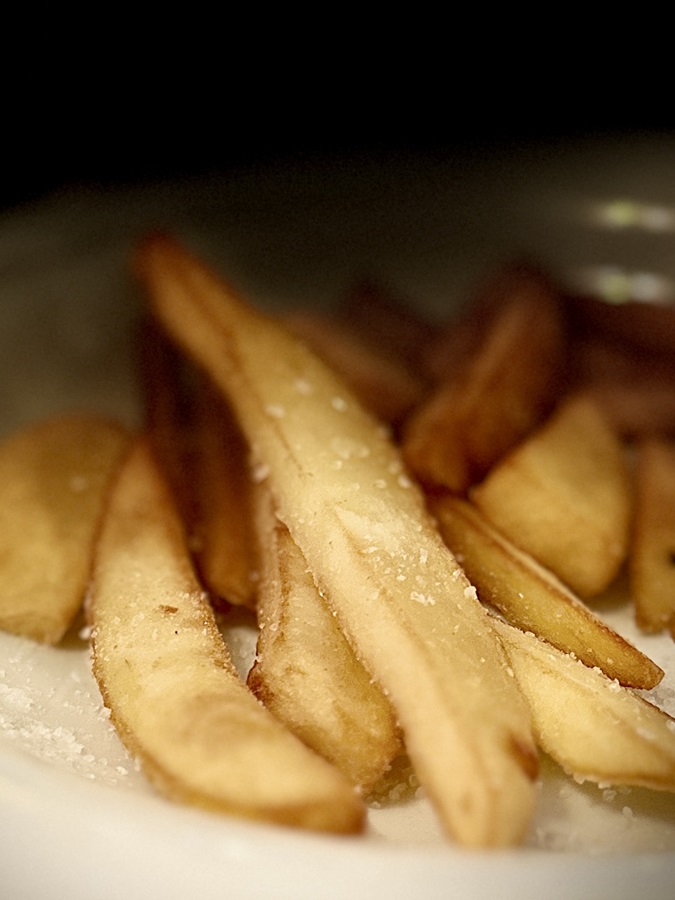
The food coming out of the kitchen looked really nice. We checked the menu and weren't surprised it was a Greek restaurant. All the staff had that charming hospitality you find in a family run business. It didn't take us long before we ordered a portion of their fries. We couldn't resist. We were almost disappointed that we already had a reservation this evening in a very traditional Austrian restaurant. It would have been wrong to have cancelled it just to eat some delicious looking Greek food.
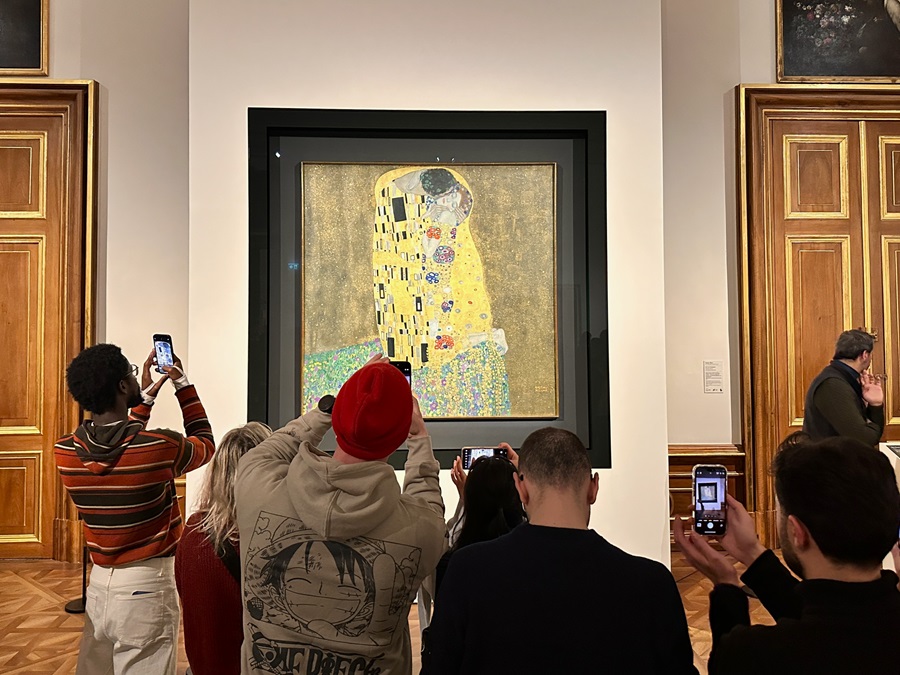
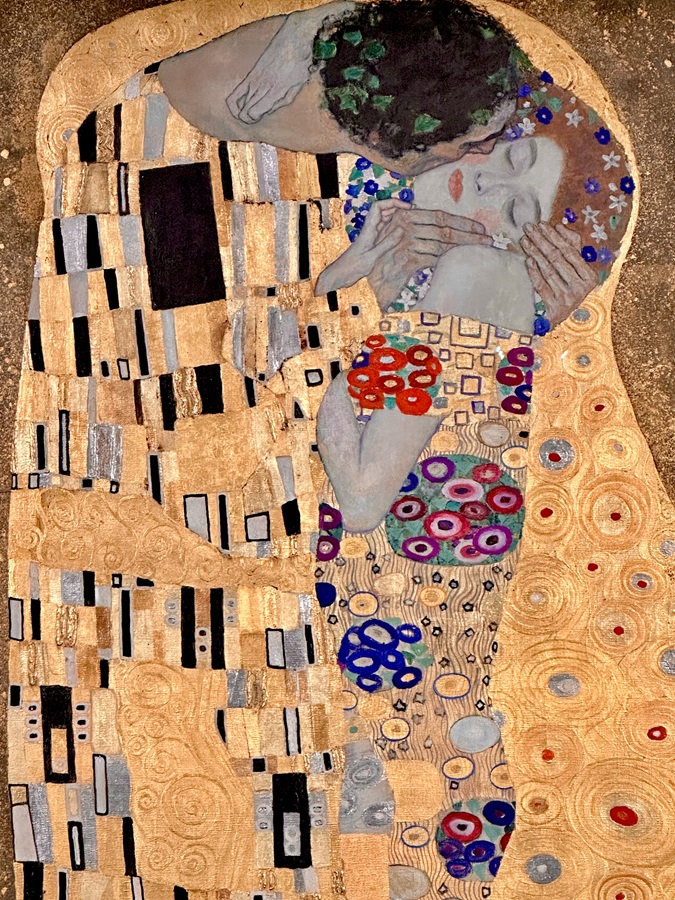
Once we finished we returned to Schloss Belvedere. By the time we reached the entrance we were exactly 10 minutes early and we were allowed in. We dropped our bags and coats in the cloakroom before having a quick look at the map. With a dinner reservation booked for 5:30pm we didn't have much time to lose. Our main objective was to see the most famous painting in Vienna, "The Kiss" by Gustav Klimt. The museum recognised its importance and had a sign that said "The Kiss - This Way". We climbed the stairs, quick marched through several rooms of masterpieces, before entering a large room with a small crowd gathered in front of a painting.
Despite there being a concentration of people there wasn't much of a scrum. There was no need to jostle for position, there was plenty of space to stand and look at the stunning work by Klimt. We all patiently waited our turn to step forward and occupy the front row, where we quickly took a few photographs for posterity, and then took our time, absorbing it in great detail, in the moment.
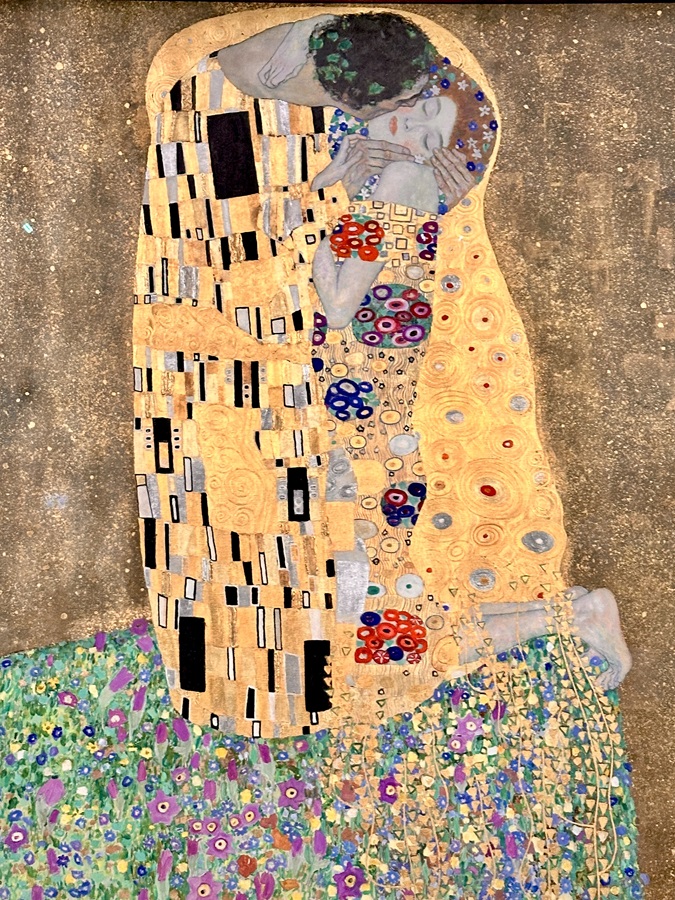
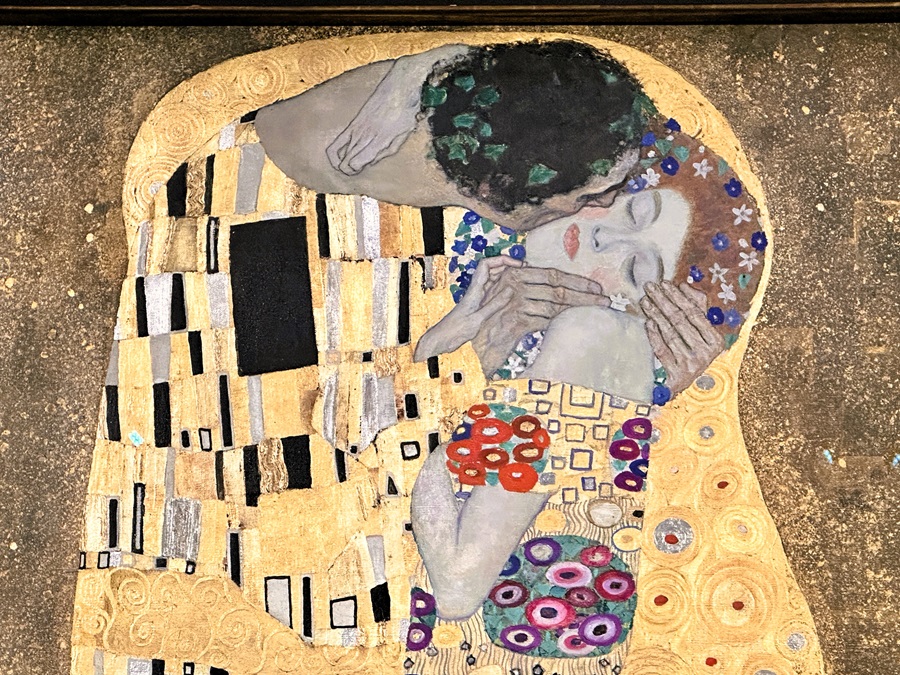
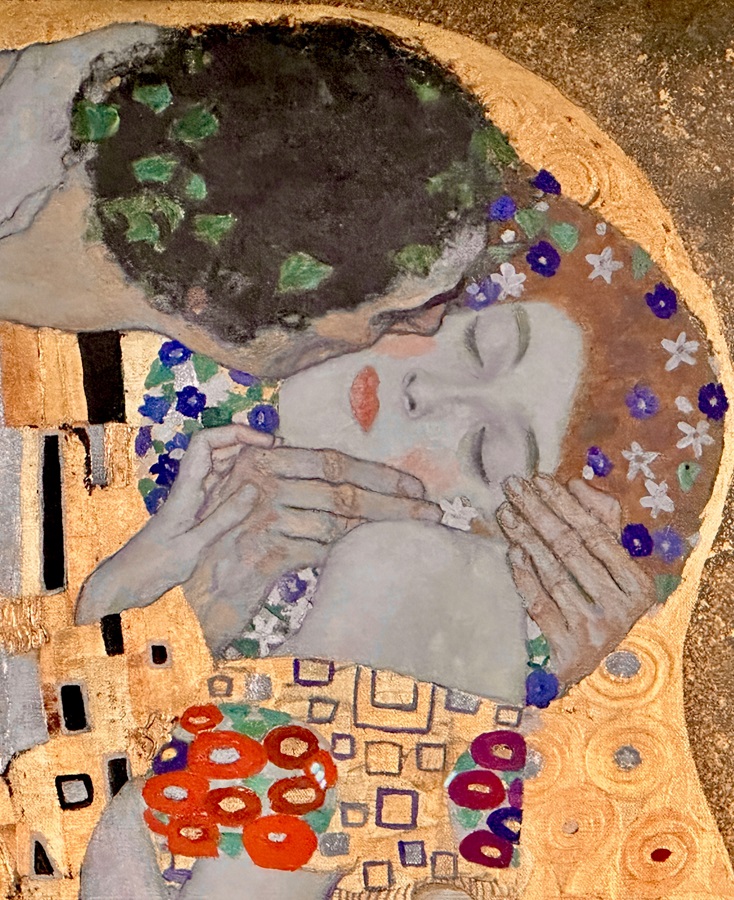
"The Kiss" was created in 1908 with oil paint and gold leaf and showed a couple in an embrace, draped in a golden cloak. They seem to be kneeling in a wild flower meadow. She had flowers in her red hair, he had some leaves in his. He gently held her tilted head and kissed her on the cheek.
It was a tender scene, her face was serene. Most of it was quite abstract but her features were detailed and beautiful. We stood there for a good few minutes taking it all in. Eventually we moved on, happy we had seen all there was to see.
We walked through the other rooms, giving each painting a glance, stopping at a few that caught our attention, such as The Evil Mothers by Giovanni Segantini (1894). It was a dramatic scene, set in a wintry landscape, where a red headed woman was writhing, contorted like the bare branches of the tree which she was attached. A child was suckling her breast but she appeared to be pulling away rather than nurturing. It was a powerful image.
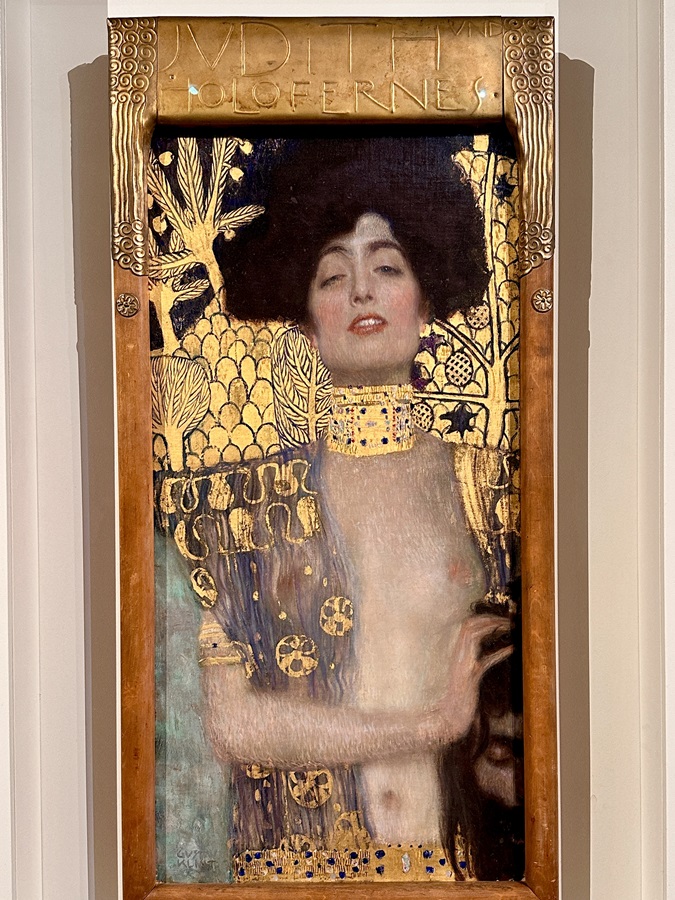
We then came to another famous Gustav Klimt painting called Judith. He created it in 1901, six or seven years before The Kiss. It was a very sensual image of the biblical character who seduced and beheaded Holofernes, a General in the invading Assyrian army. My eyes were drawn to her nakedness, the see-through fabric, the gold-leaf, and to her face that seemed to exude pleasure from her kill. Then, hidden in clear sight, unnoticed until it was seen, we saw the decapitated head of Holofernes clutched to one side. We continued to walk through the rooms. Unlike Schöbrunn Palace, the Belvedere seemed less ostentatious. The plain rooms were perfect for the paintings not have to compete for our attention. The Belvedere Palace was built in the early 18th century. The Lower palace was the summer residence of Prince Eugine of Savoy, where as the Upper Palace was built for his entertainment and state receptions. I was surprised to learn he wasn't a Habsburg but came from the House of Savoy. However he served under several of the Habsburg Emperors and worked his way up the ranks becoming Commander General of the Austrian and Holy Empire armies. He accuulated a great deal of wealth over his life and was a keen patron of the arts.
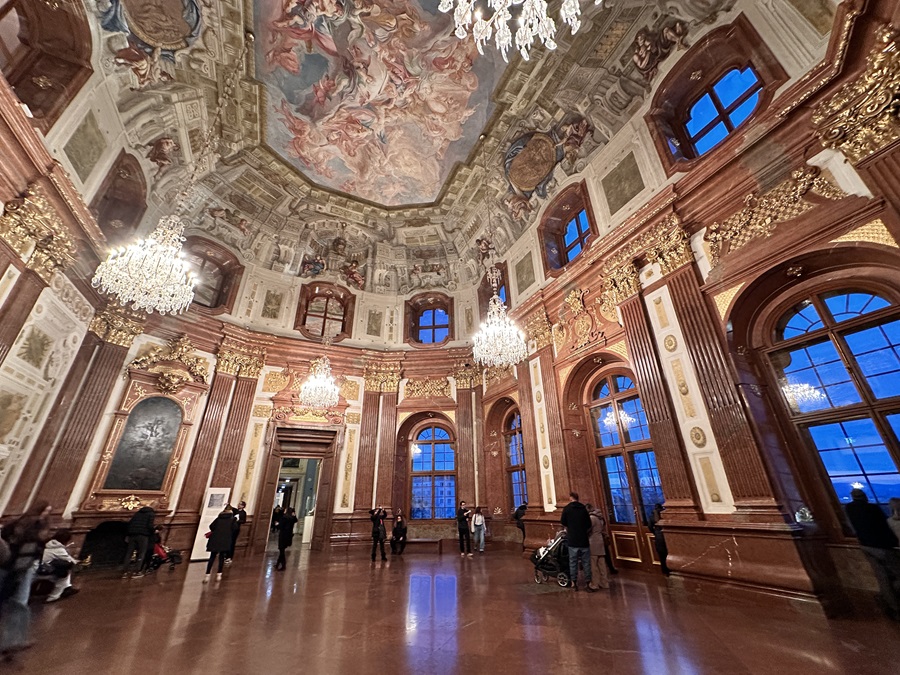
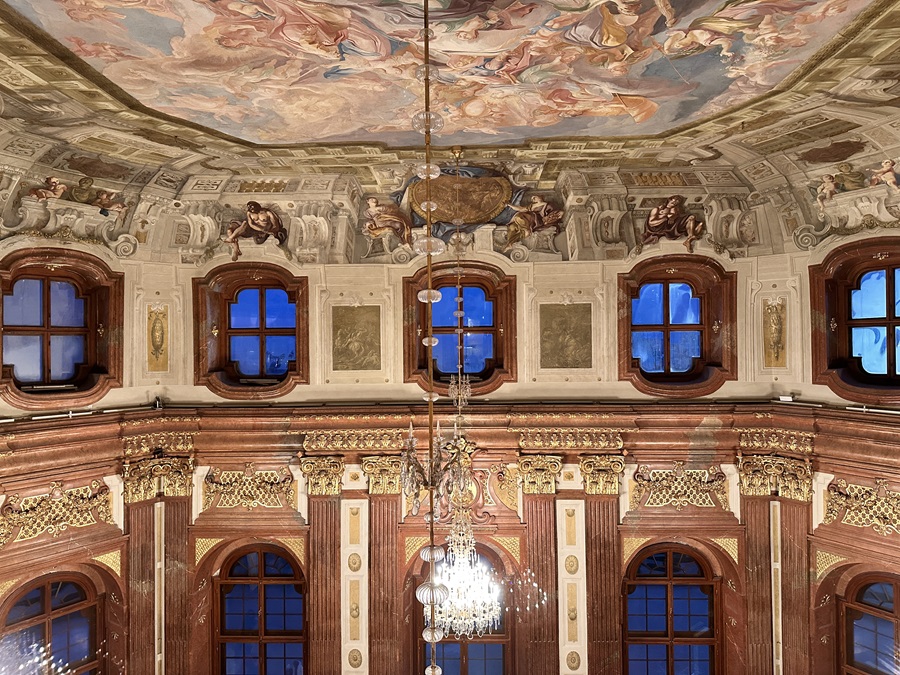
The grand Marble Hall was in contrast to the plain rooms, where its chandeliers and frescoes were the main attraction. It sat at the centre of the palace.
It's high ceiling was two floors high. The stunning fresco and marble work appeared worthy of any cathedral. The Marble Hall was also of great historical significance. It was the location of the signing of the Austrian State Treaty. For ten years after the end of the Second World War Austria was occupied by the four victorious Allied countries, dividing the country into four zones. Vienna was within the Soviet controlled Lower Austria, but then as in Germany with Berlin, the capital itself was sub-divded into four zones. Thankfully Vienna was spared a similar fate to Berlin when in 1955 the treaty returned the sovereignty to an independent democratic Austria.
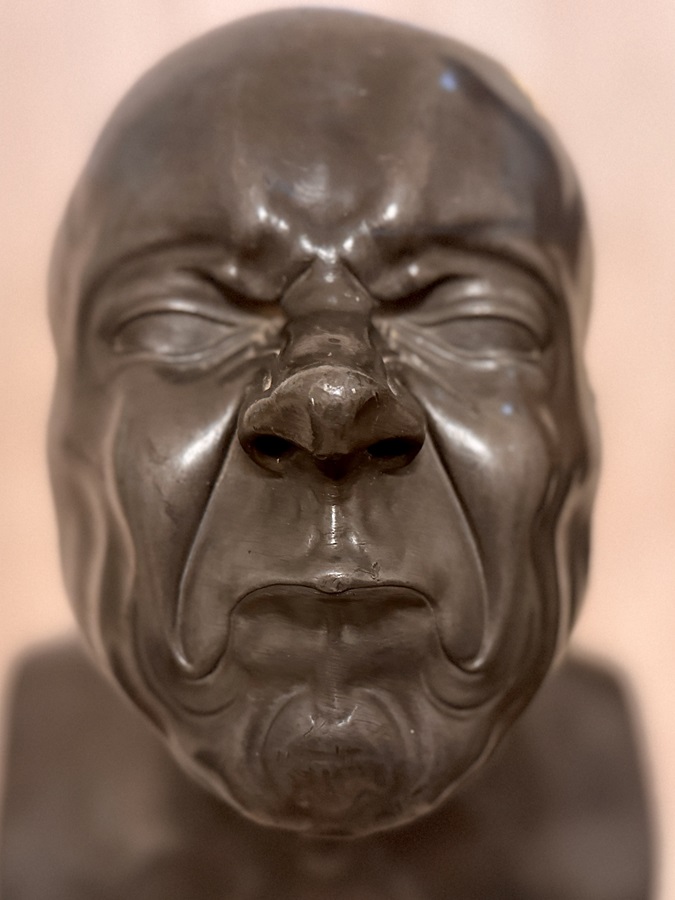
We moved on, entering a small room with a collection of very peculiar busts known as the "character heads". The 18th century sculptor Franz Xaver Messerschmidt created over sixty of these, each one capturing a moment where he face is contorted. Their twisted facial expressions encouraged descriptive titles like "The Yawner", "Afflicted with Constipation", "The Laughter Kept Back"or "The Smell That Makes You Sneeze" . The Belvedere had 16 of them, although I think only nine were on display.
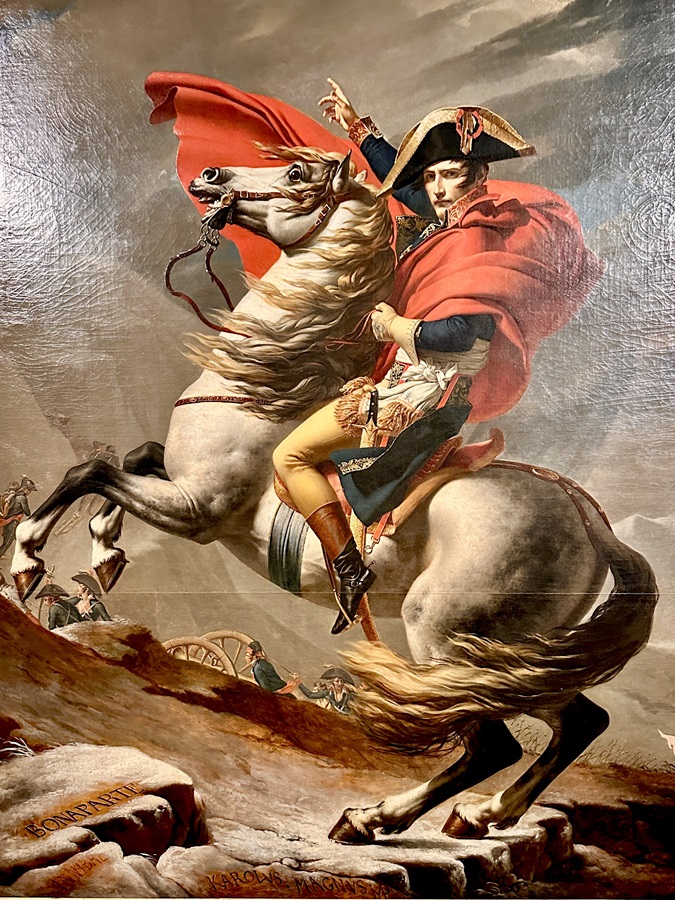
We continued on our way, revisiting the room we rushed through earlier, stopping at a dramatic image of Napolean at the Great St. Bernhad Pass by Jaques Louis David. It was a very idealised image of the legendary march in 1800 of Napolean leading the French army across the Alps to attack Austrian forces laying siege to Genoa. In reality he rode a mule!
Once we had gazed at the heroic Napolean for long enough, we backed up on ourselves, heading up the staircase to the second floor. Here we came across a Hundertwasser ("The Large Path") and a few other paintings that caught our attention. However what we enjoyed the most was looking through the window into the Marble Hall. We were on the level with the marble and could see that in fact the most impressive section was actually painted work of art not carved masonary.
We checked the time and it was only 4:40pm. We felt we could afford another twenty minutes at least before leaving so we decided to revisit "The Kiss". After walking steadily and surefooted downstairs, ("The marble looks slippery" warned Julie), we rushed once again through the other rooms to stand in front of Klimt finest acheivement for a few minutes more.
The longer I looked at it the less tender it appeared. She was young, pure, serene and almost passive in the embrace. Whilst he was unshaven, unclean, pulling her head towards him, coming across as a lecherous old man. Perhaps subconciously I was feeling like a dirty old man myself, and that's the power of great art.
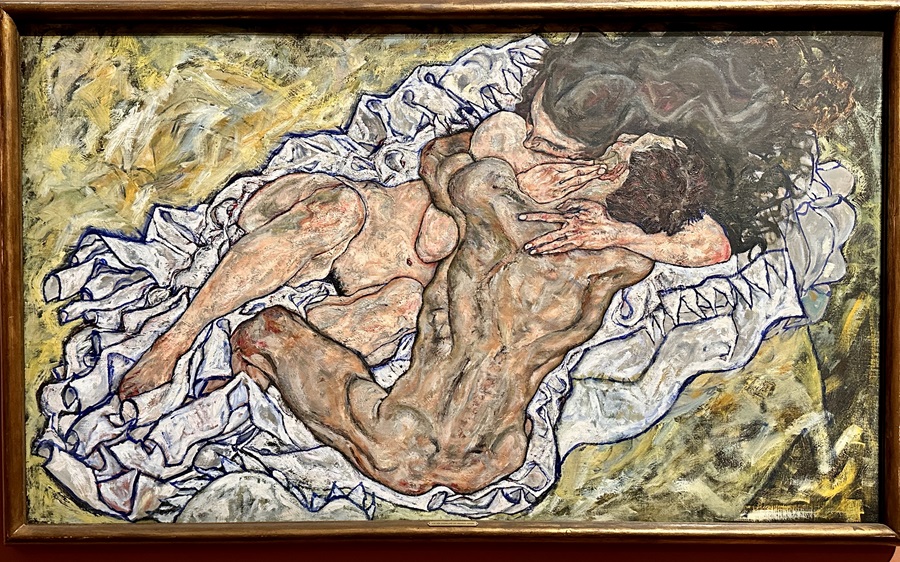
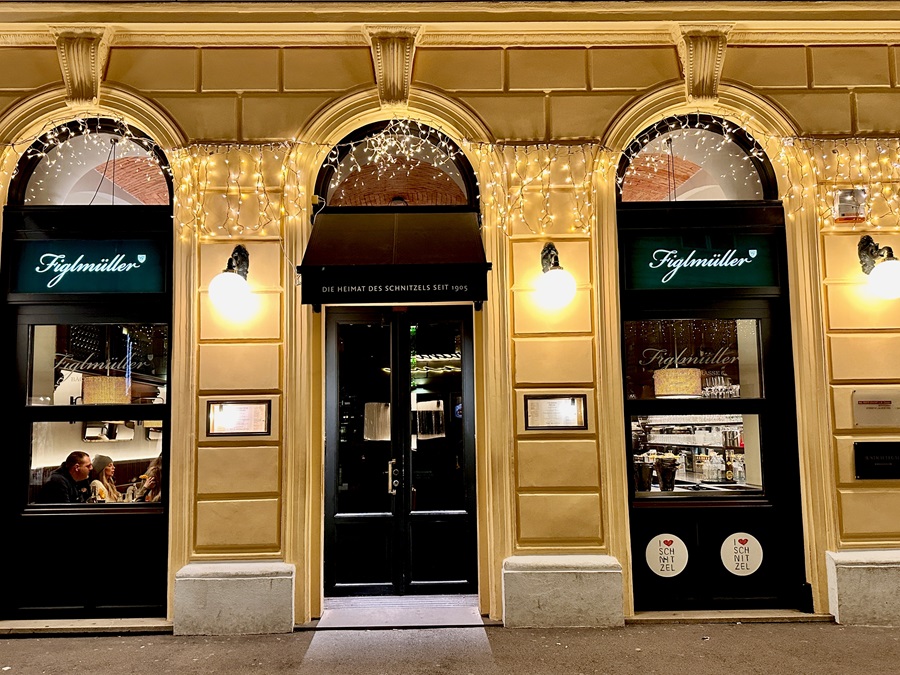
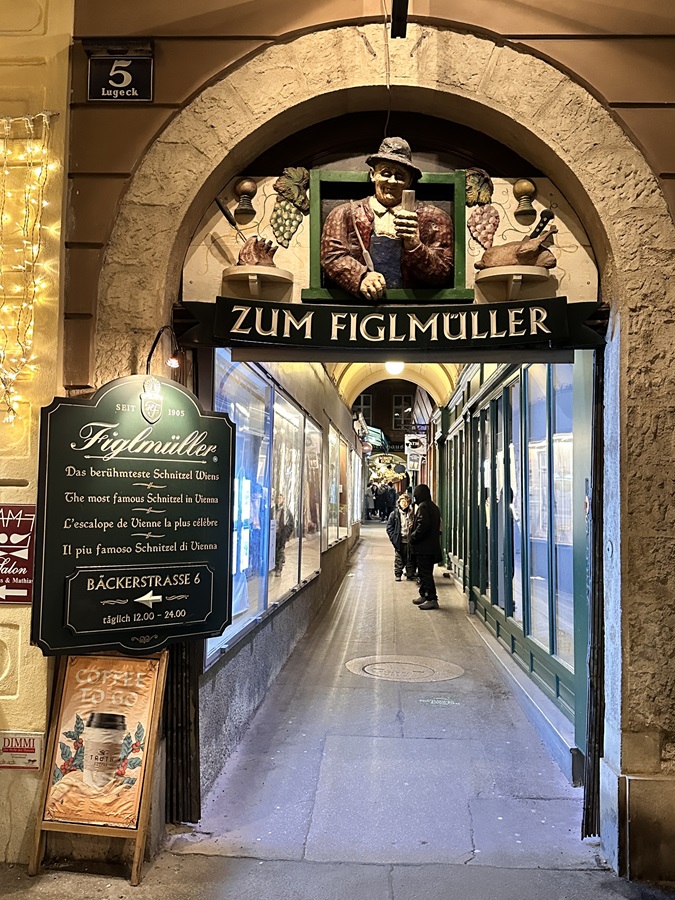
On the way out we stopped to look at the Embrace by Egon Schiele. A very different approach to love, pushing the bounaries of decency but still tender in its own way. Interestingly I didn't feel lecherous by looking at it. It was captivating. We left the Belvedere, having spent less than an hour inside. We should have spent longer but 5:30pm was getting closer. I have no idea why we booked dinner that early? Taxis were lined up at a rank outside the palace so we made our way back to the city centre and the famous Figmüller restaurant, the self-proclaimed "home of the schnitzel". Johann Figmüller opened a wine tavern in 1905 , where the house speciality was this pan-fried breaded cutlet of veal and the rest is history, as they say. The Wiener Schnitzel is now an Austrian national treasure and even protected by law to preserve its uniqueness.
The original restaurant, the small wine taverna, was on Wollzeile street. It only had a limited menu, rightly focusing on its Wiener Schnitzel. We did toy with the idea where I could have sat and watched Julie eat her schnitzel but instead we decided to reserve a table in their larger restaurant, just around the corner, on Bäckerstraße. This Figmüller Bakerstraße even had a vegan schnitzel on their menu!
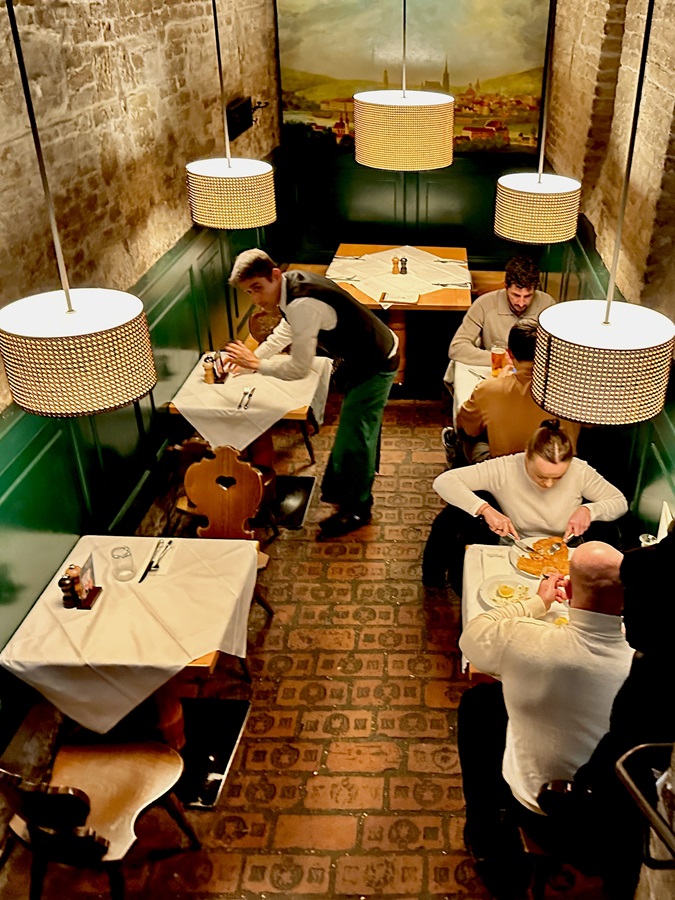
We waited in reception briefly before being shown to our table. As we walked through the restaurant we caught a glimpse of how enormous it all was, but more surprisingly how incredibly busy it was. Our waiter took us downstairs to a cosy little cellar room, alrhough it still had a dozen covers. I couldn't begin to imagine how much schnitzels they sold in a day? I was so intrigued I had to search the internet, and Copilot came back with the answer, "20,000 schnitzels a year", which equates to 548 per day if they served 365 days. The kitchen is open for 10.5 hours a day, so that's 52 per hour, almost one per minute! That's insane!! The waiter handed over the menu. Despite already having read it thoroughly on-line we politely browsed before ordering.
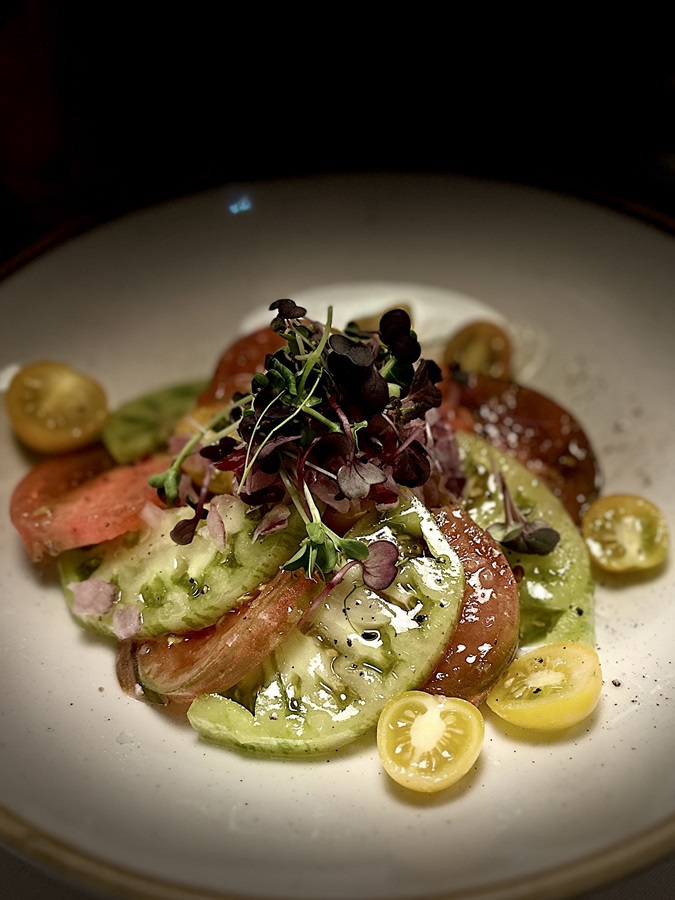
A dish of tomato salad sounded like a good starter for us to share. It was absolutely delicious, with a mix of rare heritage tomtoes, full of flavour. We also got a paper bag full of bread, served with a really tasty butter.
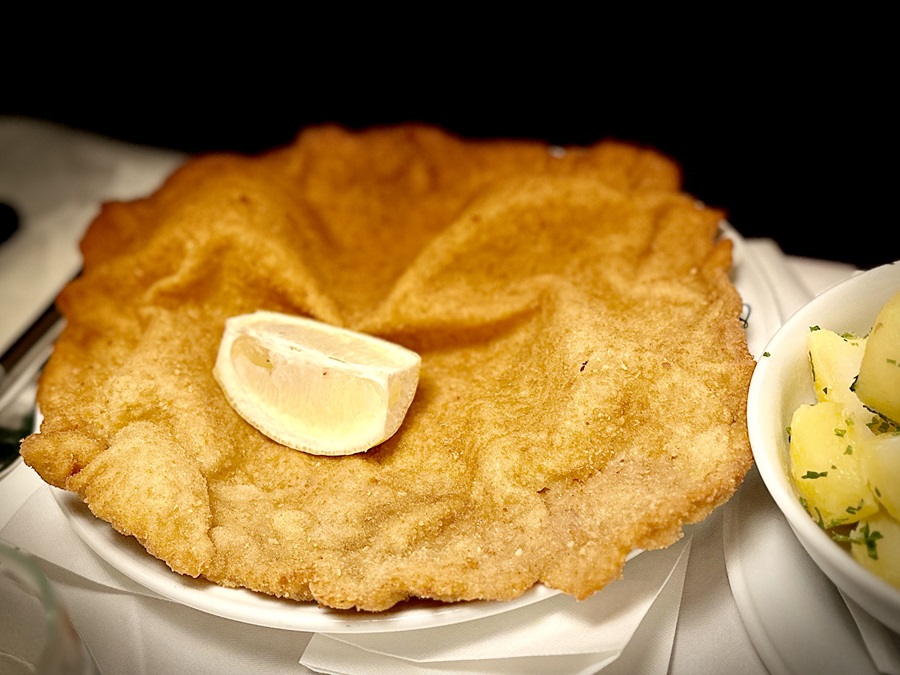
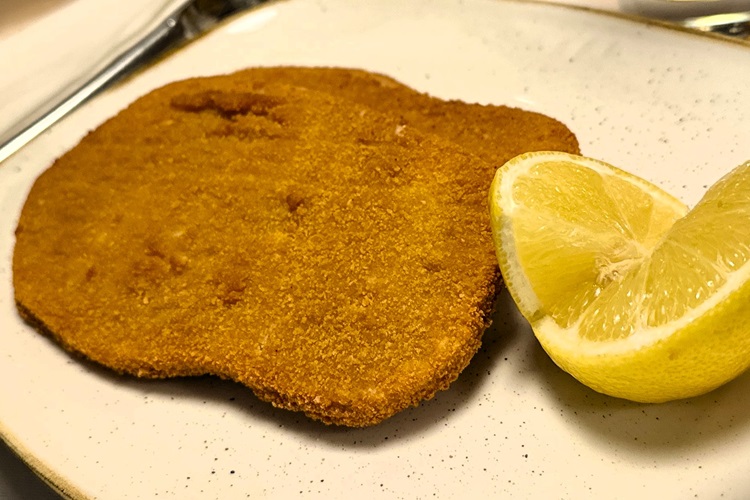
Julie ordered the Figmüller-schnitzel, made with pork instead of veal, apparently as it was originally prepared in the restaurant in 1905. She had tried a shop-bought veal schnitzel at home before coming and didn't like it much. When it arrived her jaw dropped. It was larger than the dinner plate! She felt overwhelmed by the challenge. At least she had a comforting bowl of boiled potatoes as a side dish.
My vegan schnitzel arrived. It looked a sorry state on the plate. It was small in comparisson to Julie's schnitzel but that was a good thing. The pea protein filling and golden breadcrumb crust was very bland. Soaking it with lemon juice and seasoning it with salt didn't help to lift it closer towards palatable. I appreciated the gesture but they really shouldn't have. The worst part was the €22.50 price. It was more expensive than Julie's schnitzel! At least Julie was enjoying hers. Although she could only manage half of it before throwing in the towel. There was just too much of it. We paid our bill, which came to €108, and left. At least we could tick the schnitzel restaurant off our list. There's no need to do it again.
It wasn't late but it felt like it had been a very long day, so we decided to slowly make our way back to the hotel. Our route back took us past the original Figmüller in an alleyway between Bakerstraße and Wollzeile. It was also filled to the rafters with gourmet schnitzel shovellers.
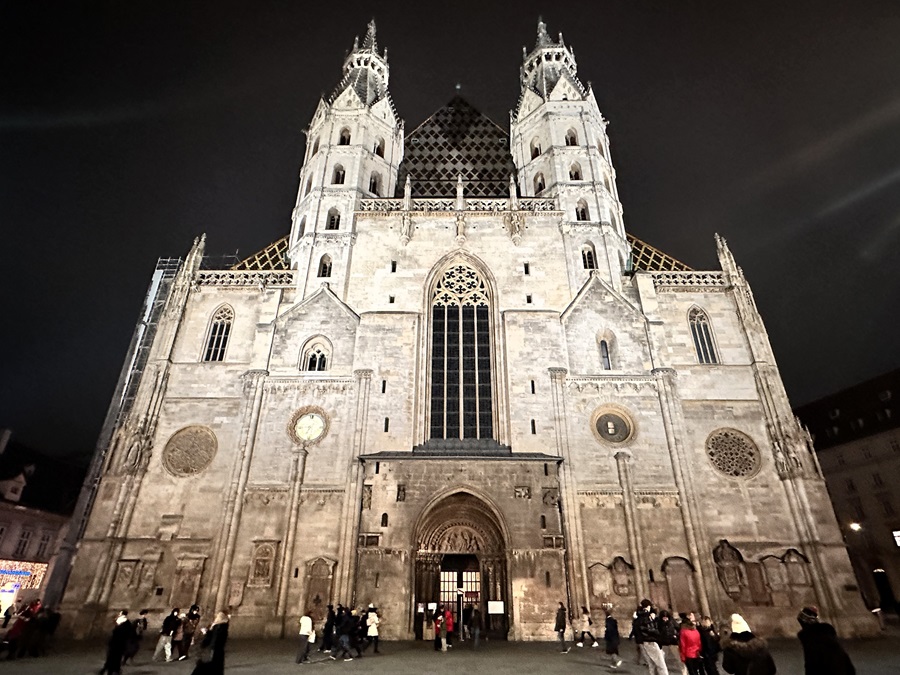
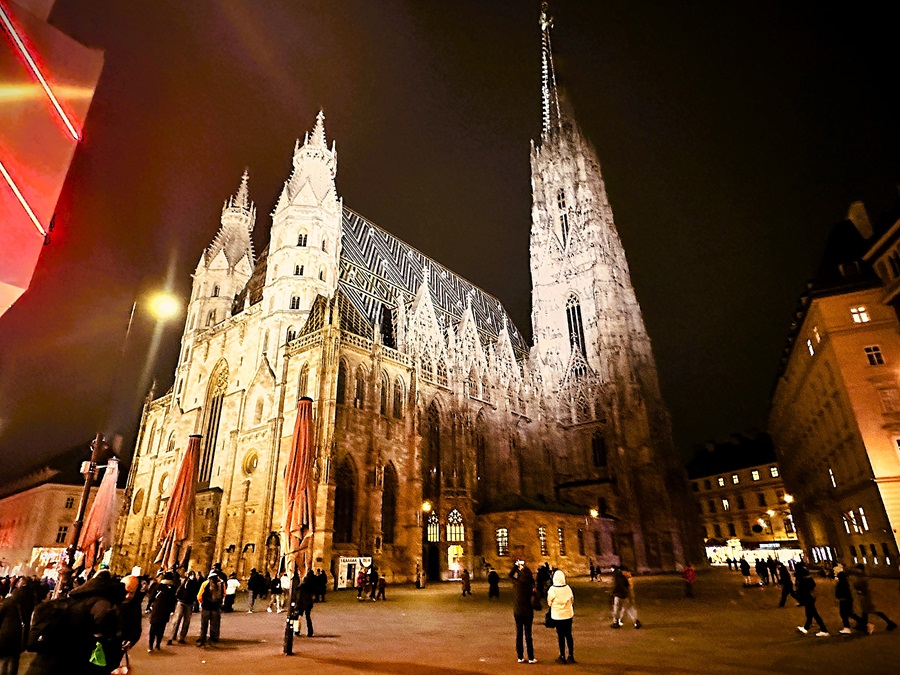
Then, just around the corner, was St. Stephen's Cathedral which was looking fabulous illuminated in the night. The square was busy with people despite the cold. The temperature had dropped tonight to around -3C
We stood for a while to admire the church but we couldn't hang around for too long, the cold was creeping into our bones.
We moved on, past Peterskirche, through Graben square, down Kohlmarkt street, towards Michaelerplatz. Having just eaten we weren't looking for a more food but a nice little bar for a drink was on our radar. However, there weren't many along this route back, so we decided to try happy hour at our hotel bar.
After using the metro last night and coming to the conclusion that it didn't save us any time at all we chose to continue on foot across the Volksgarten towards the Rathaus. The Christmas market and ice rink had almost completey been packed up for another year.
Back at our hotel we asked the barman if he was serving cocktails tonight. At first we thought he was an odd bloke, a bit pretentious, but he had this timeless air about him, like Sam from Casablanca. We soon warmed to him. He asked us about our preferences in cocktails. Julie described something fruity and the first drink that popped into my head was a sour. "I once had a pisco sour" I explained "which was amazing."
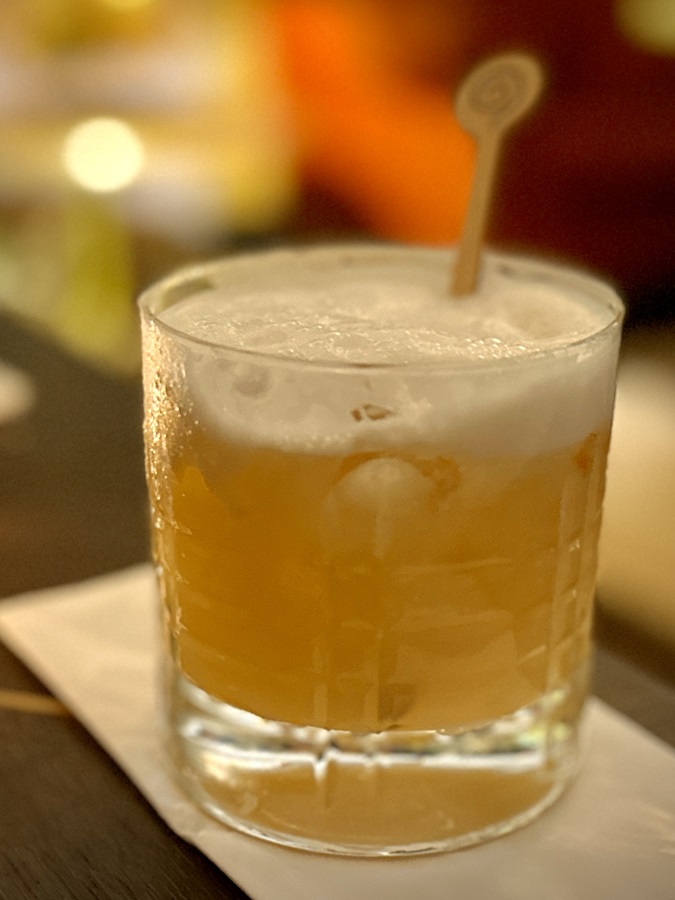
He returned with a Boston Sour for me, a bourbon whiskey sour with an egg white foam on top. "He's made a few of these before" I told Julie. It was delicious. He got the balance between the whisky, the syrup and lemon juice just right.
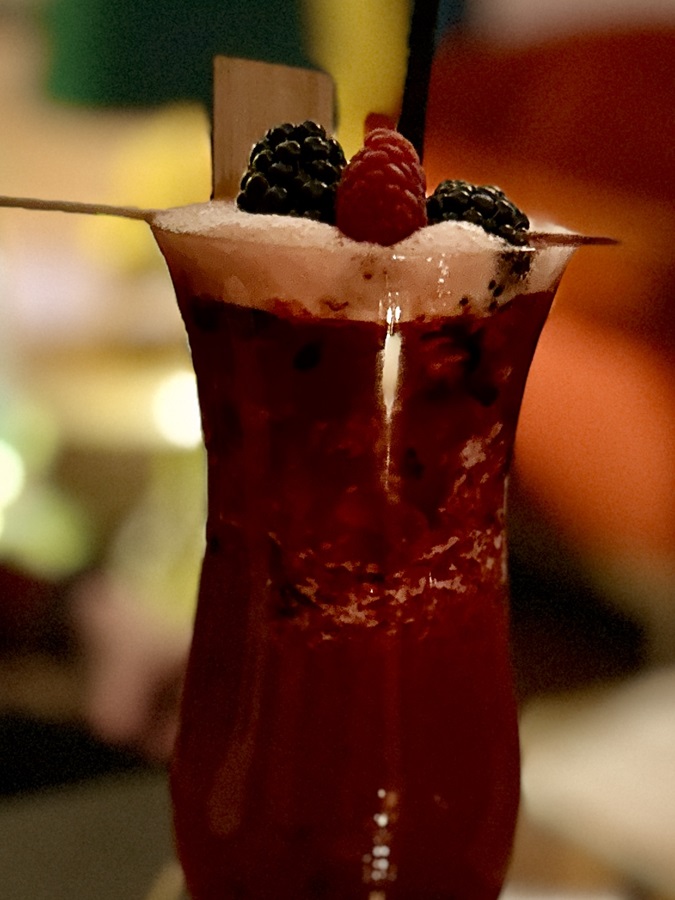
Julie's cocktail looked fabulous, a fruity concoction extraordinaire. "What's this called?" Julie asked the barman. "Oh it's just something I threw together" he answered nonchalantly, hinting at his mastery of mixology. "We should call it 'Oh, Vienna (it means nothing to me)' " I joked, after the popular Ultravox song from the eighties called "Vienna". We got chatting. He was from London originally, and has been a barman for as long as he could remember. I can't remember much of the conversation other than he talked about himself a lot.
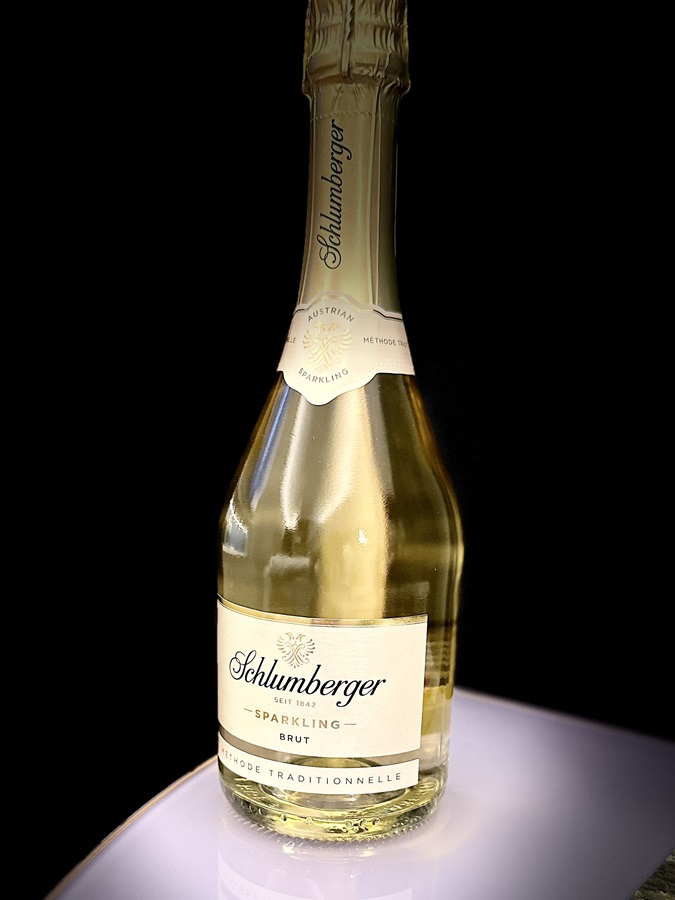
Instead of ordering another drink from the self-proclaimed cocktail genius we headed up to our room. We had a bottle of Schlumberger sparkling wine that needed drinking! We were heading home tomorrow. Next Day >>> |
|
©Copyright 2000 - 2026 Colin Owen |