Skip the Light Fantastic
Thursday 2nd
January 2026
|
|
Oh, Vienna
Skip the Light Fantastic |
|
|
|
We woke up starving this morning, our stomachs felt empty and desperately in need of filling. Thankfully we surfaced between the hours breakfast was still served.
The hot buffet was a disappointment. The rosti tray was empty. Tired looking scrambled eggs was my only choice. Julie had a smokey sausage but it was far too strong in flavour that she couldn't bring herself to eat the rest of it. Thankfully the cold buffet offered more choice and everything was fresh and tasty. We didn't rush but by 10am we had checked out and making our way to the terminal. With the benefit of broad daylight we found the direct route, complete with pavements, all the way to the terminal. If only we had found this way last night! The quickest and cheapest way into the city was by train. It was scheduled to leave the airport every hour. Fortunately we only had to wait 20 minutes before the next one was due.
I had already bought a Vienna City Card to cover the time we were in the city, which included all the public transport plus, with an add-on, included the train to/from the airport. I don't know if it was good value for money but it was certainly peace of mind knowing we could hop on and off train and buses as often as we liked.
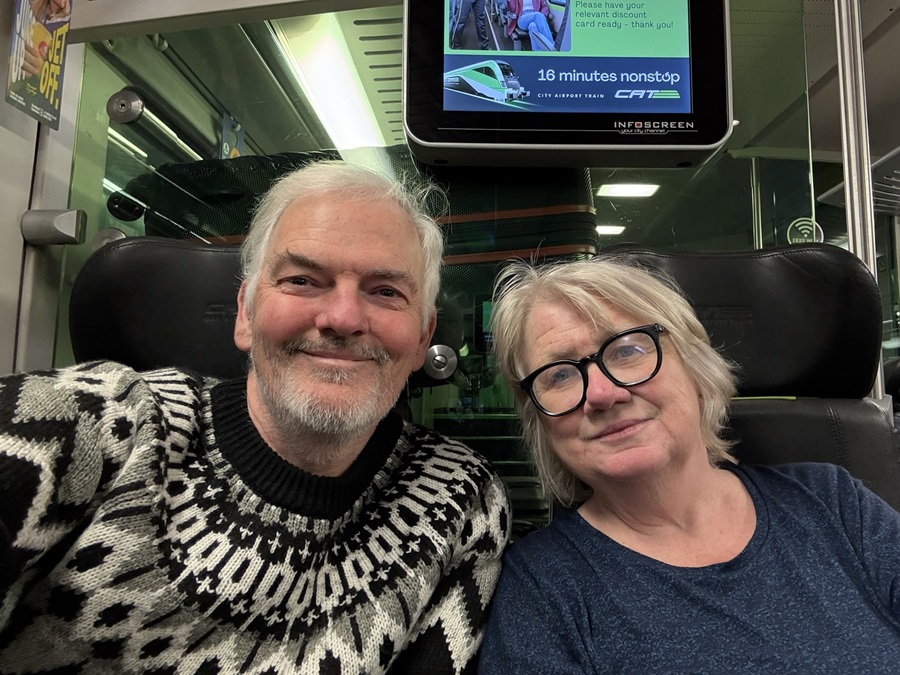
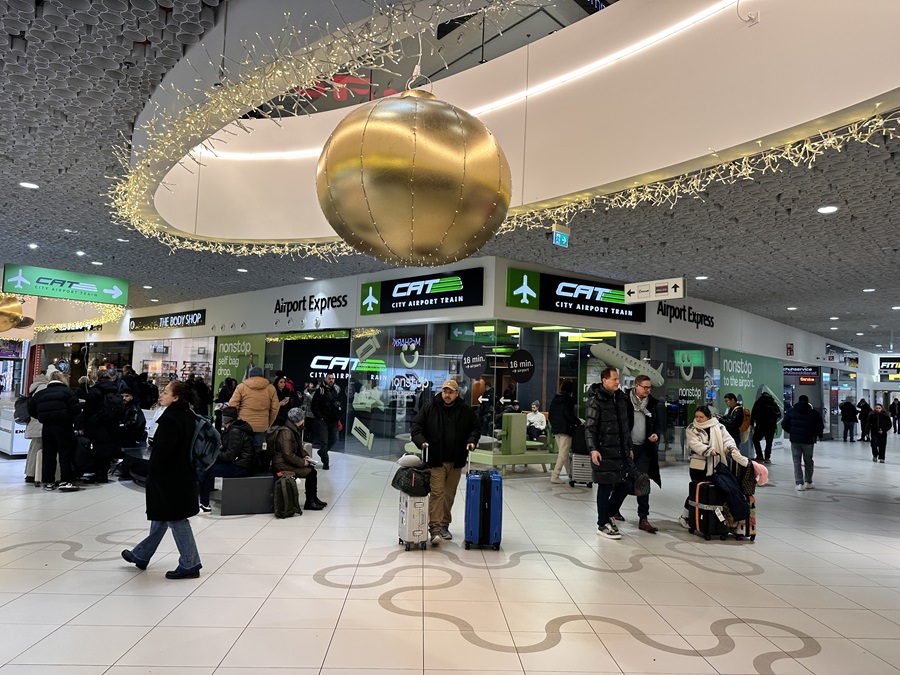
As promised, the non-stop train arrived at Wien Mitte-Landstraße train station inside sixteen minutes. We came out into a modern shopping centre. Some cosy colourful hats caught Julie's eye. She was drawn inside whilst I waited impatiently outside. "I'll buy one later" she said, but we never did come back. Moving on, our next challenge was to find the underground, to catch the U4 to Karlsplatz before changing to the U2 line to Rathaus. "I'm glad we're sober trying to figure this out" I said.
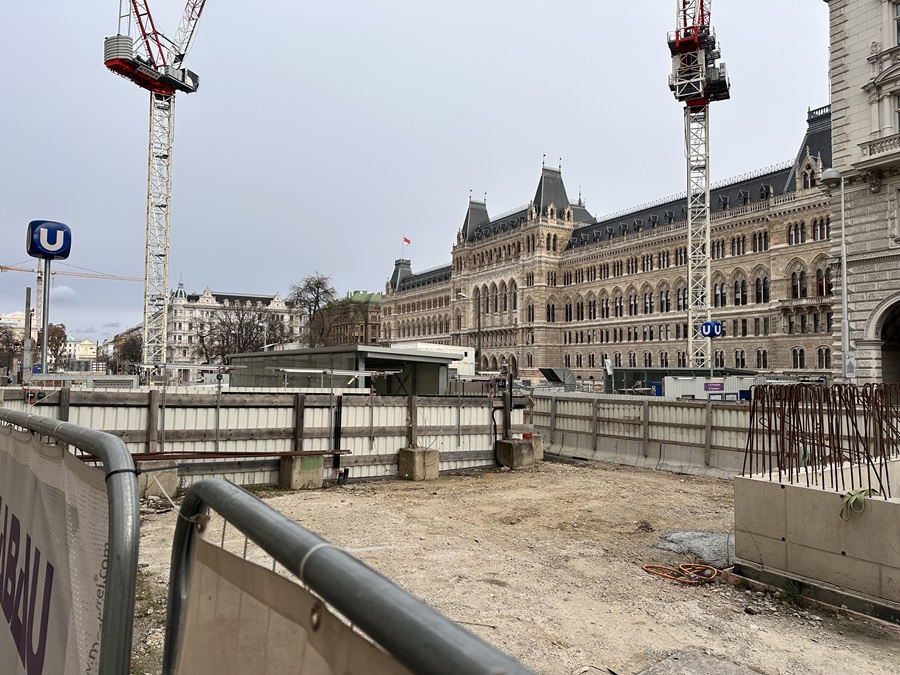
As it happened, it turned out to be really straightforward and in no time we were back up on ground level, coming out to the side of the Rathaus, or city hall. Our first glimpse was disappointing. I was expecting to be wowed by the Gothic architecture of the 19th century building but it was mostly hidden from view, behind tall safety barriers. With two cranes and the noise of jack hammers it was obvious the square, Floriani park, was undergoing major reconstruction.
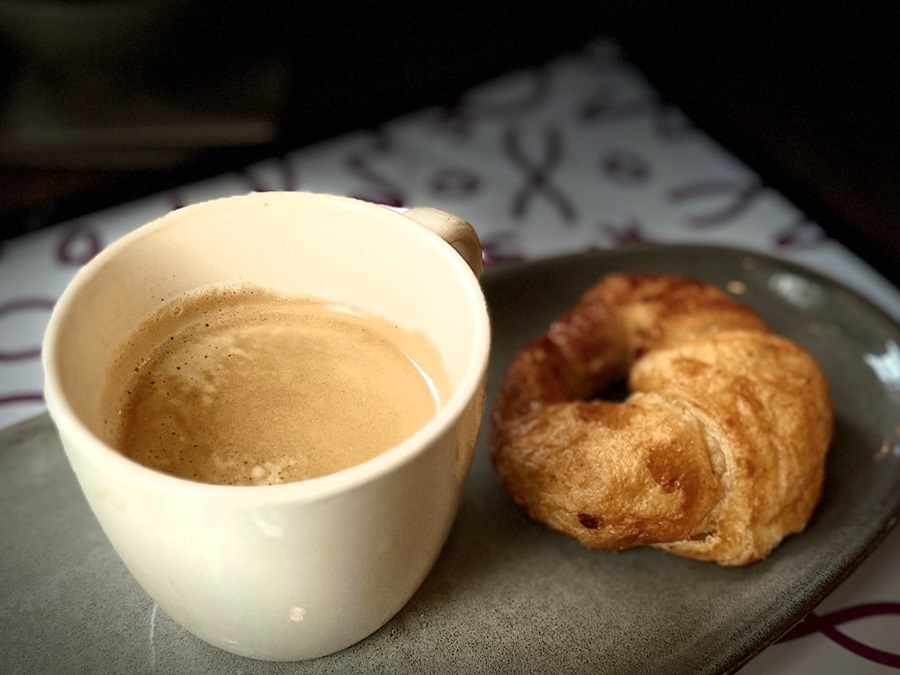
Our hotel, Artist Boutique Hotel, was only a short walk from Floriani park. I don't know what makes a hotel "boutique" but it did have a quirky feel. Living up to it's other name, "Artist", there were several portrait paintings on the walls and a few LED screens with various portraits on loop. We dropped off our luggage with reception, and went through the check-in formalities to save time later, when our room was ready. Before leaving Julie asked if we could sit through in the breakfast room and have some tea or a coffee. They were more than happy to oblige and kindly offered it free of charge. We had a good feeling that we we're going to like this hotel.
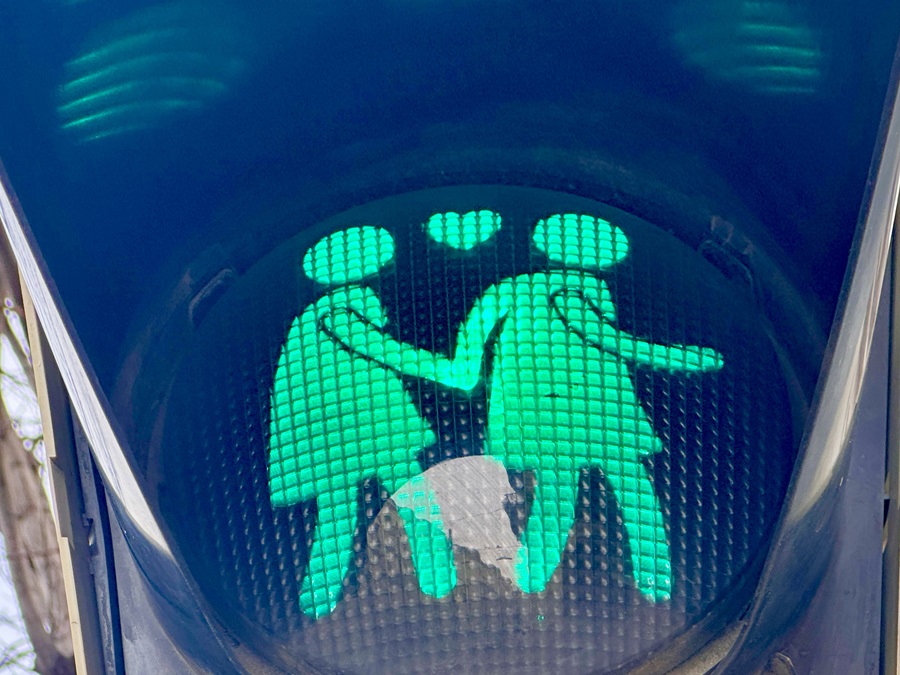
It wasn't until midday we began our walk around the city. At the very first traffic lights we noticed the pedestrian green light. It was a pixilated image of a same-sex couple, crossing hand in hand with a heart between them. These were introduced throughout the city to celebrate diversity and inclusivity when they hosted the Eurovision song contest back in 2015. We were walking down towards the Innere Stadt, the main city centre. A ring road known as the Ringstrasse or Ringstraße using the German eszet letter ß for a sharp S. It was effectively the border, replacing the old fortified walls to this inner city.
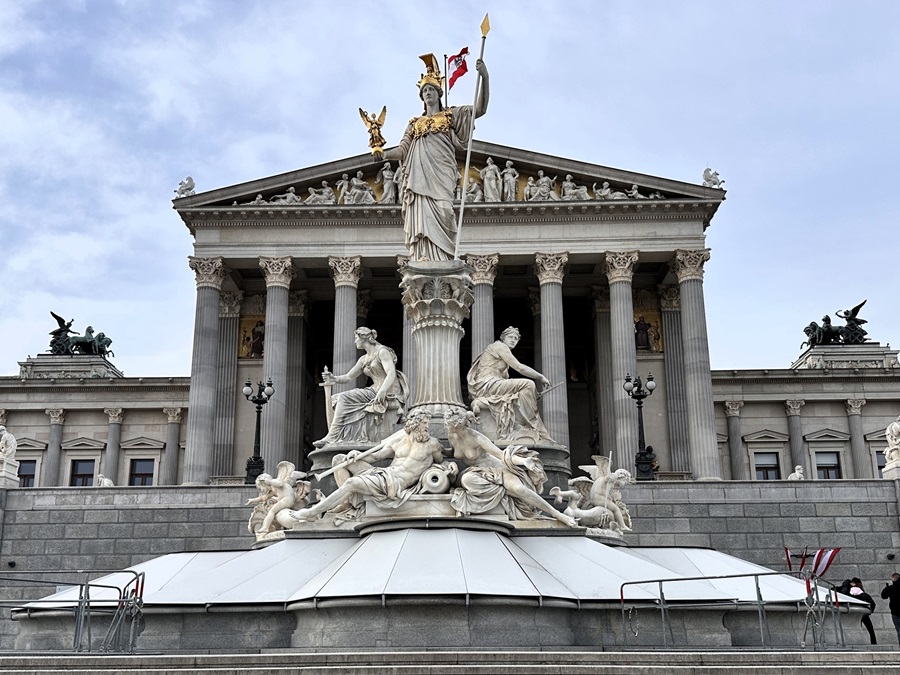
In no time we had reached the ring road and came across the Parliament buidling. It was completed in 1883, the same year as the Rathaus, city hall. At the end of the 19th century Vienna went through a renaissance, similar to Paris and its Belle Epoque period. It must have been an exciting time to be here.
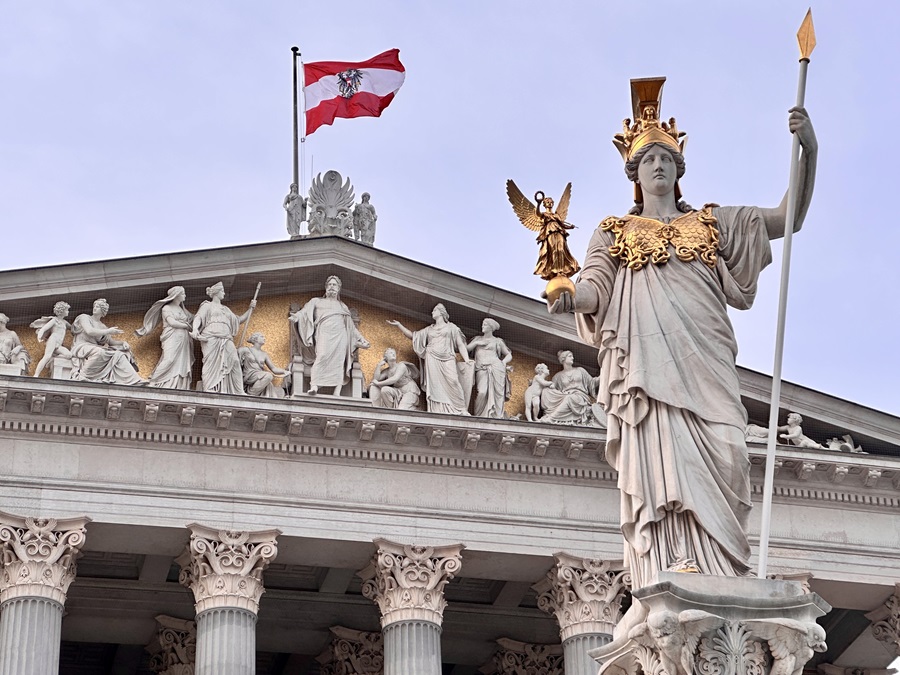
The building itself was impressive, built in the style of a Greek temple, but the Pallas-Athene-Brunnen fountain and statue to the front was stealing the show. The white marble Greek goddes was looking fabulous with her gold breast-plate, helmet, spear tip, and a small golden Nike, the goddess of victory in her hand. We continued on our way, walking towards a row of three bronze busts of prominent Austrians politicians who formed the German-Austrian Republic in 1918. Our route had now deviated from the ring road slightly, going off on a tangent. I got a little disorientated at first but soon realised our error and double backed on ourselves.
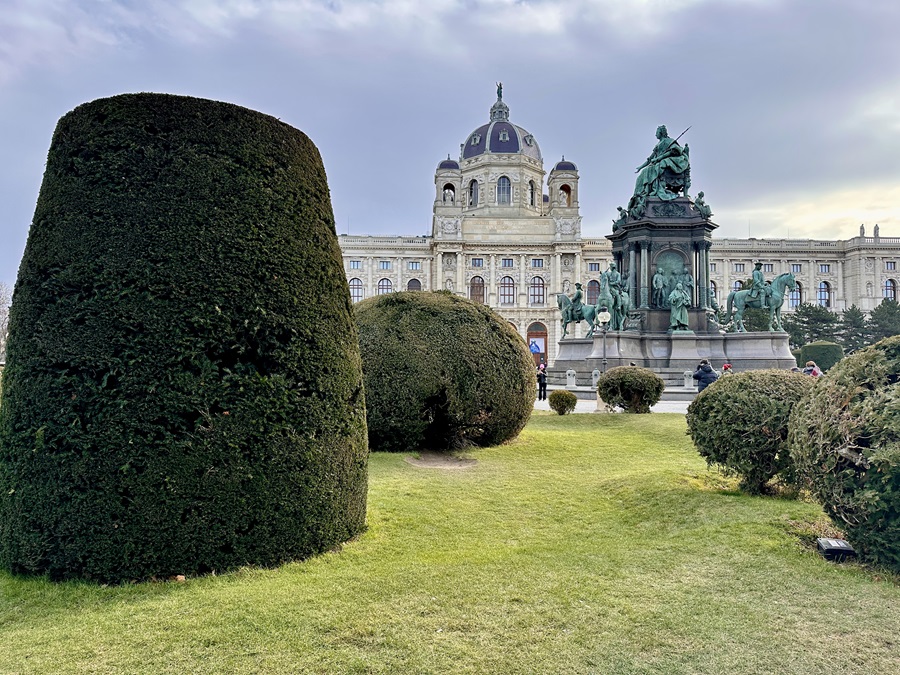
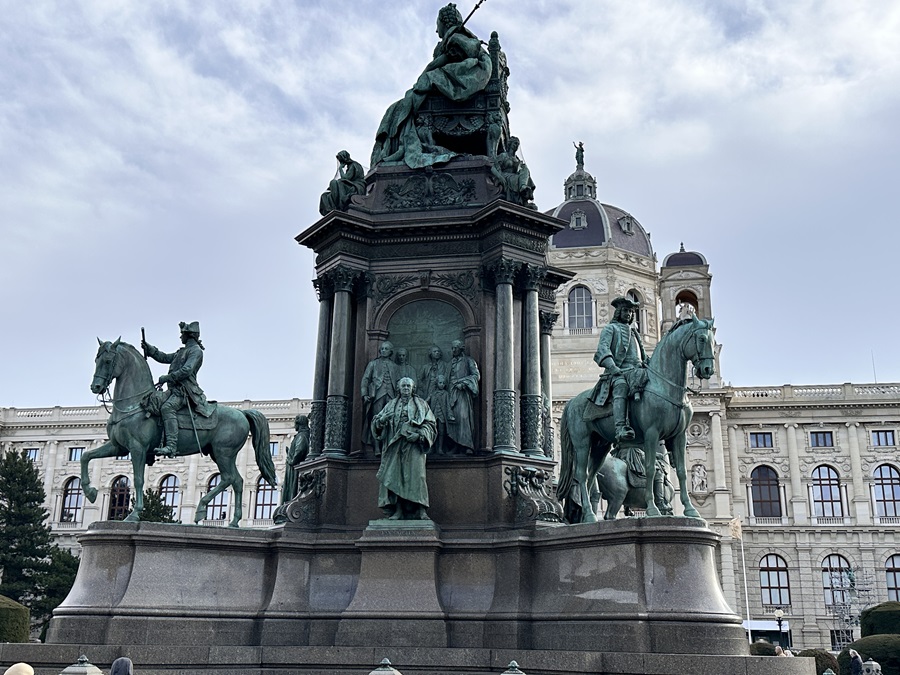
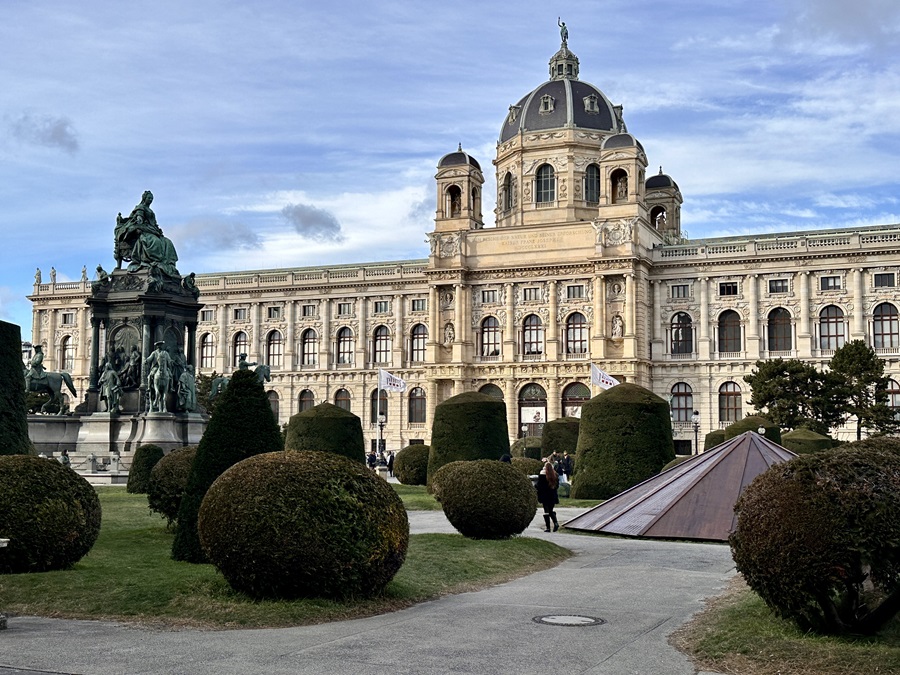
Returning to the Ringstraße we came to the next impressive sight, Maria-Theresia Platz, a large square with two palatial museums, the Kunsthistoriches fine arts museum and the Natural History museum, both completed in 1891, continuing the Belle Epoque explosion of culture in the city.
The park was in honour of Empress Maria Theresa, the 18th century monarch, and only female ruler, of the Hapsburg Empire. In the centre stood an imposing statue of her, overseeing her court of advisors, administrators and military comanders. In the Arts & Science quarter of the pedestal there was even a image in bas relief of the child Wolfang Amadeus Mozart, who was born during her reign.
We walked towards the fine arts museum, however, there was a bit of a queue to get inside, so we side-stepped it. Once again my orientation was off and I ended up leading Julie around the back of the building, pretending to admire the architeture, before completing a circle and returning to Maria Theresin Platz.
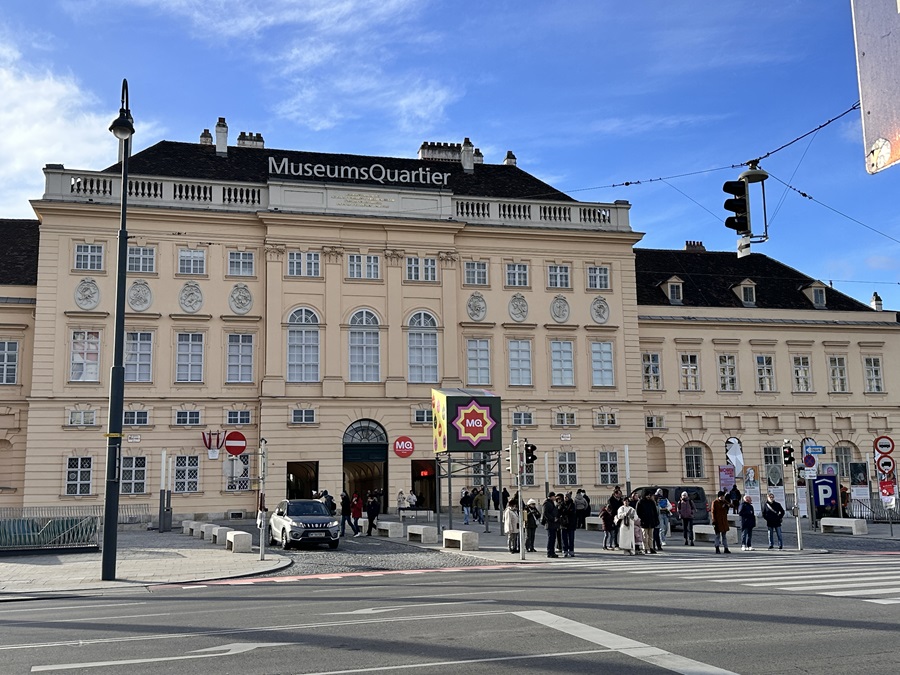
It wasn't a completely futile march as it brought us to the other end of Maria Theresin Platz opposite the Museums-Quartier, and a visit to the Leopold museum was on my "to do" list.
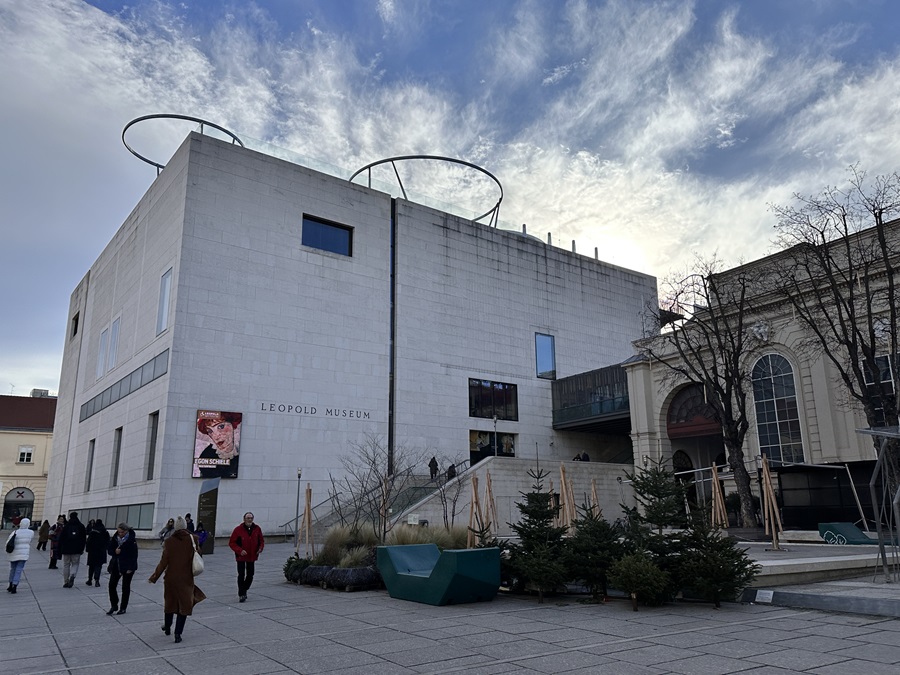
Housed in the former Imperial Horse stables, we entered through the main arch and came to a large inner courtyard. To the left was a stark concrete block of a building with hardly any windows which housed the Leopold museum. It was established by an art collector called Rudolf Leopold and has the largest collection of Austrian modern art. There was controvesy recently about some of the artwork may have been looted by the Nazi's during the second world war. I don't know if its all settled by now. Anyway, we paid our entrance fee and then queued to stash our coats and my small rucksack in a locker. We were begining to feel a little hungry. I remembered there was a cafe inside the museum, so we decided to grab some lunch there.
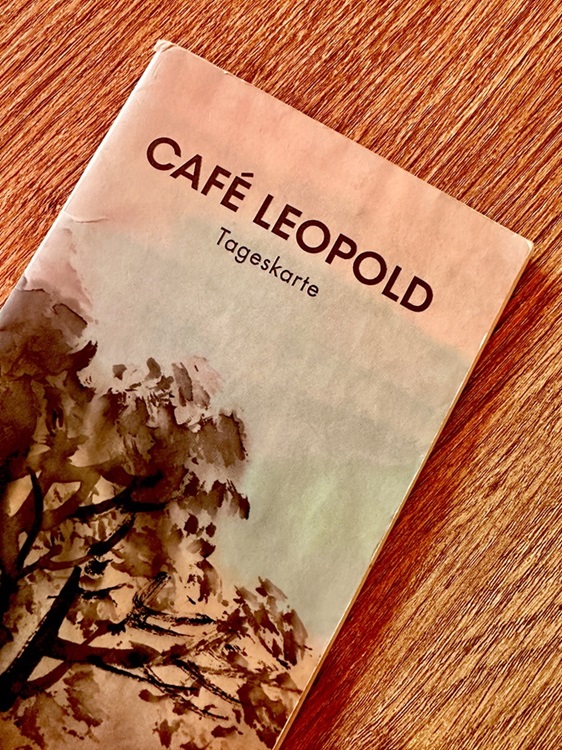
Cafe Leopold was on a mezzanine floor, between the first and second. It was very popular. Luckily they did have a table for two. The waiter brought out two menus. The cover had this Japanese style watercolour painting of a tree. The penny then dropped. We could kiss goodbye any chance of a schnitzel or a strudle here. Cafe Leopold was an Asian inspired restaurant.
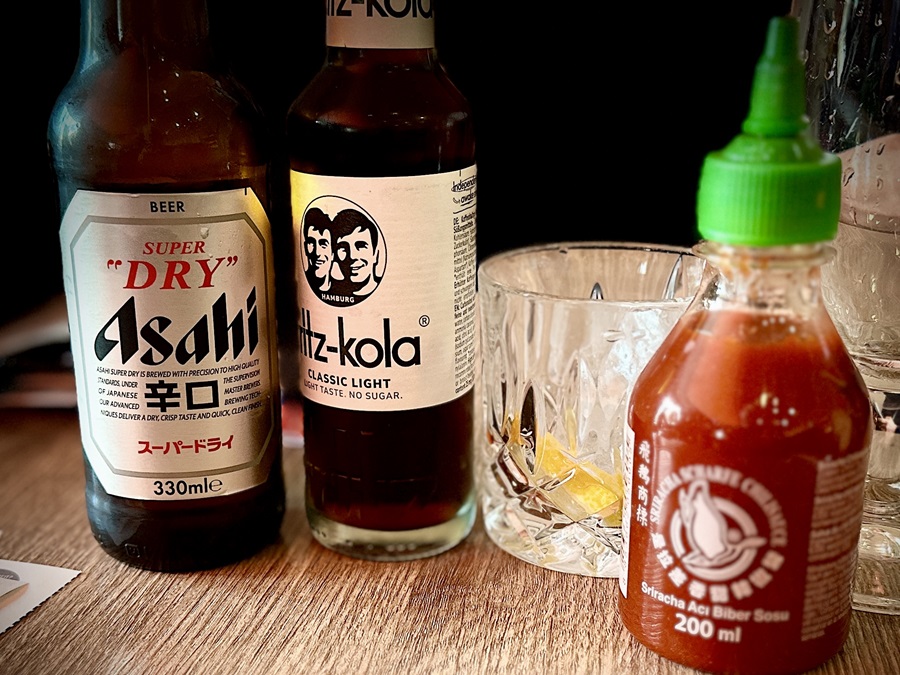
Even the beer choices were from the land of the rising sun. I opted for the Asahi which I've enjoyed before. Julie kept it soft and went for the Fritz-kola. "Oh my God" she went "this is delicious!" The menu choices were a bit unexpected so it threw Julie a little.
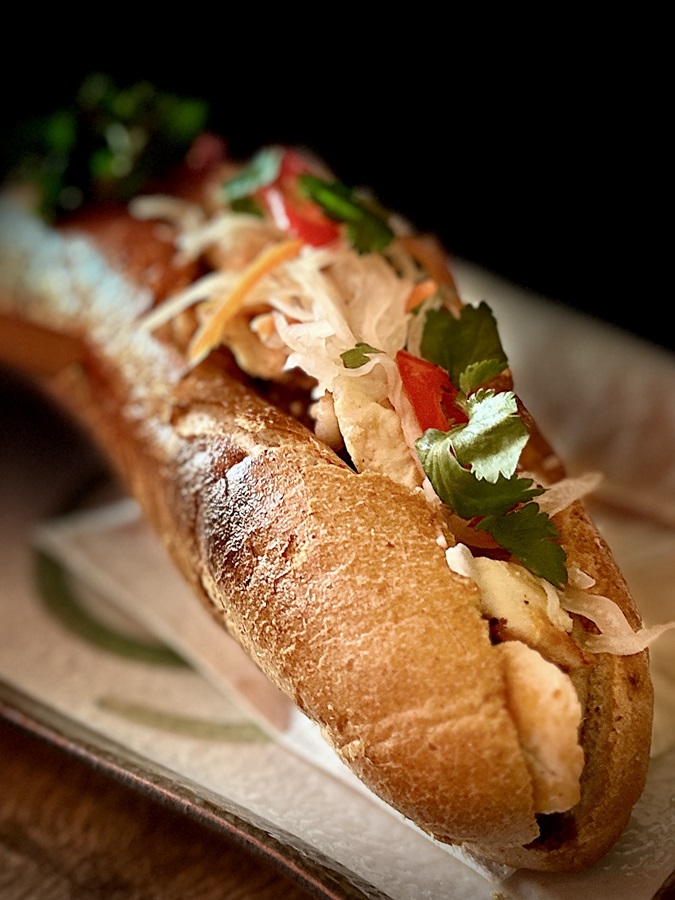
She eventually decided to try the chicken Bahn Mi, a French-inspired Vietnamese filled baguette. When it arrived she could see it was laced with strands of what looked like sauerkraut. She put on a brave face and tucked in, ending up actually enjoying it, despite the fermented cabbage.
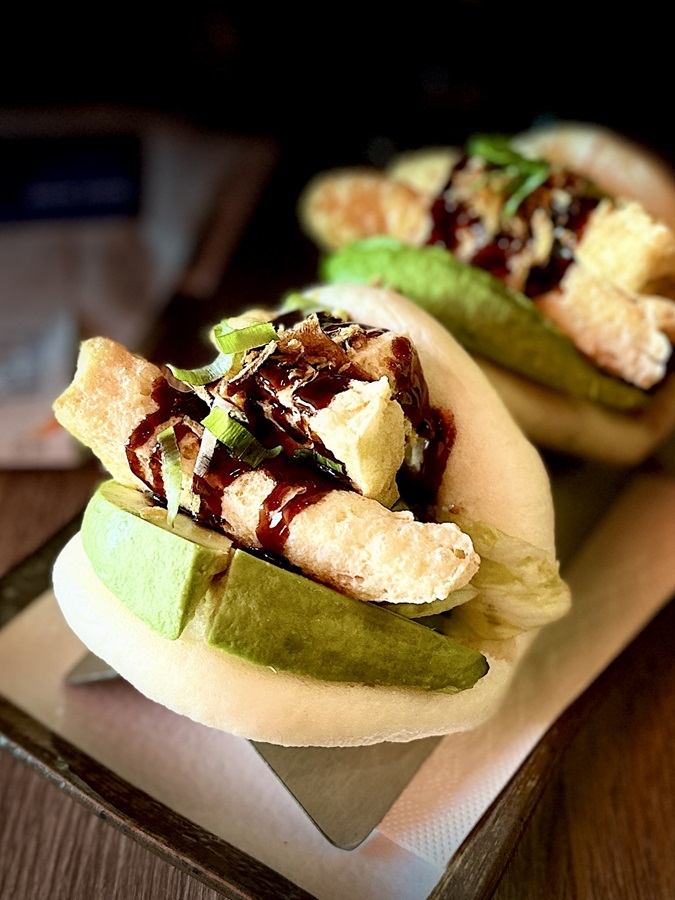
I had plenty of meat-free choices, from Korean Bibimbap, Vietnamese tofu Bahn-Mi, or Chinese Bao buns. I chose the steamed buns filled with tofu. I used to serve something similar from my vegetarian food truck, although mine were tastier! After lunch we had to show our tickets to re-enter the museum. Cafe Leopold also had a public entrance, so you could dine without having to buy a ticket.
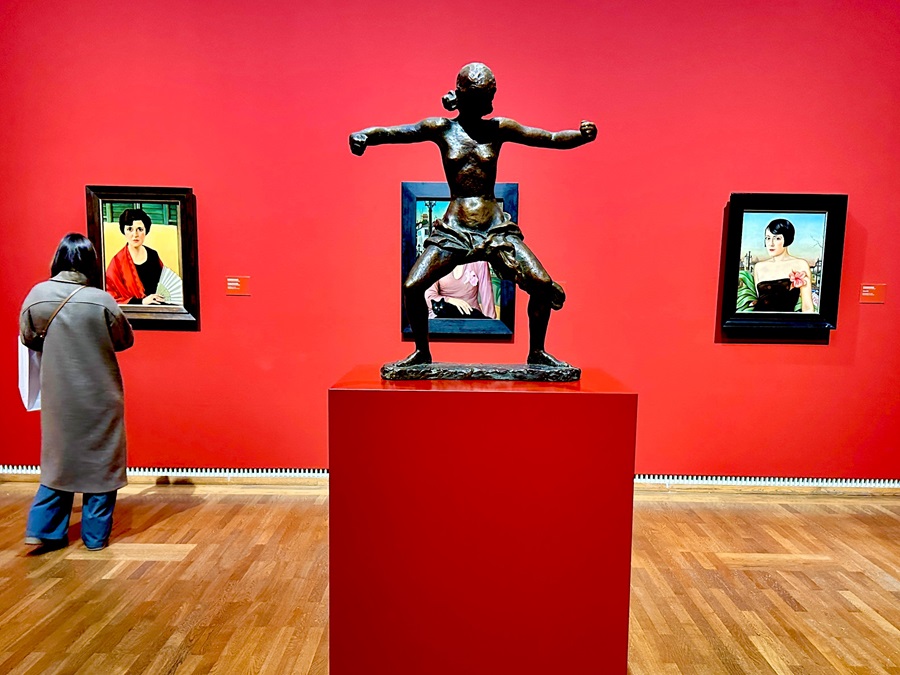
We return to the ground floor and methodically worked our way through all the rooms. Our free pamphlet acted as our guide. On each floor it identified the highlights and we made a point of searching them out. The first floor acquainted us with artists such as Alexej van Jawlensky, Christian Schad, and Lucian Freud. None of which I had heard of before.
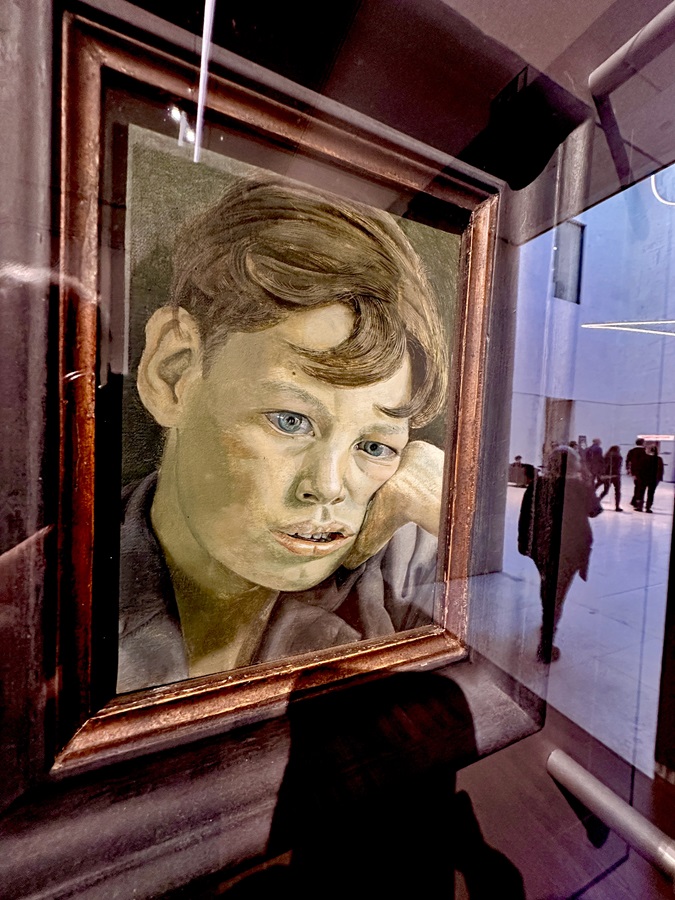
Lucian Freud, although born in Berlin, was considered a British artist. He lived near Paddington in London. A small portrait called "Boy's Head" was behind toughened glass. I could only assumed it was considered a more valuable piece than the rest.
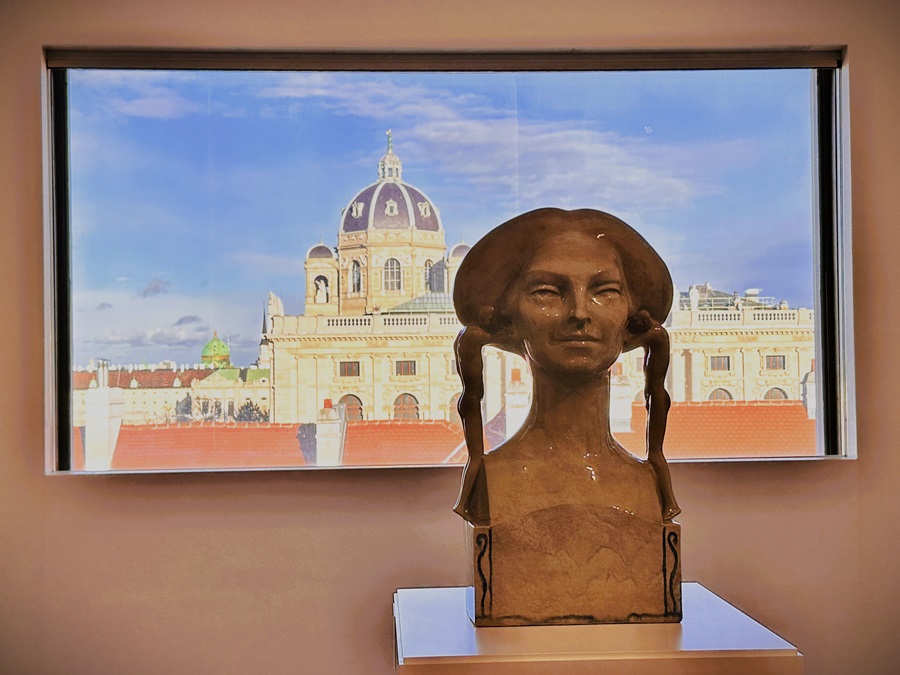
It wasn't all just paintings on the walls, there were also a few bronze sculptures and ceramic heads in the empty space in the centre of the rooms. All were fascinating.
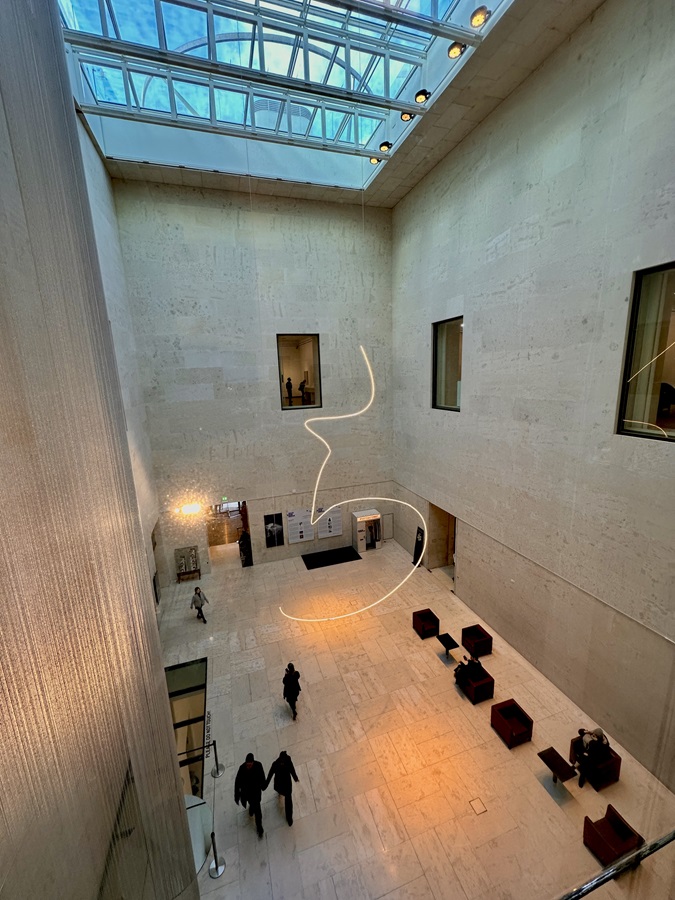
We went up a floor where we could see into the atrium. An odd squiggle of LED lighting suddenly became an art installation.
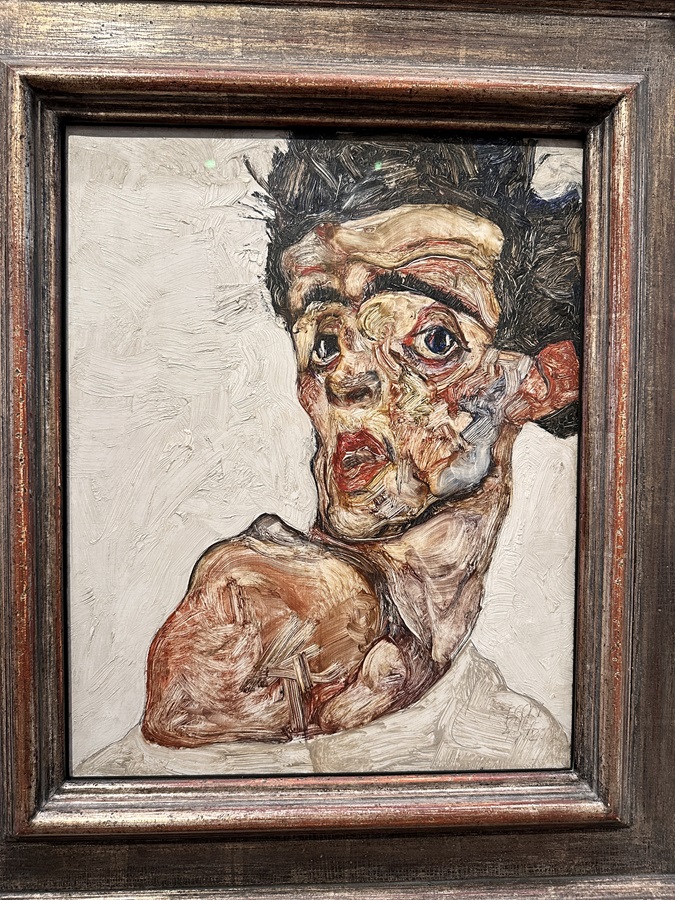
On this floor was a collection of work by artist Egon Schiele. I had never heard of him before but I really liked his contorted human figures. They looked tormented, even his self-portraits weren't complimentary.
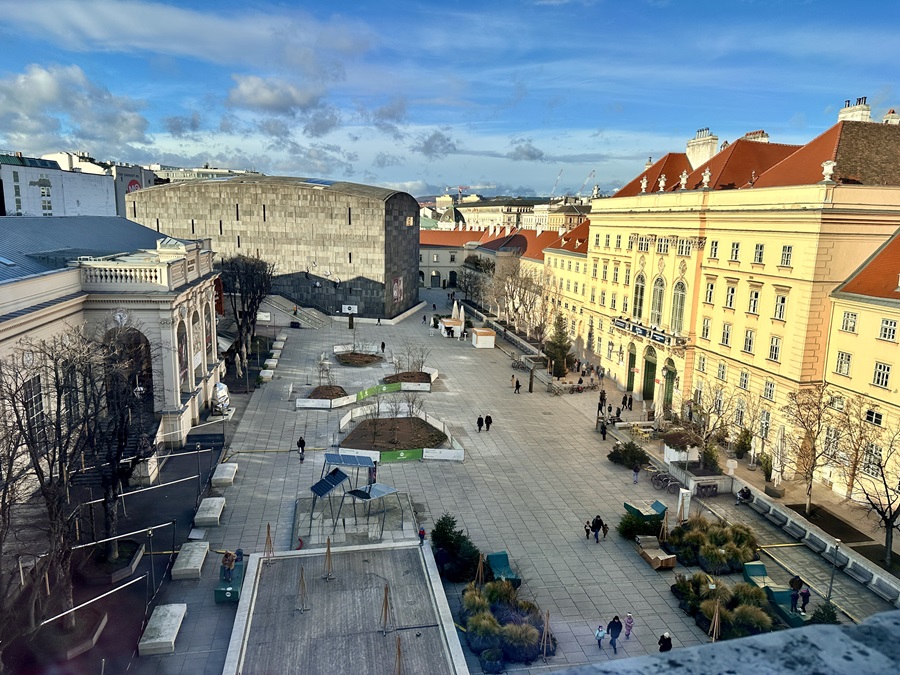
On the next floor we came to one of the few windows looking out. It overlooked the inner courtyard where we could see on the far side the Mumok museum, another stark minimalist building. On the left was another museum called the Kunsthalle. You could really spend all day just within the Museum Quarter.
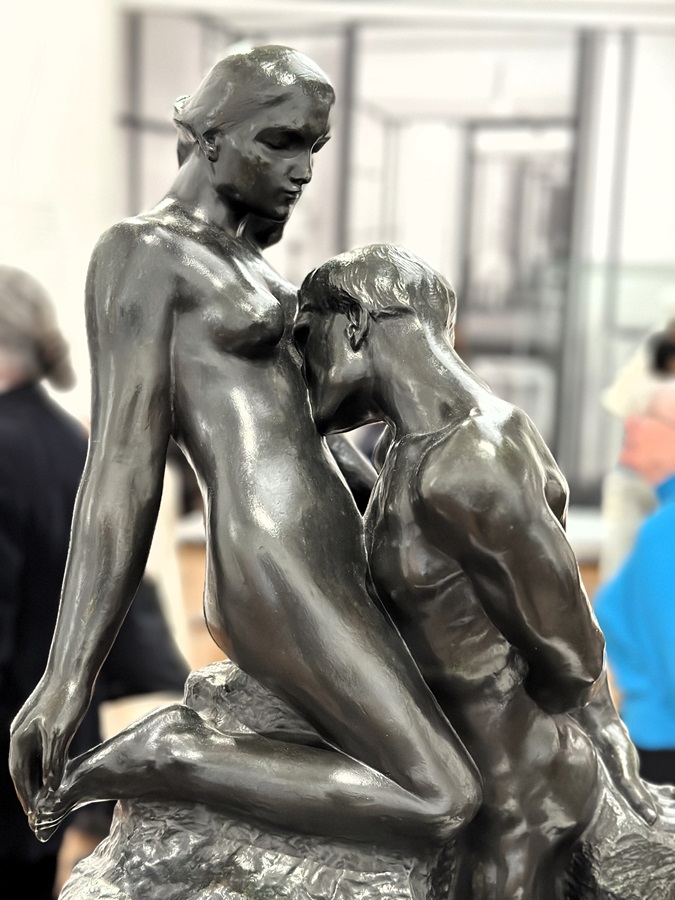
Up another floor we came across a sculpture I recognised. It was called The Eternal Idol by Auguste Rodin. I knew it because it was on the cover of a Black Sabbath album called The Eternal Idol, released in 1987. It was a stunning. I couldn't stop gazing at its sensual form. However, this wasn't the original. It was a bronze cast of Rodin's marble sculpture.
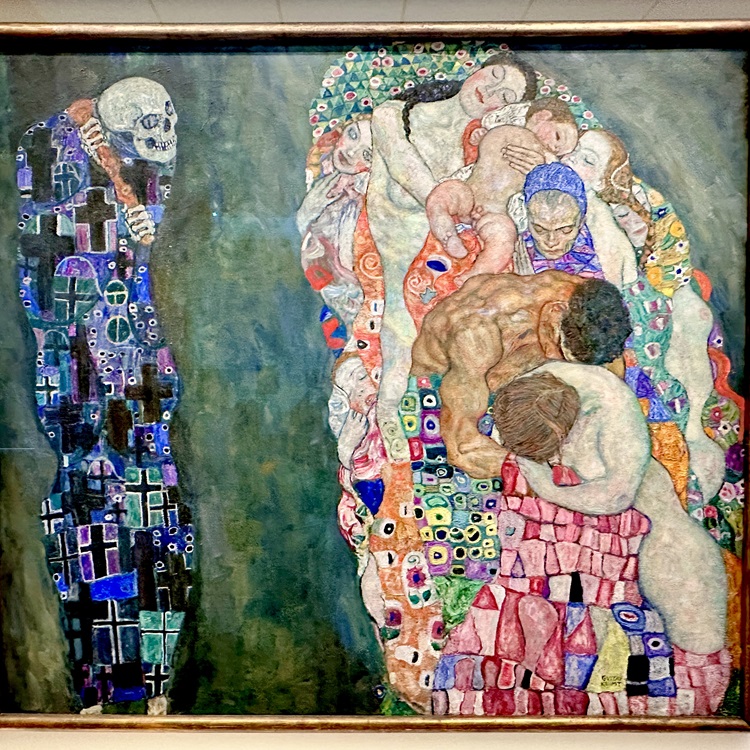
Next we came to an artist that many people will have heard of, Gustav Klimt. Several of his paintings were regular, almost undistinguishable from any other artist but then he found his stride, his own signature style, and it's these Art Noveau that he is best known for.
Death and Life, was incredible. Death, a skeleton cloaked in a dark robe of crucifixes, holding a club, as if about to strike, looked on over Life, a bright cluster of fair skinned naked bodies, embracing, holding aloft a baby. A muscular bronze skin toned man seems to comfort a woman, whilst a face that didn't seem to belong in Life, an older woman with a sallow complexion, looks down on them. The scene feels tragic, as if death was near. Perhaps the old woman was dying whilst, at the same time, life was being born, the circle of life in full. It had captured my attention, for sure.
We moved on, to another floor, to a window with great views of the Kunsthistoriches fine arts museum. On this level we had works from Koloman Moser, a contemporary of Gustav Klimt.
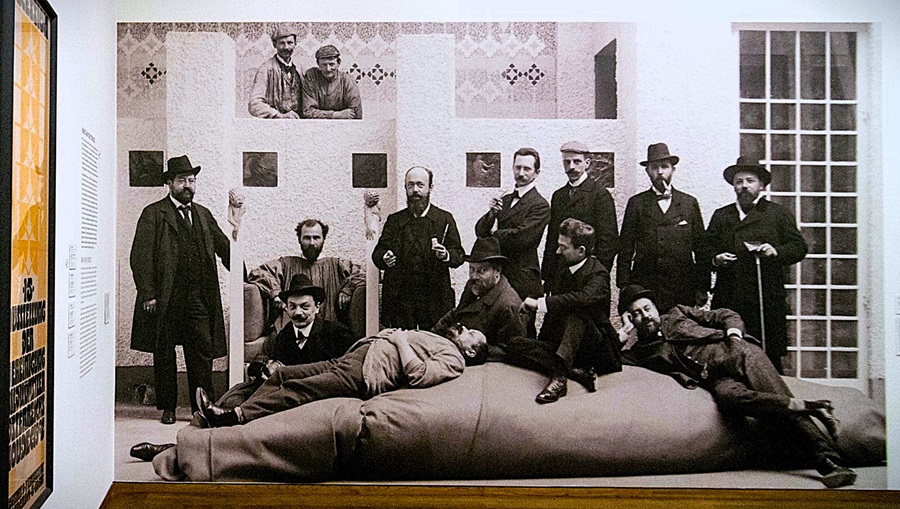
They were both founding members of the Vienna Secession, a club of like minded individuals, creative types such as artists, designers, architects, who in 1897 broke away from the traditional confines of the establishment. They even built their own temple to their movement, a clubhouse for its members. There was a great photograph of them all on the wall. They were all smartly dressed except for Gustav Klimt who was still in his artist's shmock.
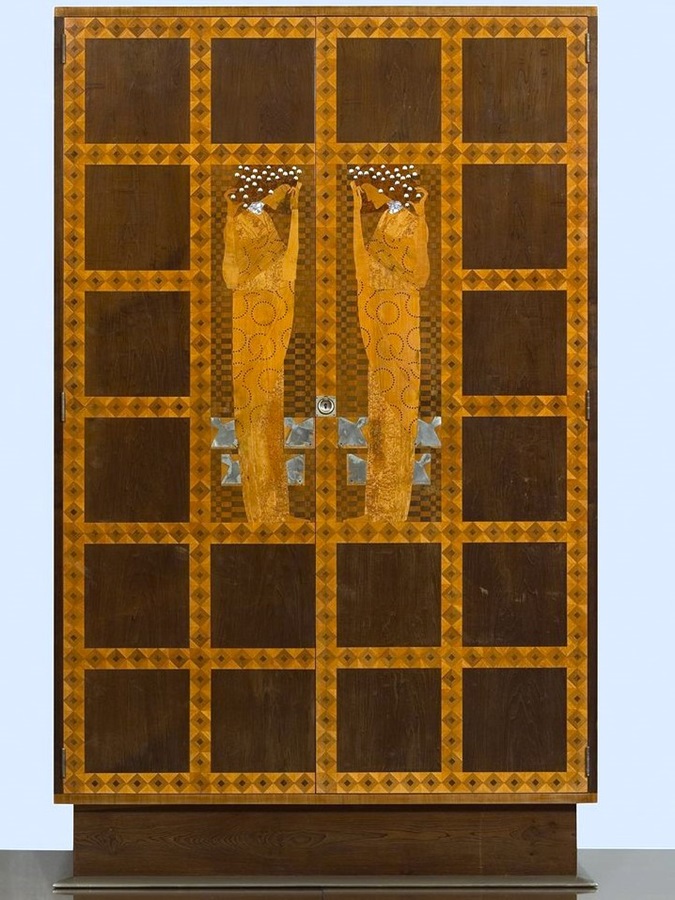
In addition to paintings, they had on display furnture that was also influenced by the Austrian Secession. It did seem a little out of place, however it hightlighted the influence of the movement on other areas. There was no mention of it here, and probably nowhere else in Vienna but I remembered reading that a young Adolf Hitler harboured ambitions to be an artist. At eighteen years old he moved to Vienna for six years, between 1907-1913 trying to make a name for himself but he twice failed his entrance exam into the Academy of Fine Arts. I wondered would history have been different if he had succeeded? Probably not. Anyway, it was almost time to check-in to our hotel room. So we left the Leopold, retracing our steps through Maria Theresin Platz, and back towards the parliament. We then continued up the Ringstraße to Rathausplatz.
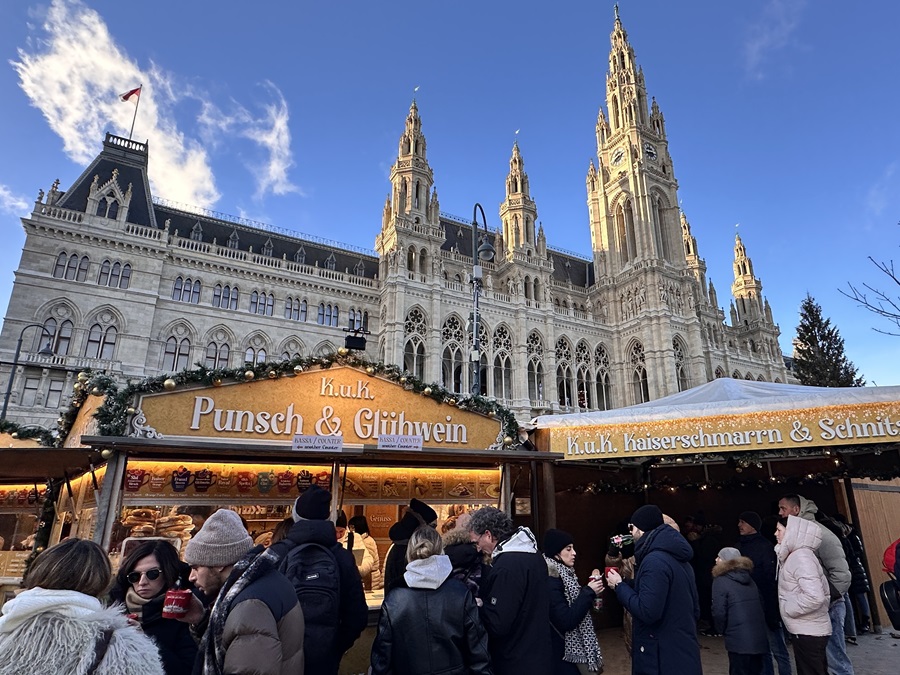
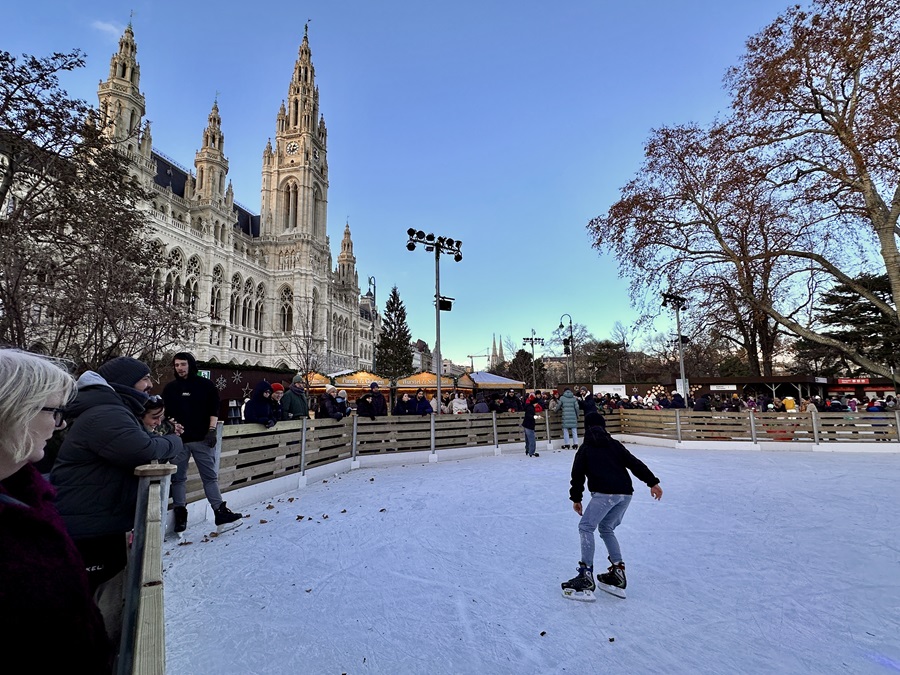
We came across a small Christmas market with stalls selling Glühwein and Punsch. They also sold a traditional Austrian dessert like Kaiserschmarrn, shredded thick pancake-like pieces. As well as Schitzel, Pretzel and much more.
There was also an ice skating rink, although it was more of a circuit that meandered around the park, like an icy path. There was a lovely atmosphere as children and adults alike put on their skates and shuffled along the track. There were a few who could skate properly and whizzed around showing everyone how it's done. We decided against giving it a go. I have a past trauma involving slicing open my thumb on someone else's blade.
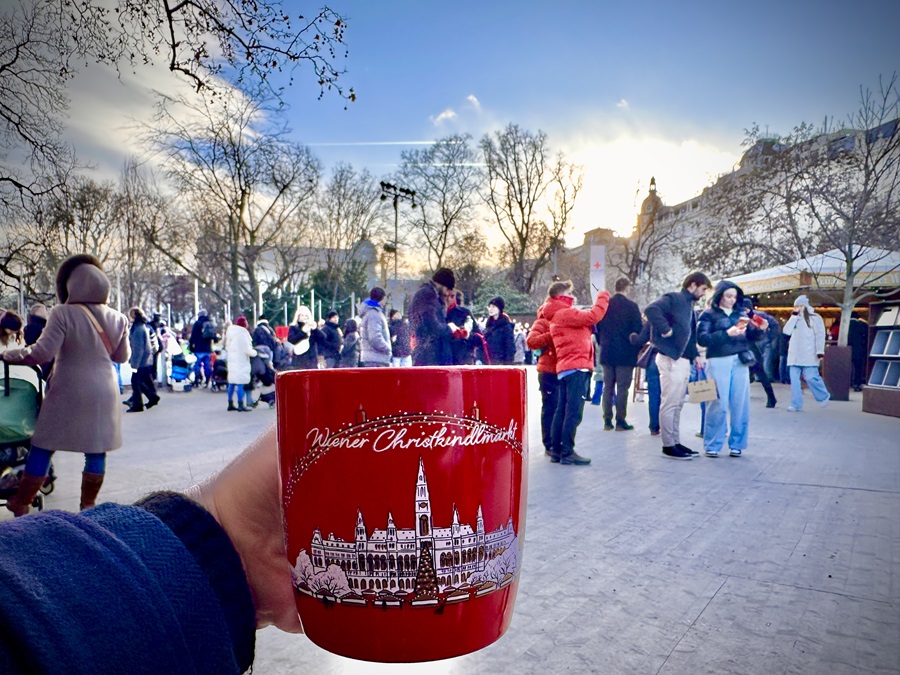
It was a lovely sunny day but it was proper cold so I bought a large mug of Gluhwein to warm myself up. I had to pay a deposit of €5 for a Wiener Christindlmarkt mug. It wasn't that expensive, but the deal was you either kept it, or simply returned it to get your refund. In the end I kept it, mostly because I couldn't be bothered to queue again to get my €5 back. We sat on a bench and people watched for a while, whilst I sipped my warming, super sweet, slightly alcoholic fruity drink.
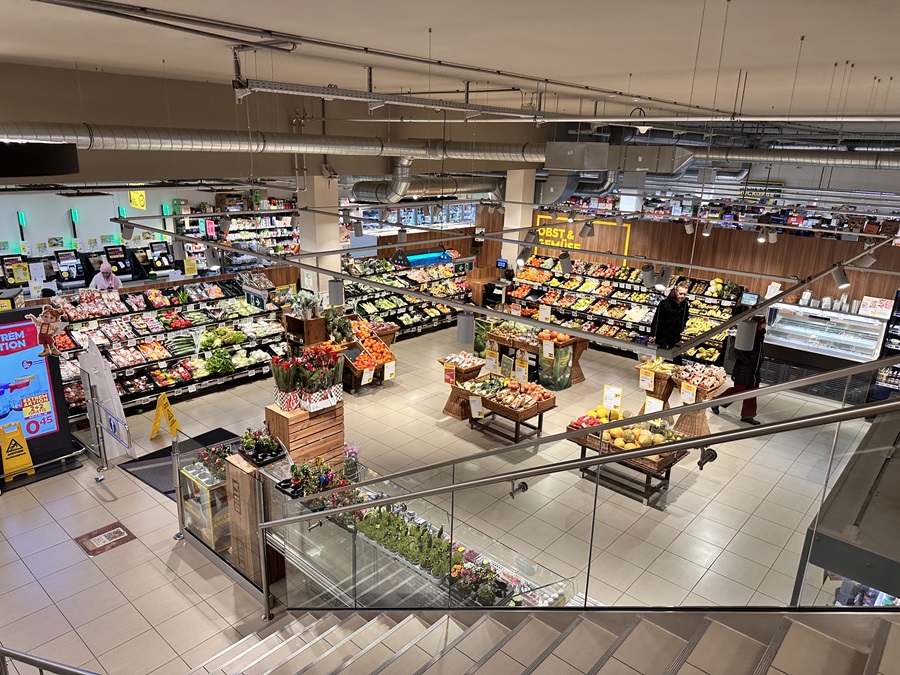
We left the Chritmas market, calling at a Billa supermarktet on the way back to the hotel for some water for the room and pastries for the morning. In the past we would always stay in an apartment and would have been stocking up on supplies but recently we've moved away from the airbnb accomodation. It's become a problem in many cities where locals are being priced out of the housing and rental markets, not too dissimilar to the second home problem in North Wales.
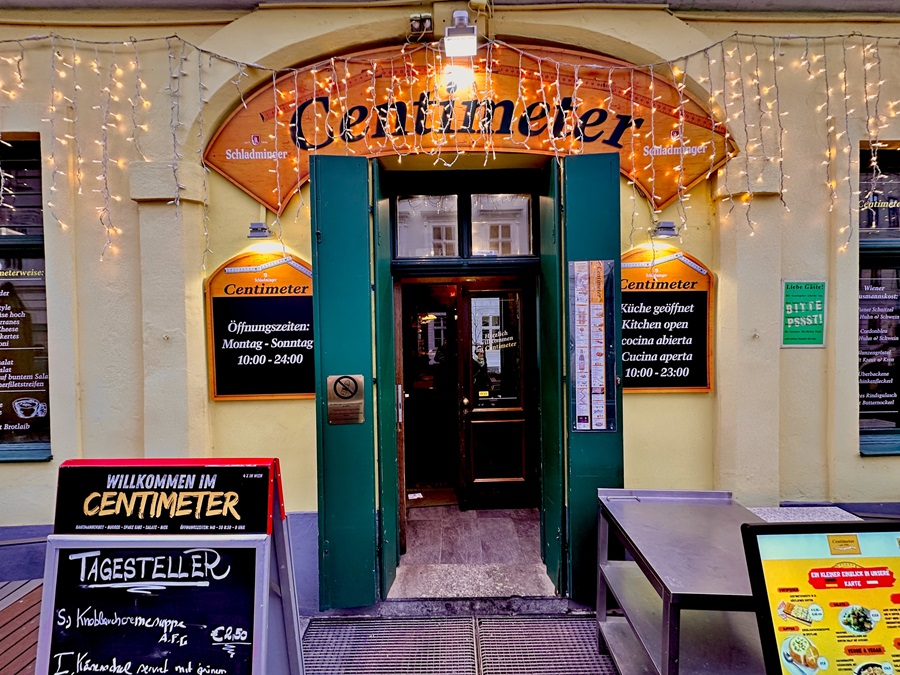
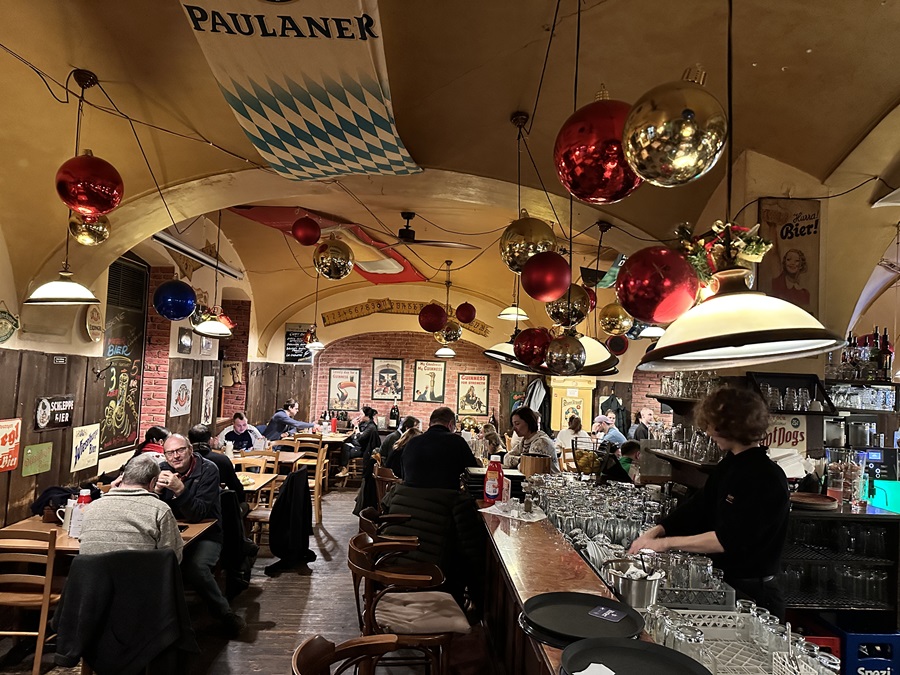
Just before reaching our hotel we called in a bar called Centimeter. It was so called because they sold small plates and their beer tasters on a 100 centimeter sharing boards! They also did "home-cooked" traditional food as well as the usual burgers.
We weren't here for the food, although plenty of other people were busy eating. We sat at the bar and had a drink. It had a great bierkeller vibe.
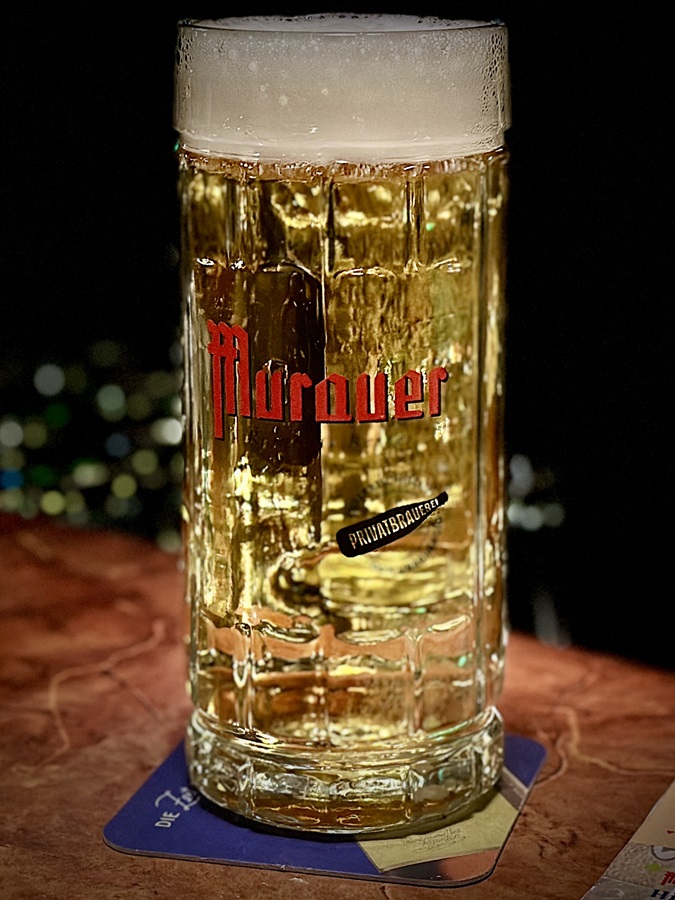
I ordered a lager called Hirter but the barman suggested I didn't want to drink that. He recommended Murquer. "It's much better in my opinion" he said. Before agreeing I checked out the price, and they weren't much different. The beer arrived in its appropriate glass, which believe it or not does make a difference! It was a good beer, light and refreshing. Nothing special though.
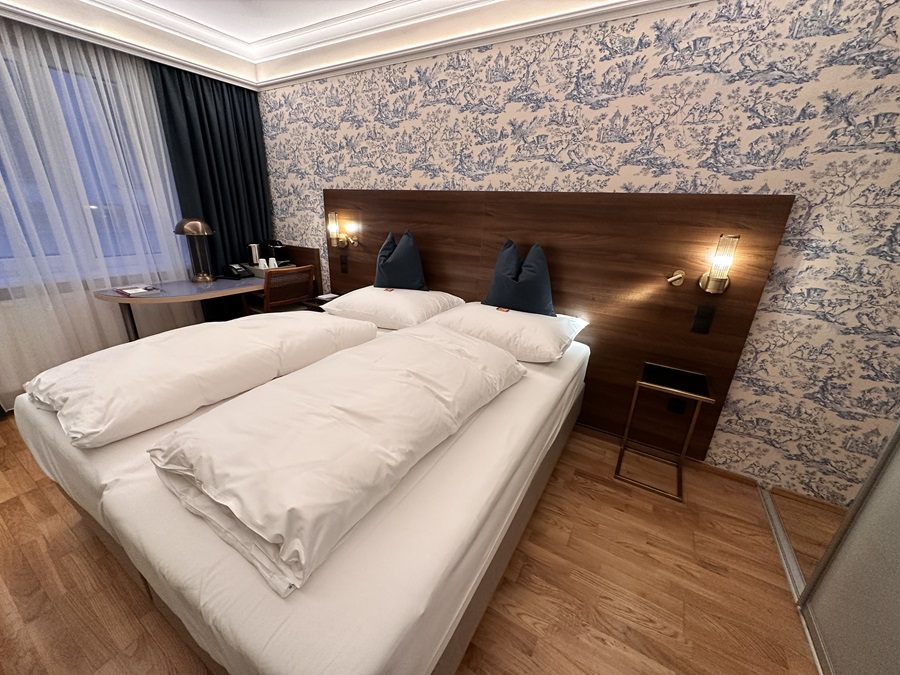
It was 4pm by the time we collected our room key from the hotel reception and made our way to our room. Each room was dedicated to a particular creative artist and ours, room 104 was in honour of Hans Moser, a well-known Austrian actor. We settled down for some relaxation.
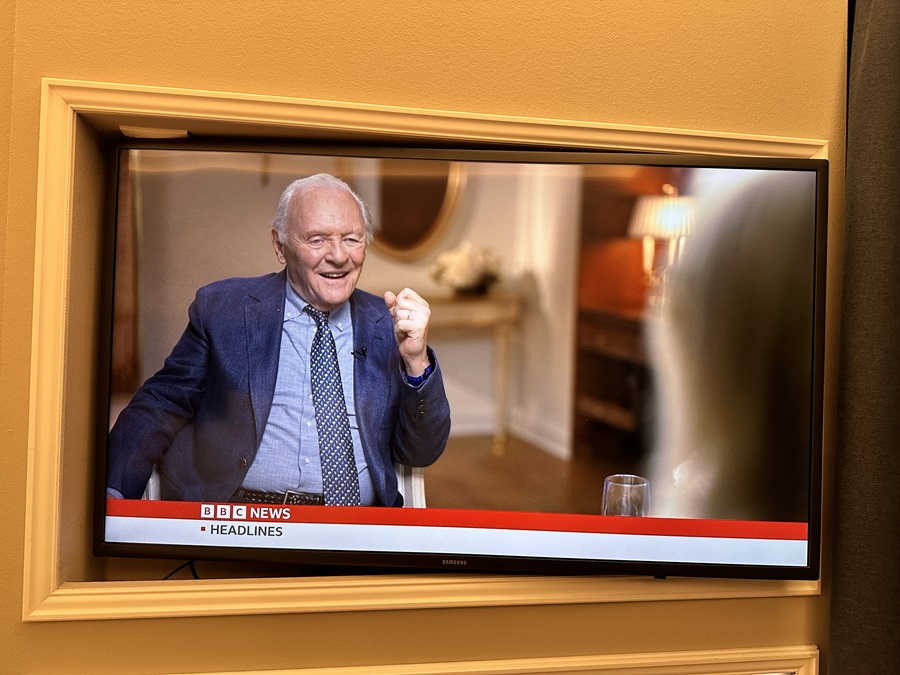
Some what appropriately we turned on the TV and watched a BBC interview with our own creative artist, Sir Anthony Hopkins, Welsh actor and National treasure. He had some very interesting stories. We didn't stay in our room for long. I had booked tickets to see the Imperial Lights at Schloss Schönbrunn. They were allocated for a certain time slot but I had paid a little extra to arrive at any time, so at 6pm we headed out.
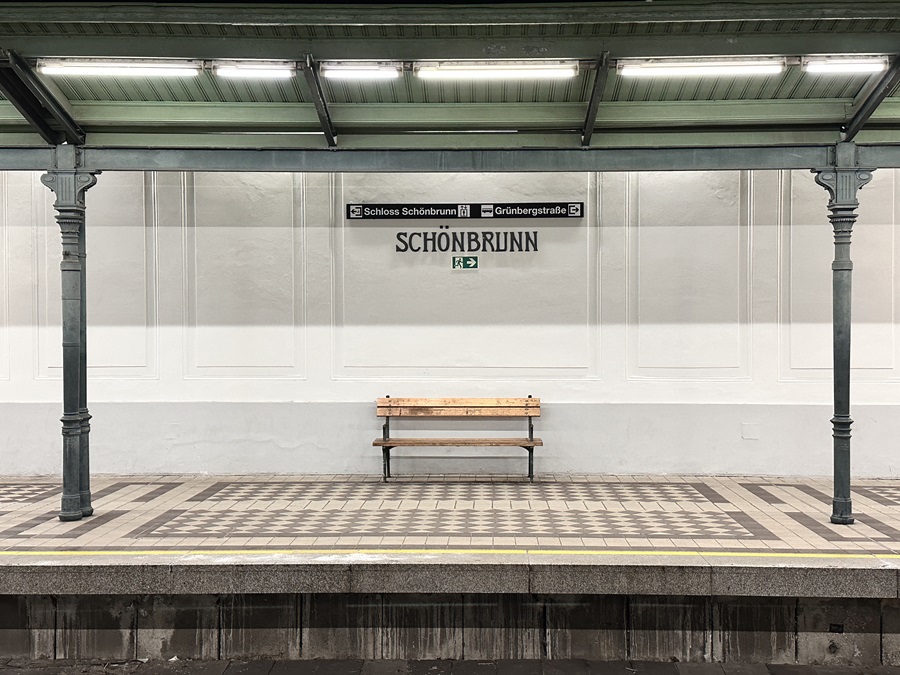
The quickest way there was the underground. The U2 from Rathaus to Karlsplatz, then the U4 in the direction of Hütteldorf. It took us a little over 20 minutes to reach the stop at Schönbrunn. We then continued on foot, a little unsure where to find the entrance to the Imperial Lights.
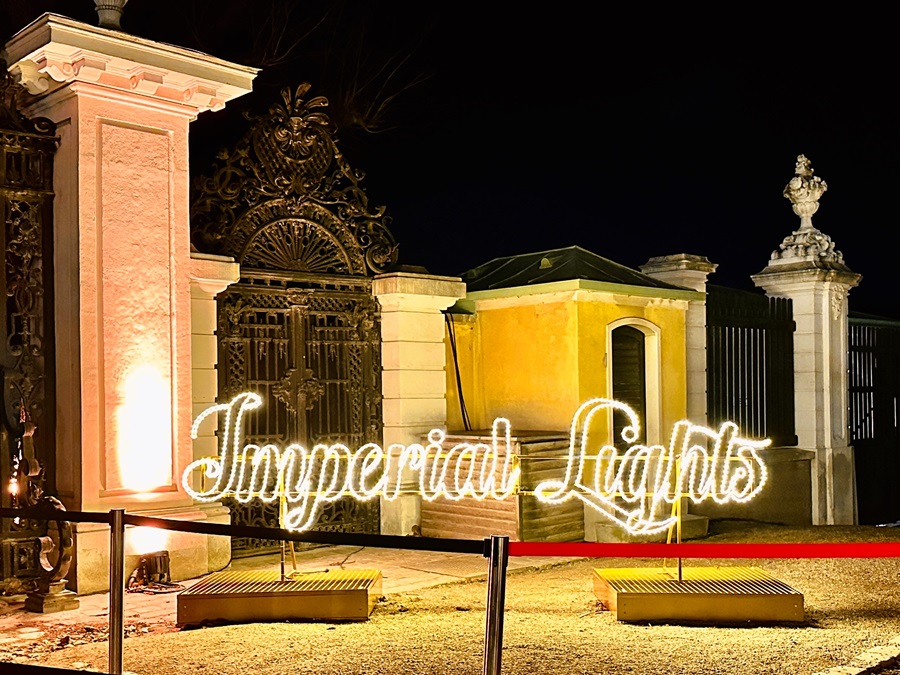
We got there in the end, by finding the Meidlinger Tor, the entrance gate to the gardens of the Schönbrunn Palace. The brightly illuminated words "Imperial Lights" confirmed we had arrived.
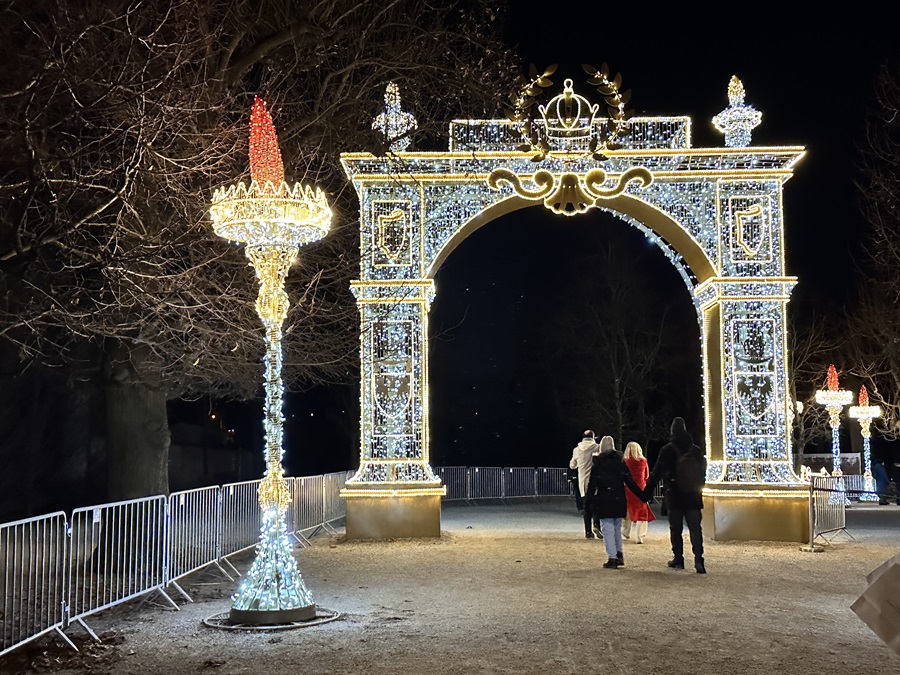
We really didn't know what to expect for our €31 each.It began nicely enough with a small arch covered with fairy lights. All the lamp posts had been decorated to resemble candlesticks.
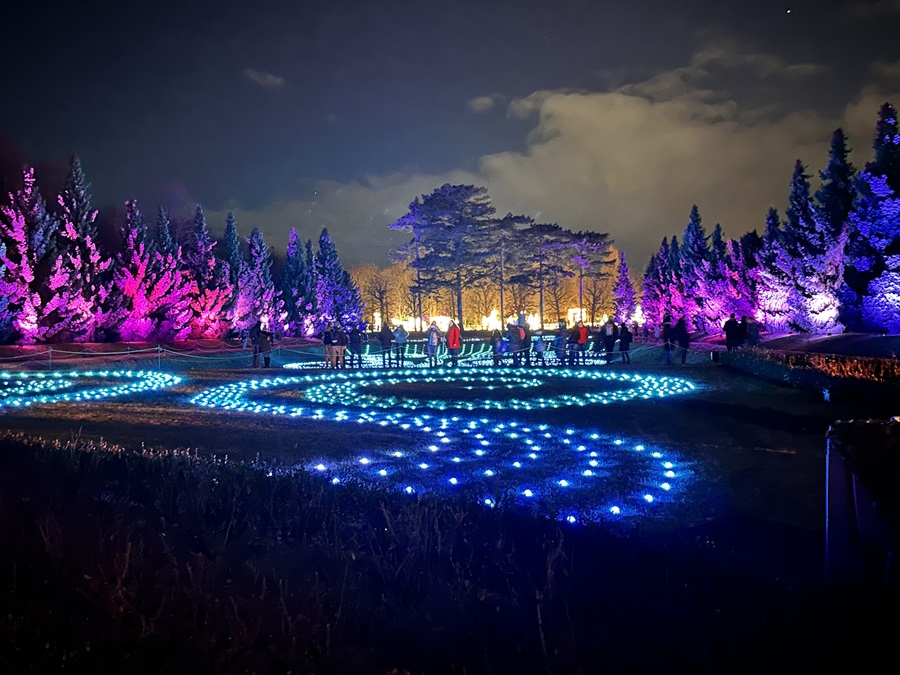
After that, we walked along the dimly lit path until we came to a wide open space, known as the Meidlinger Vertiefung a "hollow", lined by purple trees down the sides, and what looked like a forest on fire at the end. In the space between was the most fantastic light display. Set to music, lights danced around in swirling patterns mesmerising us both. "Wow" we both said, literally standing there open mouthed.
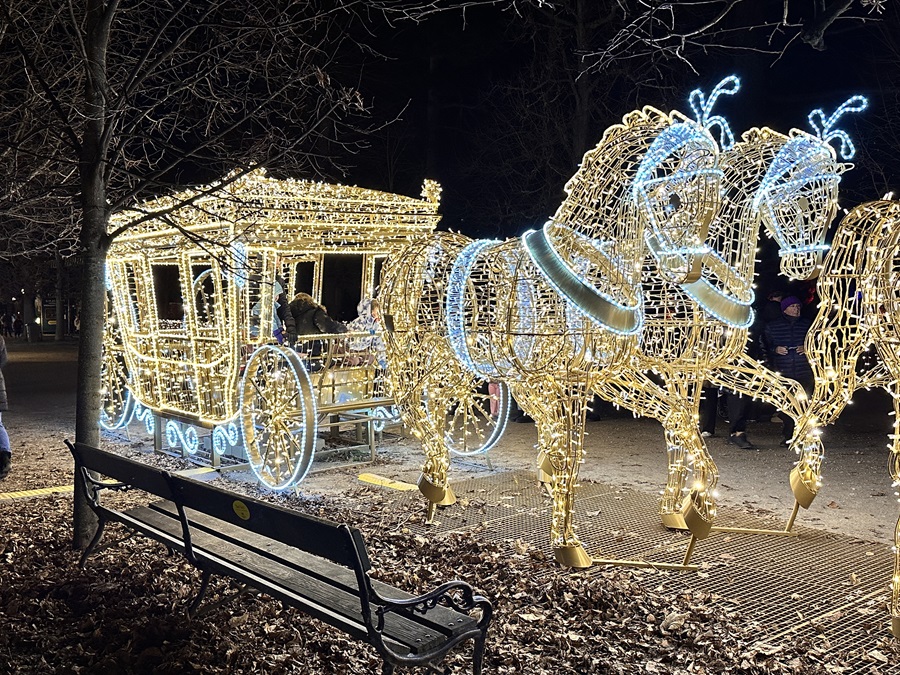
We moved on, towards the light in the trees. It turned out to be a collection of various items created solely from wire and lights, like an incredible horse drawn carriage. Other creations were a huge crown, a peacock, a musician playing the violin. They were actually quite amazing.
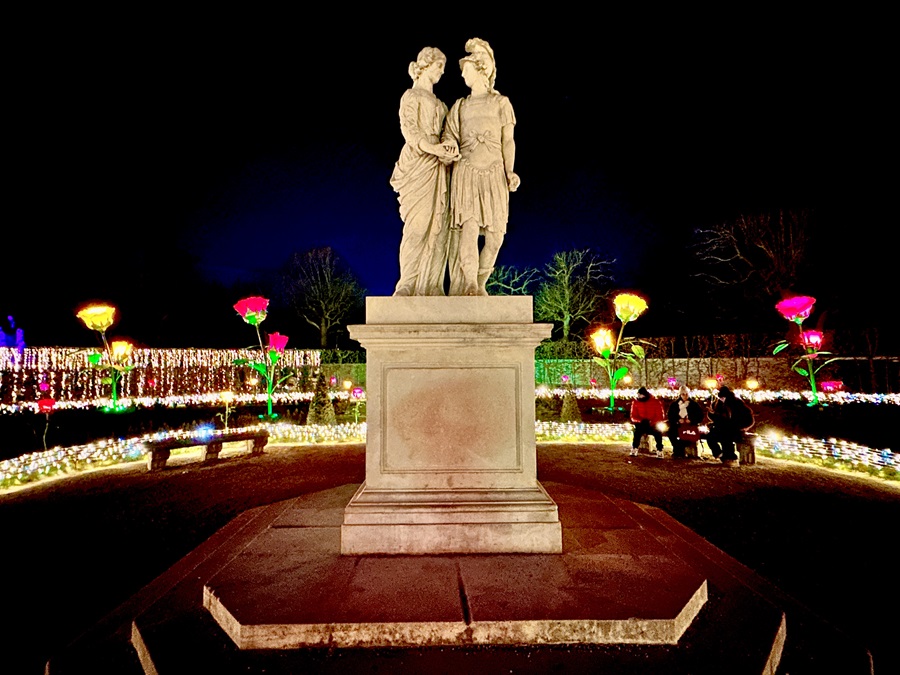
We continued our stroll through the park, following the signs that lead us into a bosquet, a grove or tree lined garden with the statues of Alexander the Great and his mother Olympias at its heart.
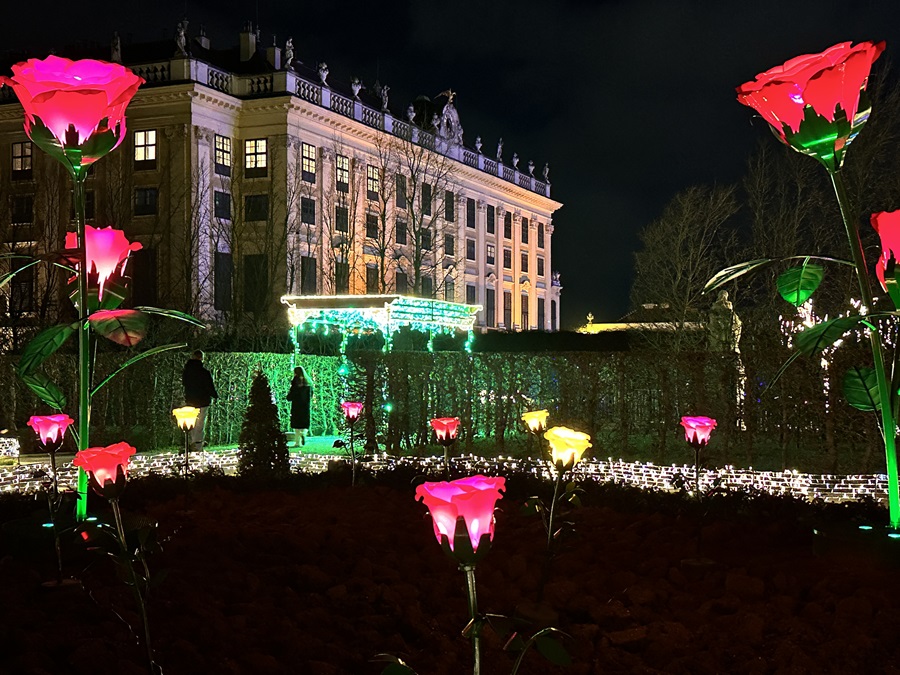
It was filled with enormous roses. They looked magical against the darkness, creating some kind of wonderland. The imposing palace came into view for the first time.
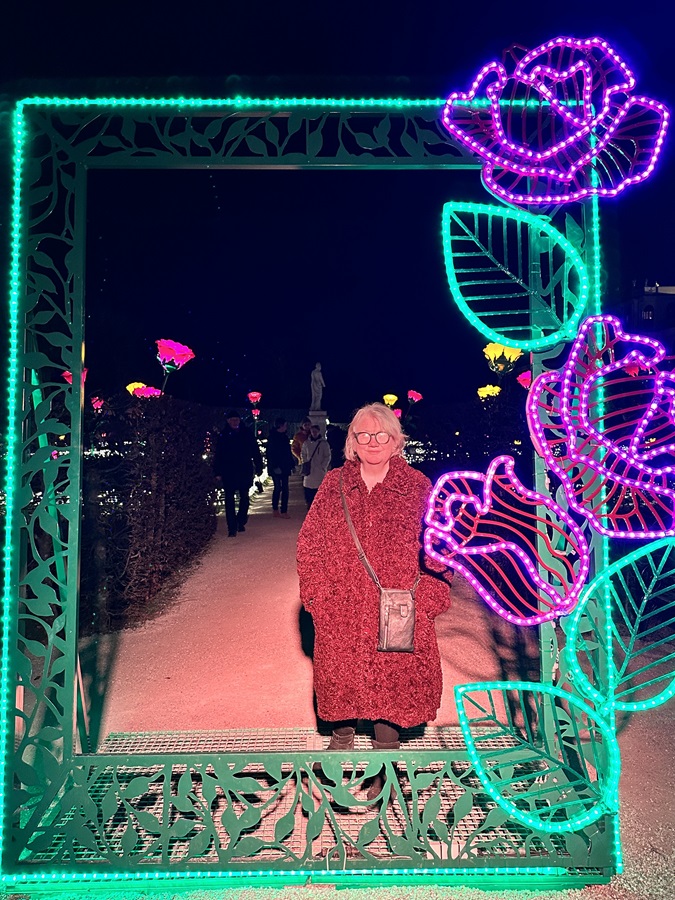
We continued being lead up the garden path to a decorated frame creating a selfie photo op. After taking it in turns to take rather disappointing pictures of ourselves we followed the path, away from the palace, down Litchee Allee.
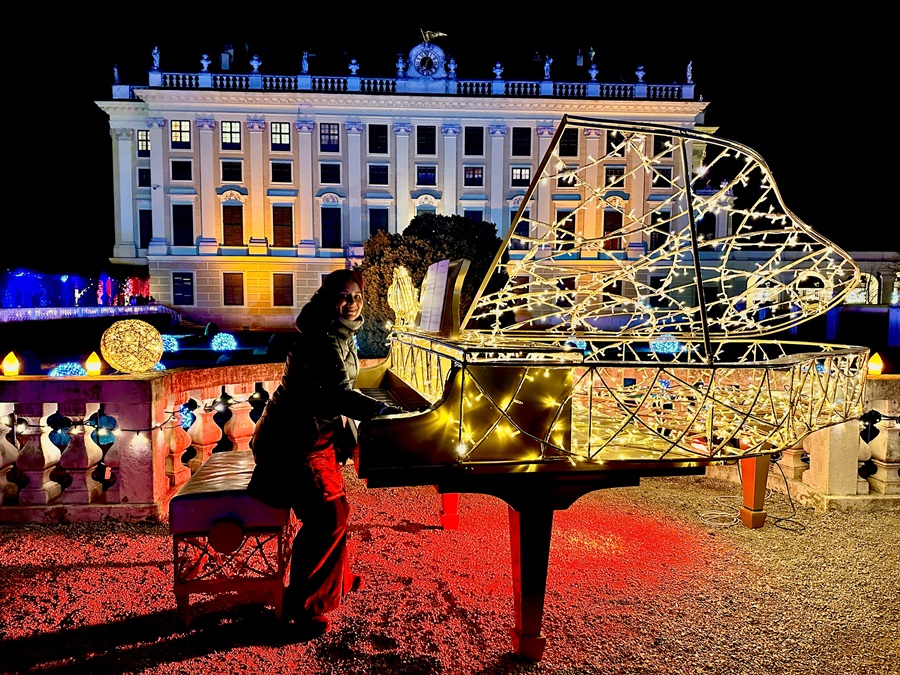
We turned left, looking over a sunken garden filled with clutsers of light. The pathway also gave us a great view of the palace. Even if this was just its side profile it was still impressive. I stopped to photograph, not so much of the palace but of a lady playing a piano made from wire and lights. I thought she was part of the show but she was just a visitor like us. She apologised for being in my shot. I apologised for taking a photo of her.
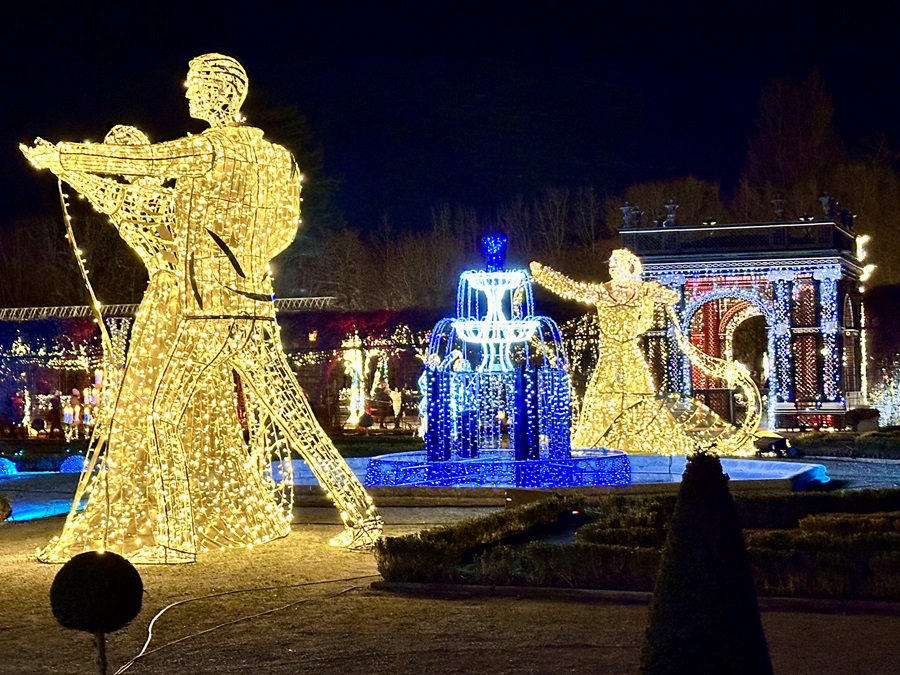
From there we came to the Crown Prince Garden. The fountain in the centre looked stunning, draped in lights. Around it were 4m tall waltzing couples. All the while we had music piped through the speakers creating a wonderful atmosphere.
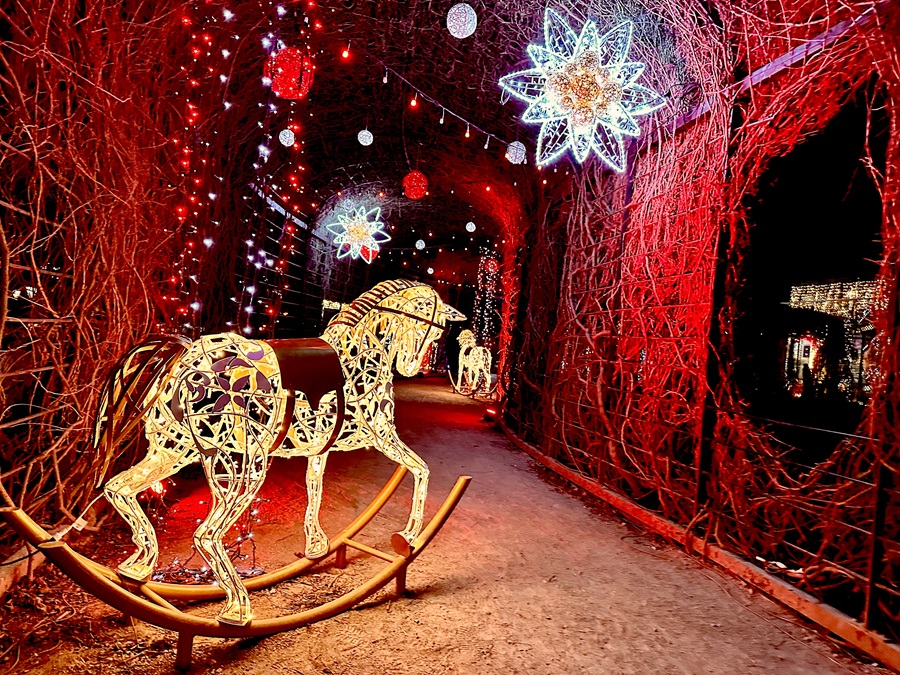
The path took us around the edge of the Crown Prince Garden, through a canopy of branches.
When we reached the end there was a viewing platform that promised the most fabulous view, so we joined the back of the queue and took our turn to wait for the opportunity to see. For Health & Safety reasons, only a limited amount of people could be on the top of the viewing platform at one time, so they were controlling the flow. The H&S didn't extend to the spiral stairs, so as one left, one could step one forward.
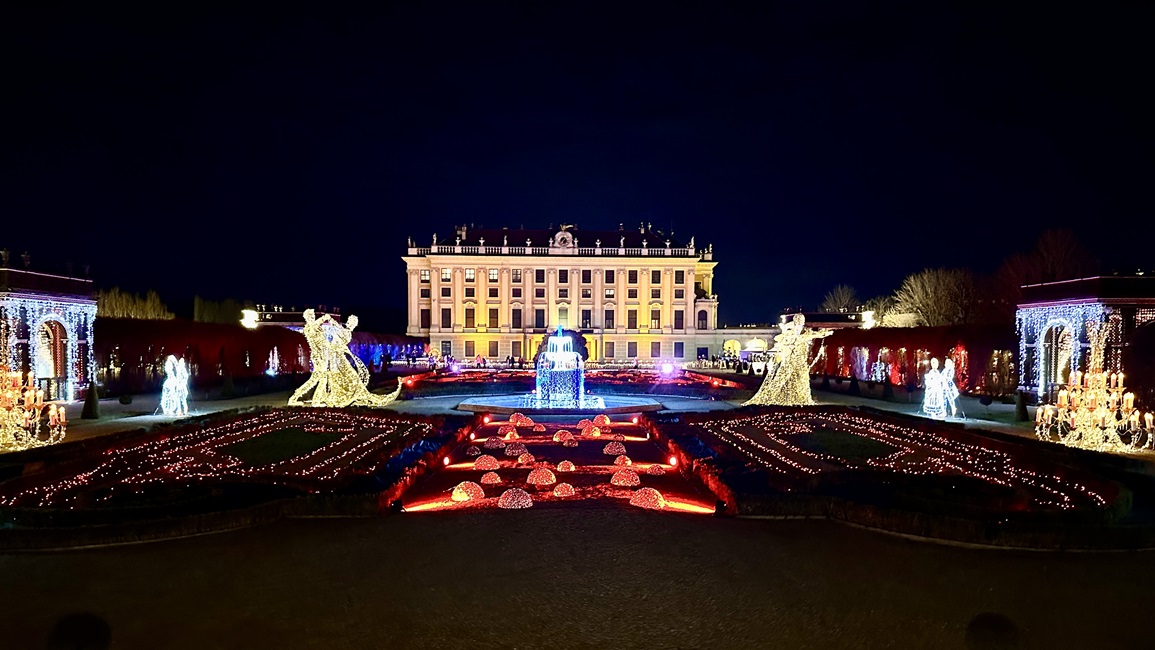
It was worth the wait. The palace and the Crown Prince Garden looked spectacular. The platform was a permanent fixture, not just erected for this light show. During the day it offered a "almost" birds-eye view of the intricate design of the Crown Prince Garden. Sadly, we couldn't see it in the dark. Conscious that people were queuing behind us we spent less than a minute enjoying the view before feeling we should move on. We did a full 360 of the platform but in the dark the only thing we could actually see was the palace and the lights. Arriving back at the start we sneaked another look before leaving.
Back at the Underground station we sat down to wait for the next train. We didn't have to wait long. We were impressed how efficient and easy the system was with our Vienna City Card. It was very straightforward. There weren't even any ticket barriers. I suppose there was an element of trust from the authorities but also the detterence of very heavy fines if you were caught without a ticket.
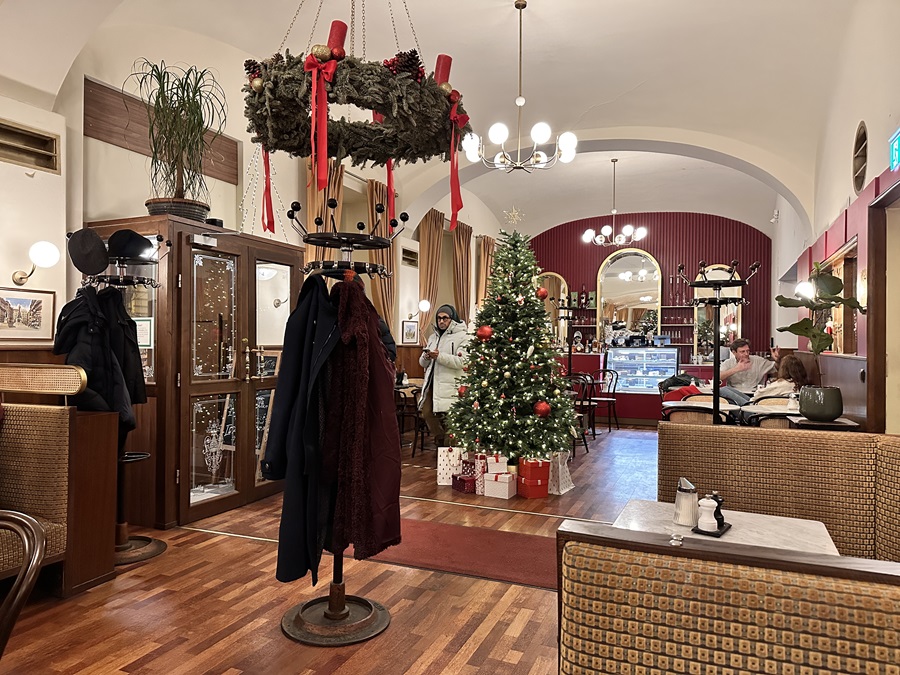
We returned to the vicinity of our hotel. We had noticed earlier a restaurant nearby that did traditional local dishes. It was simply called Cafe Restaurant Rathaus. It had a very old school feel to it. The room was brightly lit and the tables were mostly set in small booths. It was very quiet. We couldn't even see a member of staff when we walked in! The room was L-shaped and we had walked to the furthest point before choosing a table. After a minute or two we were concerned that no one had seen us walk in, so we moved to one of the booths near the front door. It worked. We were soon spotted by a waiter, who brought over the menus.
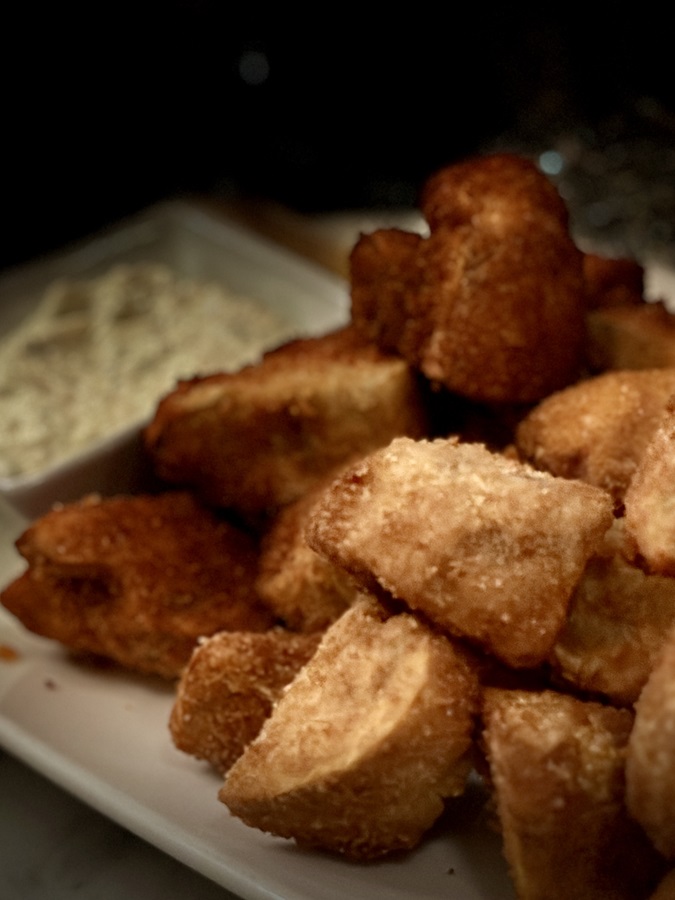
They had a dedicated section for vegetarian dishes which I was happy about. I was hungry, as usual, and decided to order some gebackene champignons as a starter and käsespätzle for my main. The baked mushrooms arrived. The portion was enormous, piled high on the plate. I think it may have been a "main course" but who in their right mind would eat so much battered mushrooms? Julie helped me out a little. They were very tasty, especially dipped in the tartar sauce that accompanied it. They weren't at all greasy but about halfway through it became a chore, so we left the rest.
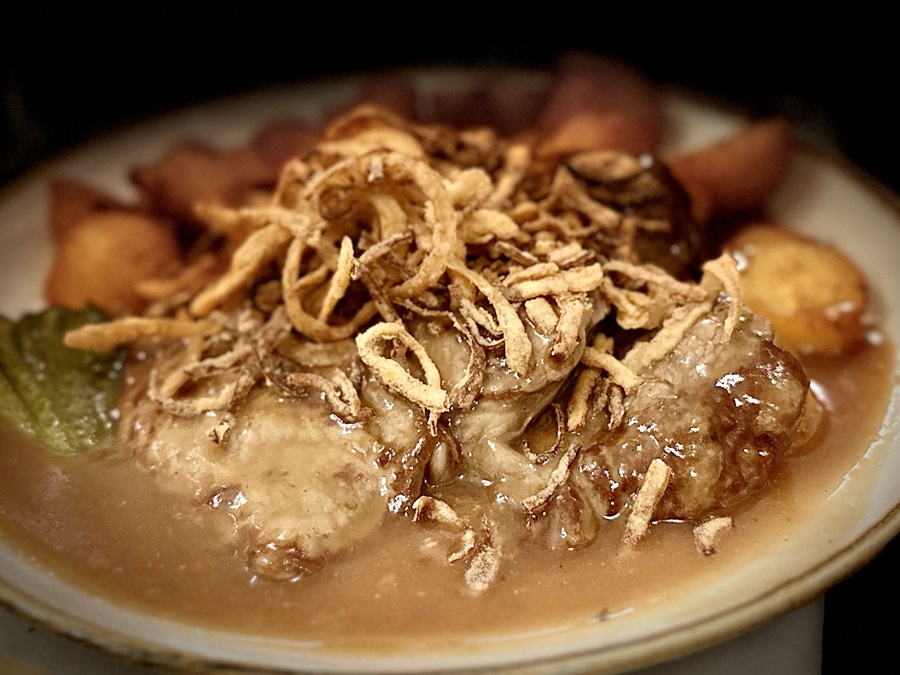
Julie dish arrived. She went for a classic dish called Zwiebelrostbraten, beef cooked in an onion broth, served with a huge portion of roast potatoes and crispy fried onions. She really enjoyed it. But there must have been over a dozen potatoes, and even Julie, who loves her roasties, had to admit defeat and leave some on her plate.
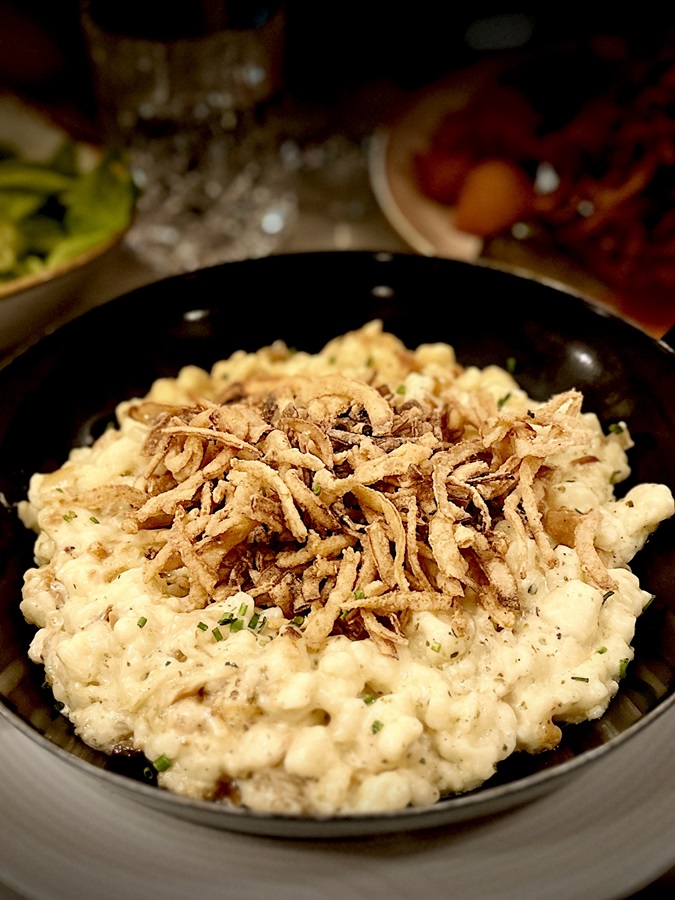
My Käsespätzle arrived. Basically it was an Austrian version of a Mac 'n Cheese but the sauce was a lot thicker. Topped with crispy fried onions and a sprinkle of chopped chives, it was absolutely delicious. I wolfed it all down. We were both stuffed and despite the temptation of an apfelstrudel, we couldn't possibly eat another thing. The bill came to €59 which was good value for the amount of food we ate!
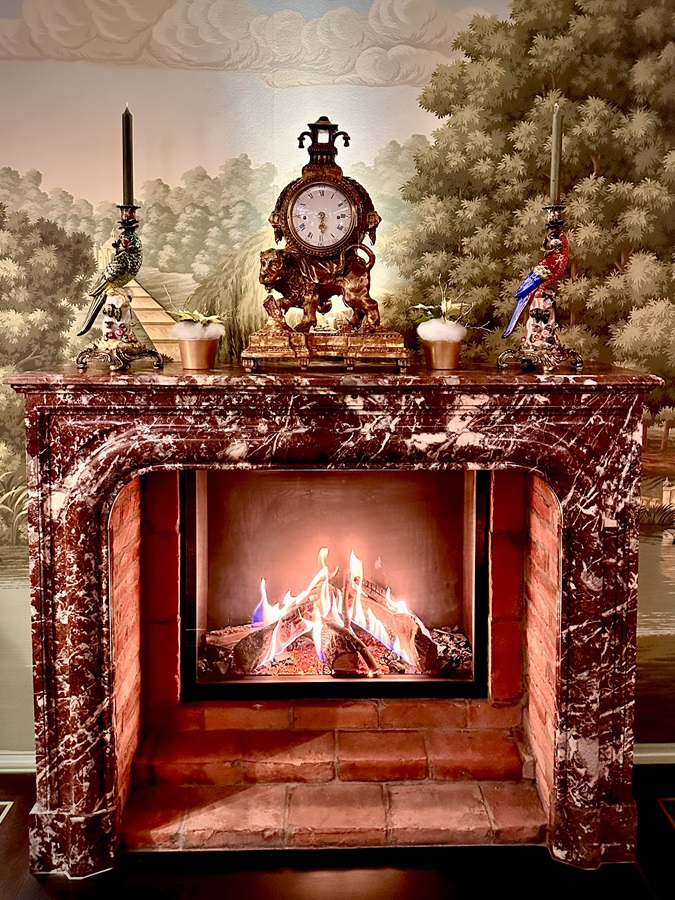
We left the Rathaus resaurant and returned to our hotel, where we decided to have a drink at the bar. A quirky faux fireplace enhanced an already cosy atmosphere. The barman was very congenial in a butler kind of a way. I had a beer from a local Viennese brewery called Ottakringer which I didn't enjoy. There was an odd taste to it. I made a note to myself not to order it again. After just one round we were ready for bed. It was only 9:30pm but it had been a very long and full day. Next Day >>> |
|
©Copyright 2000 - 2026 Colin Owen |