Door-slammer
Sunday 18th
December 2022

|
|
The Week Before Christmas
Door-slammer |
|
|
|
We woke up early, in case our classic Golden Circle tour to see the impressive Gullfoss waterfall and the nearby Geysir geothermal area was still happening. I opened the curtains but it was difficult to see what the weather was doing outside. It was pitch black. Whilst having a cup of tea an email came through from our tour company. They were still hoping to run the tour but were waiting for an update from the authorities at 8:30am before confirming. So it meant at least a hour delay.
I checked an app that Devon told us about yesterday called SafeTravel.is. It showed (in red) many roads were still closed, including the route to Þingvellir along which we would need to travel if we wanted to reach Gullfoss. It didn't look promising. Not long later we got the message cancelling the tour. The road "wasn't going to get ploughed" today. The door was slam shut. As disappointed as we were, it was good to know they acted responsibily. In fact Julie was relieved. She had been worried that the tour company would have taken risks just to get the tour going.
Looking out the window it looked a pleasant day but the damage had already been done yesterday. Undettered we hastily hatched a plan for today. It began with a visit to the Laundromat. Not to do our laundry but to have the "best brunch in Reykjavik".
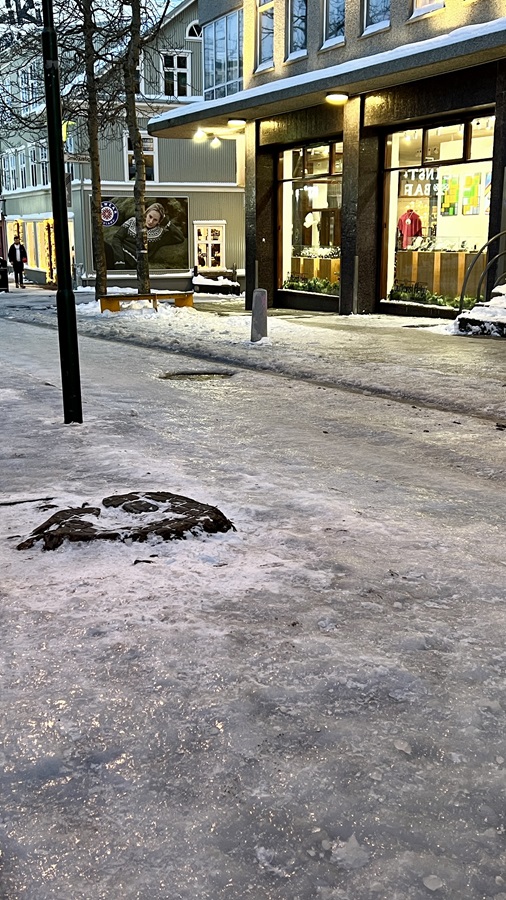
We stepped out onto the street and were shocked by the conditions. The entire street, pavement and road had been transformed into an ice rink. It was unbelievably slippery, like walking on a glacier!
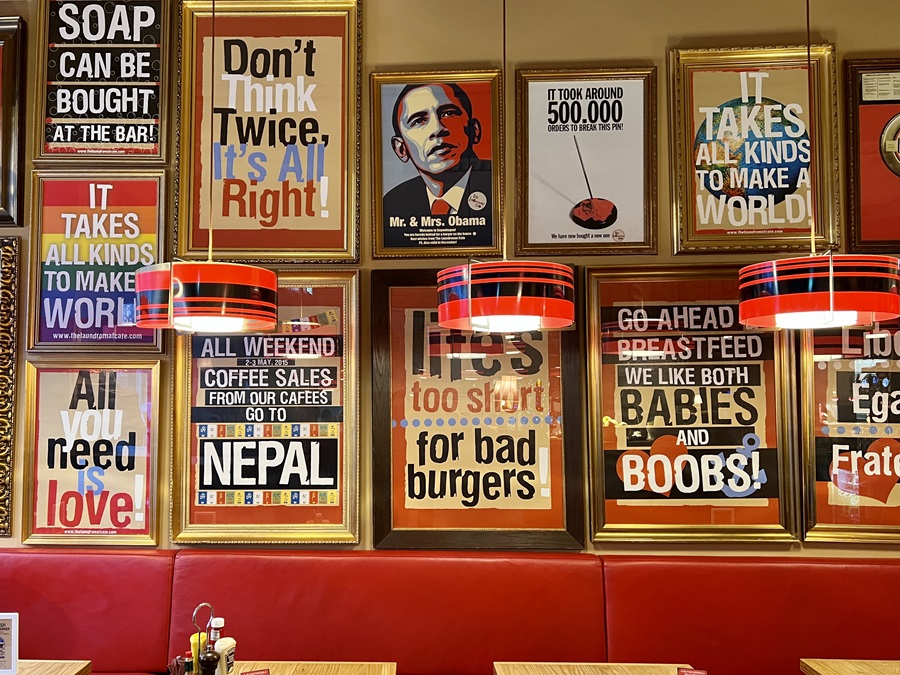
The Laundromat cafe wasn't far. Probably on a good day it would have taken us no more than 10 minutes but it took us almost half an hour to slowly edge our way carefully down Laugavegur and along Austurstræti. We linked arms and took short hesitant steps, shuffling along like an old couple. It was with great relief we arrived safely. The Laundromat was opposite the Vínbúðin off-licence. We had walked past it before, but hadn't really noticed it. It was a Google search for "the best breakfast in Reykjavik" which brought it to our attention.
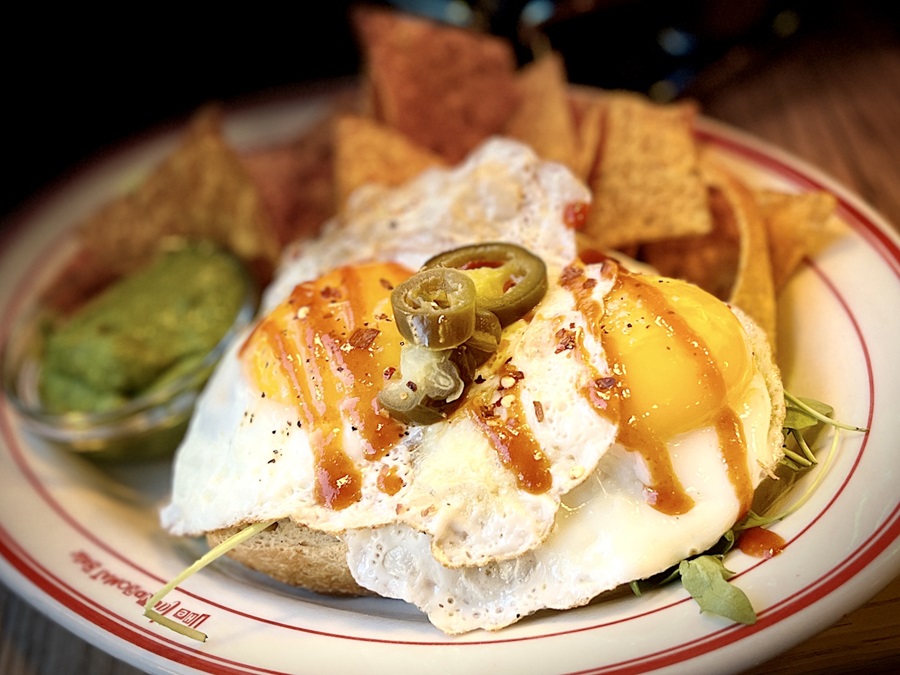
The menu was as funky as the cafe. I ordered the Mexican eggs which, whilst not being chilaquiles, were very tasty in their own way. Julie was disappointed with her bacon sandwich. It was too salty and oddly served "deconstructed" with cheese and strawberry jam. We were in no rush to leave, ordering another coffee to extend our stay.
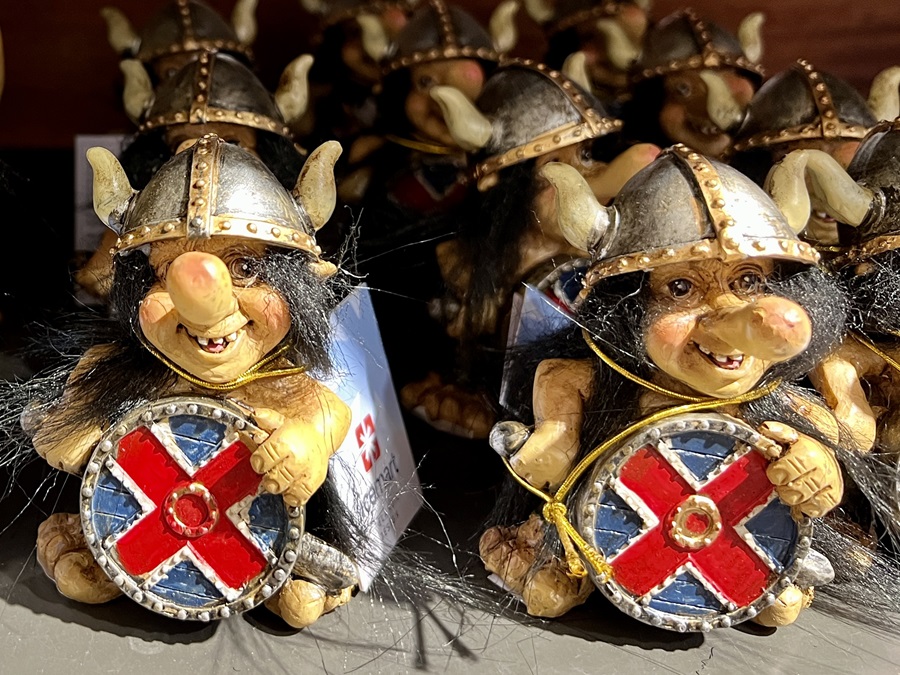
Eventually it was time for us to move on. We skated a few doors down to a souvenir shop where we bought a pair of slippers for my mother (perfect Xmas present) and a small viking troll of our shelf of nick-nacks at home.
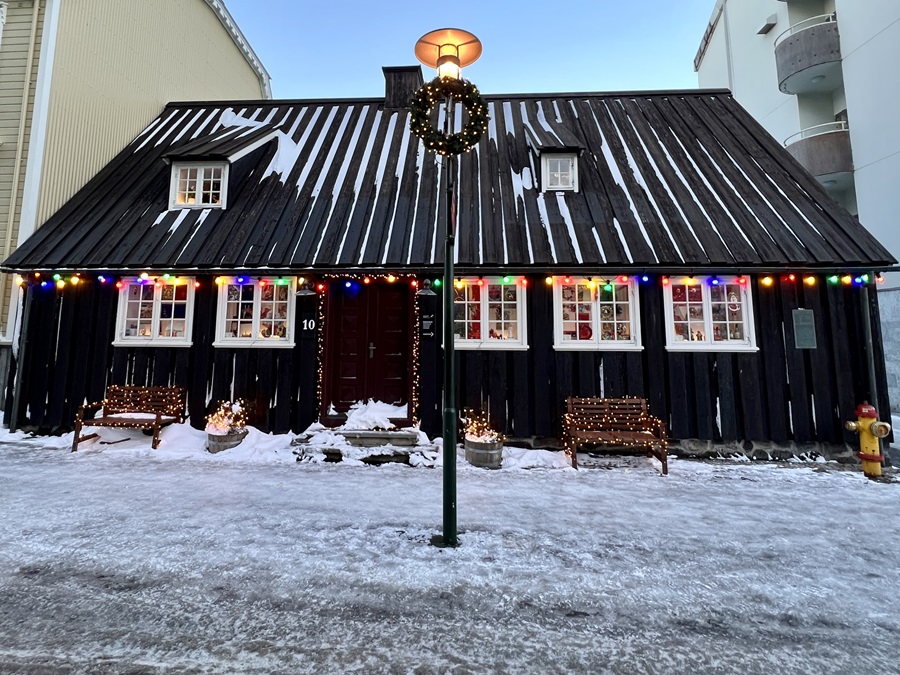
From the end of the street we crossed the square where a real ice rink had been set up. Obviously no one was using it because the whole city was one big ice rink. "Today it should be called Rinkjavik." We ungracefully made our way across the square, like the exact opposite of Torville and Dean, towards a small colourfully decorated tin shack . Apparently Aðalstræti 10 was the oldest surviving building in Reykjavik, built in 1762. It was typical of many of the houses still in the city. Walking past we tried to peek inside, wondering what was inside. It was the Reykjavik City Museum.
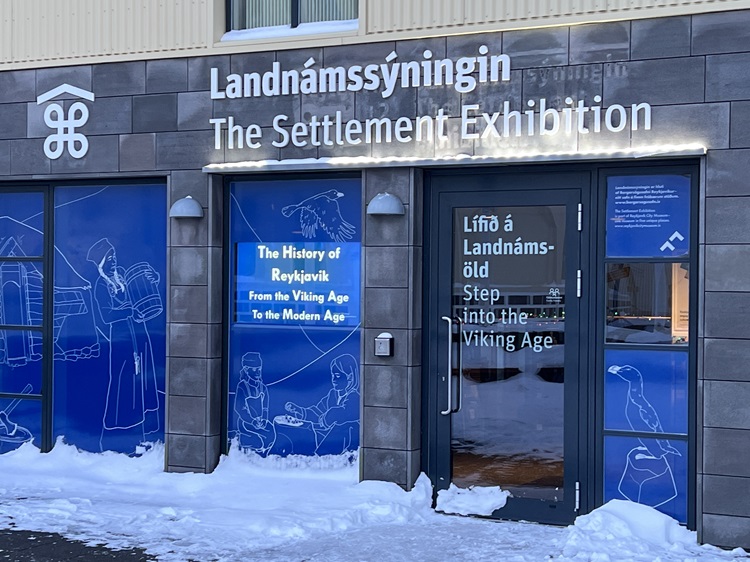
Just around the corner was the entrance to Landnámssýningin - The Settlement Exhibition.
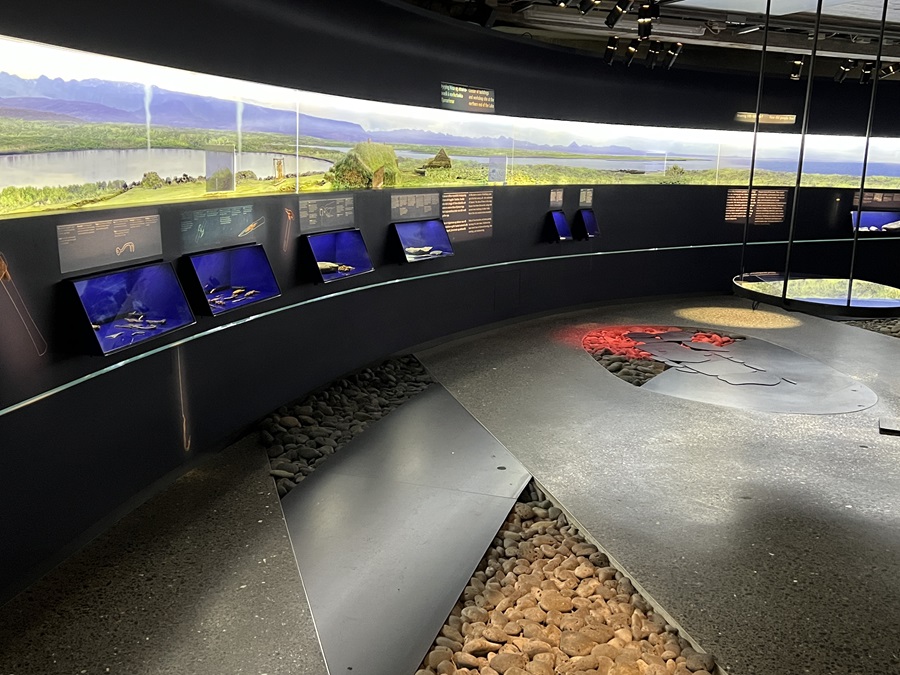
It began in the basement. It looked like a pile of stones in an underground car park but this was a significant piece of the city's history. It was the remains of a longhouse dating from 930AD.
A section of the wall was even older than that. An accurate dating of 871±2 AD was reached because of the specific volcanic activity found. This was going back to the earliest human settlements on Iceland, to the time of Ingólfur Arnarson, the founder of Reykjavik.
Thankfully it wasn't all just a pile of stones. There were some interesting artefacts and interactive displays all around the edge. They were very well thought out, bringing all the facts and figures to life, firing the imagination of what this longhouse would have looked like, with a grass turf on the roof, and a large wooden entrance.
Once we completed the full circle we left along a corridor with several artefacts across the centuries before walking upstairs into 19th century Reykjavik.
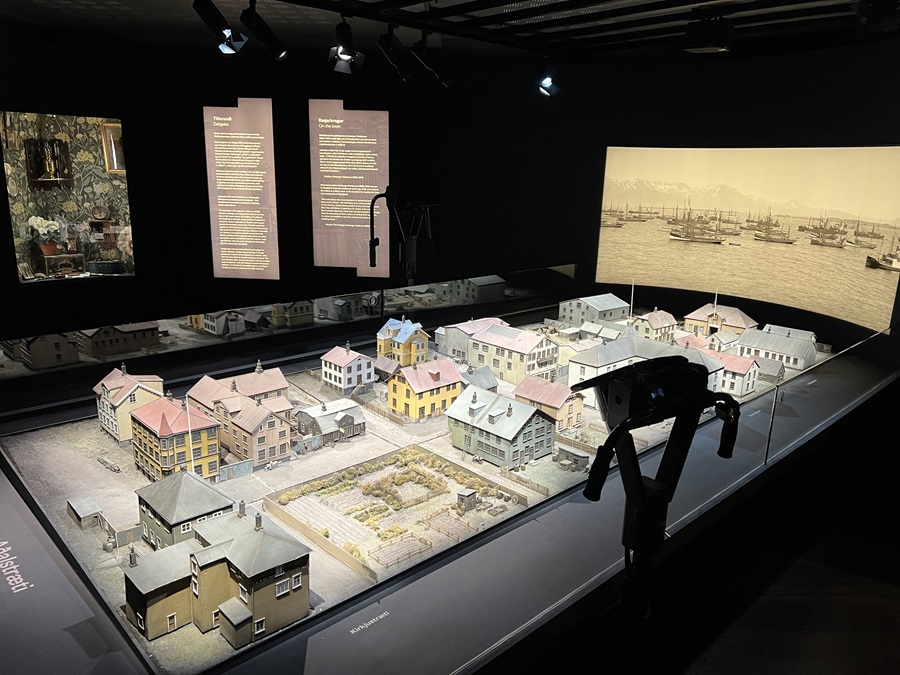
By far the best display at first it looked like an interesting but simple scale module of the city centre, but when you looked at it through a view-finder suddenly people appeared, walking along the streets, like holograms. It was incredibly clever how they did that!
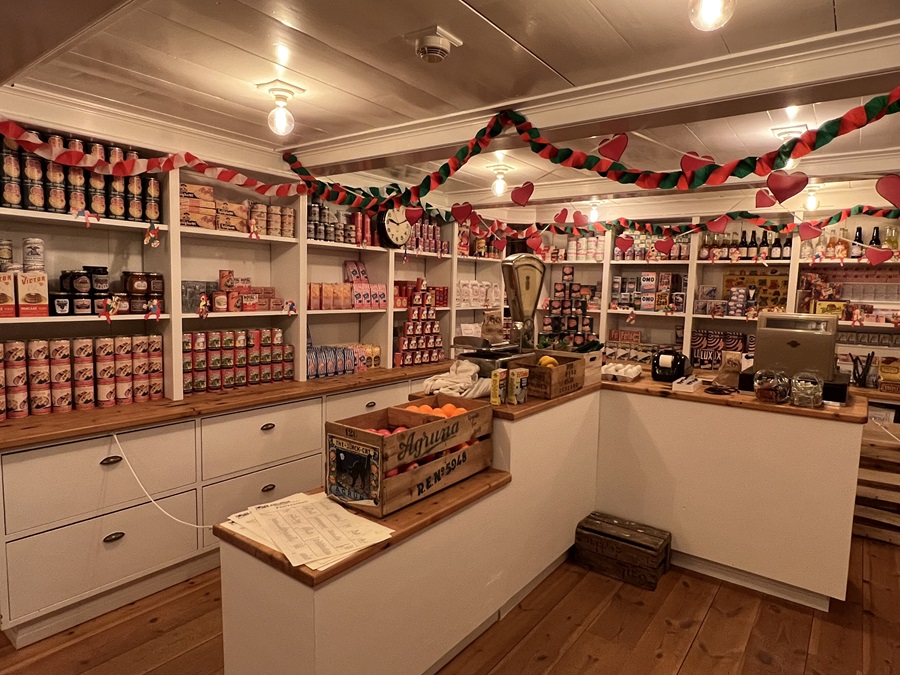
Another display that caught our attention was a local grocery store from the 1950s where most of the produce was canned food. Excellent for a long shelf life! It also highlighted some of the fresh fruits now being imported to Iceland, like oranges and bananas. We had spent almost an hour at the Settlement Exhibition and thoroughly enjoyed our time.
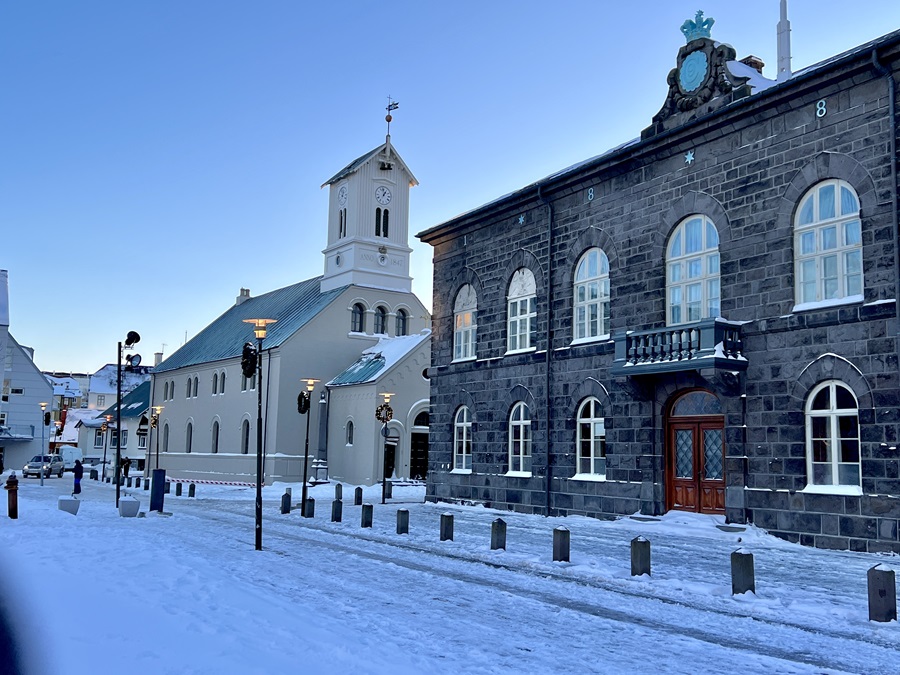
We took a different route back, walking towards Alþingishús, the charming Icelandic parlimament building. It looked like a provincial town hall, not too disimilar to the one in Llangefni. Next to it was the modest looking 18th century cathedral Dómkirkjan, the oldest church in the city.
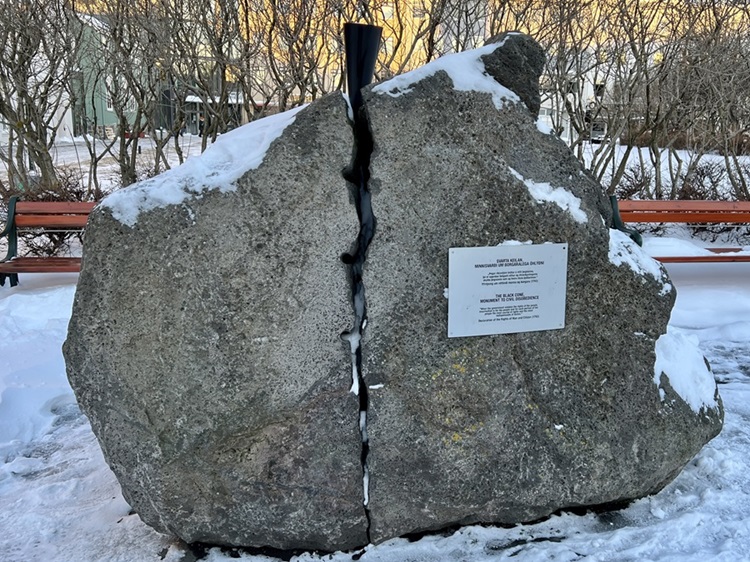
In front of the parliament, there was a monument to civil disobedience known as Svarta keilan, the Black Cone. It was a small black spike thrusted into a rock, splitting it in half. It represented how the verhment protests in 2009 brought down the government, in what was called the Pots and Pans Revolution. After the 2008 global financial crisis and the subsequent collapse of the Icelandic banking system, the people gathered here in large numbers to protest at the government's mishandling of the situation. In addition to jeering and shouting slogans it was common for protesters to bang "pots and pans" to make as much noise as possible. Their "civil disobedience" culminated in January 2009 when the government resigned and new elections were held. There was a small plaque with a quote from the French Revolution "When the government violates the rights of the people, insurrection is for the people and for each portion of the people the most sacred of rights and the most indispensable of duties."
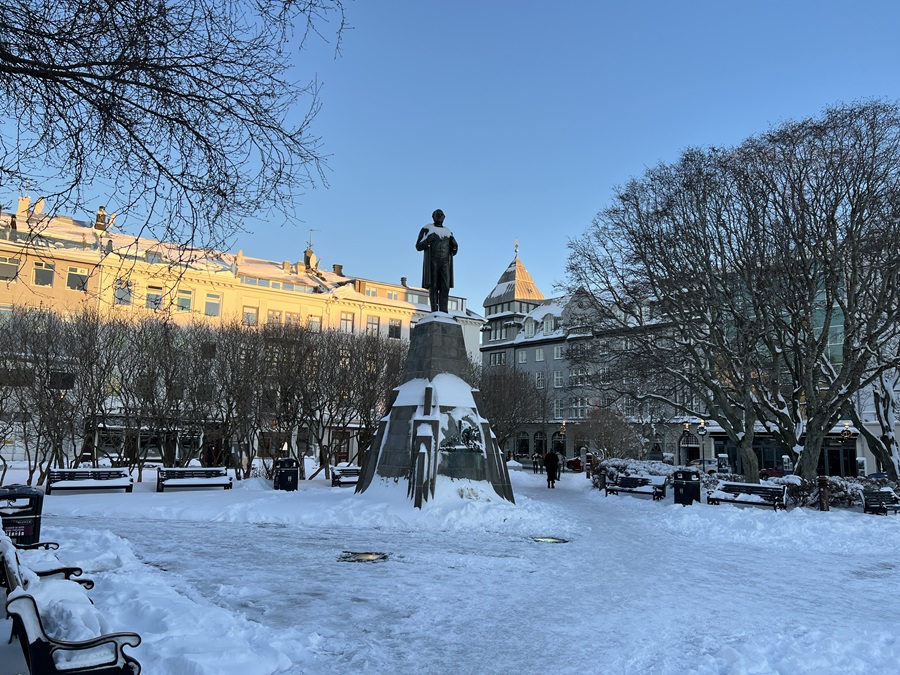
We crossed Austurvöllur a large open square in front of the parliament. In it's centre was a statue of Jón Sigurðsson, a leading figure of the Icelandic independence movement of the mid-19th century. Iceland had been ruled originally by Norway since 1260 AD, then as part of a Danish/Norwegian union for around a further 250 years until 1814 when the kingdoms of Norway and Denmark went their separate ways. Part of the divorce settlement was that Denmark aquired the overseas territories of Iceland, Faroe Islands and Greenland. Eventually Iceland won its independence in 1944, a day now celebrated each year on the 17th June. On the other side of the square we returned to the main street where we saw a man slip and fall awkwardly whilst stepping out of the 24/7 supermarket. It looked like he had broken his leg. This traumatised Julie, to the point that each step petrified her.
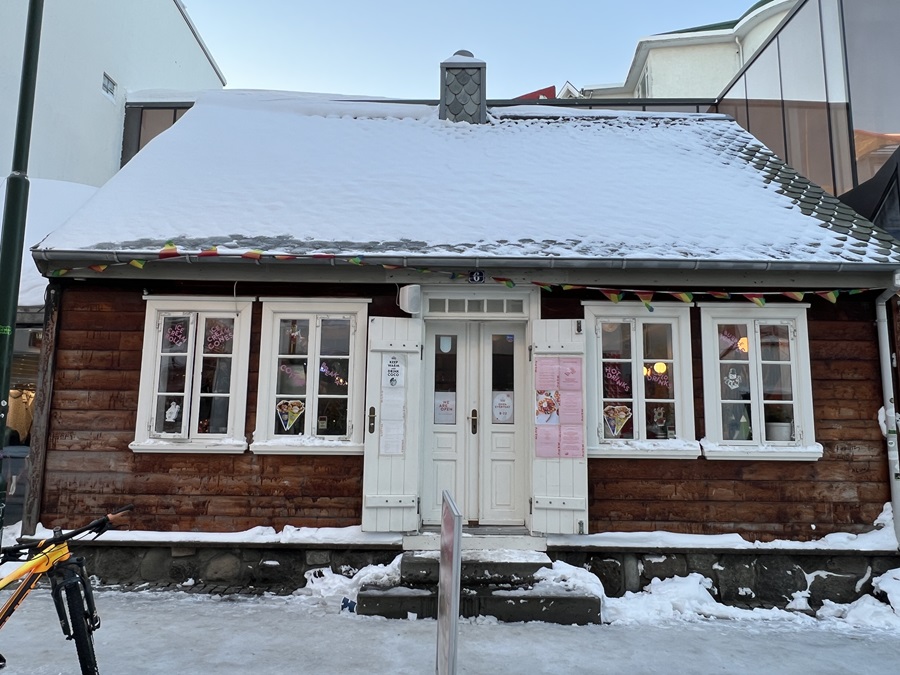
We very slowly made our way back up the hill of Laugavegur. Not far from our apartment we came across another old shack that could have been a contender for oldest surviving buidling. It housed a cafe called Sæta Húsið.
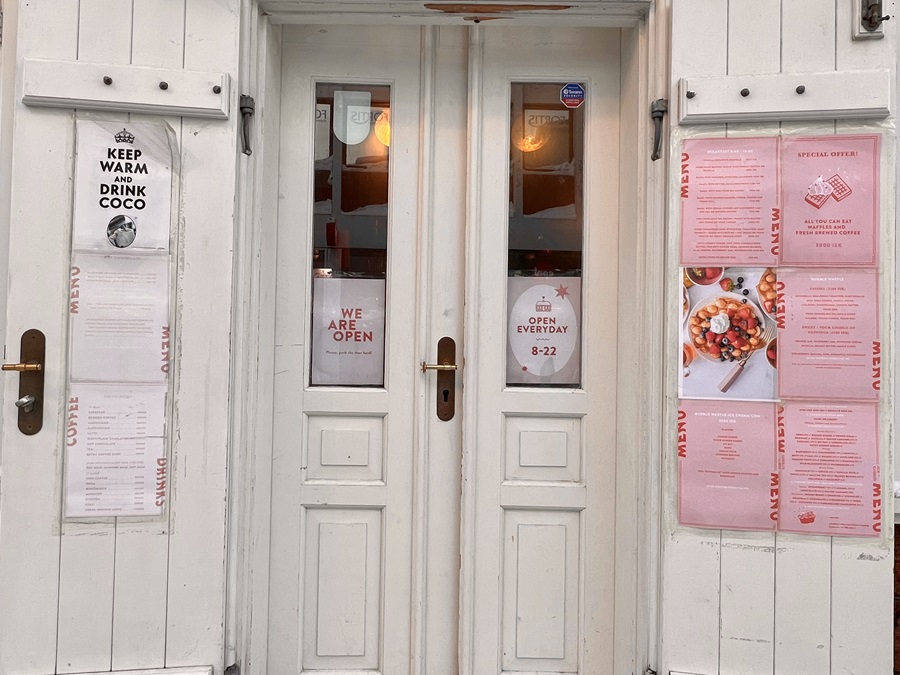
It looked very quaint and inviting. A small sign by the door in the style of the British government pre-war slogan of "Keep Calm and Carry On" told us to "Keep Warm and Drink Coco". So that's exactly what we did.
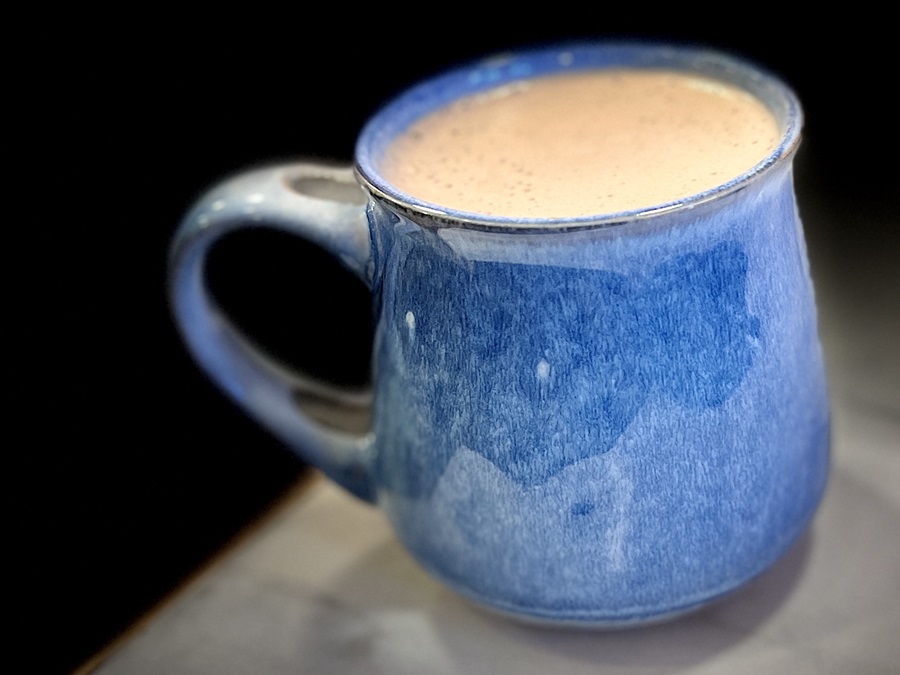
We took a break from our ice trek and settled down inside the warmth. Their hot chocolate was delicious and despite its very Barbie pink interior we enjoyed our break in the Sweet House, which was the English translation of its name. After discussing what to do this afternoon Julie decided she had enough of the icy conditions and was happy to just return to the apartment and chill out.
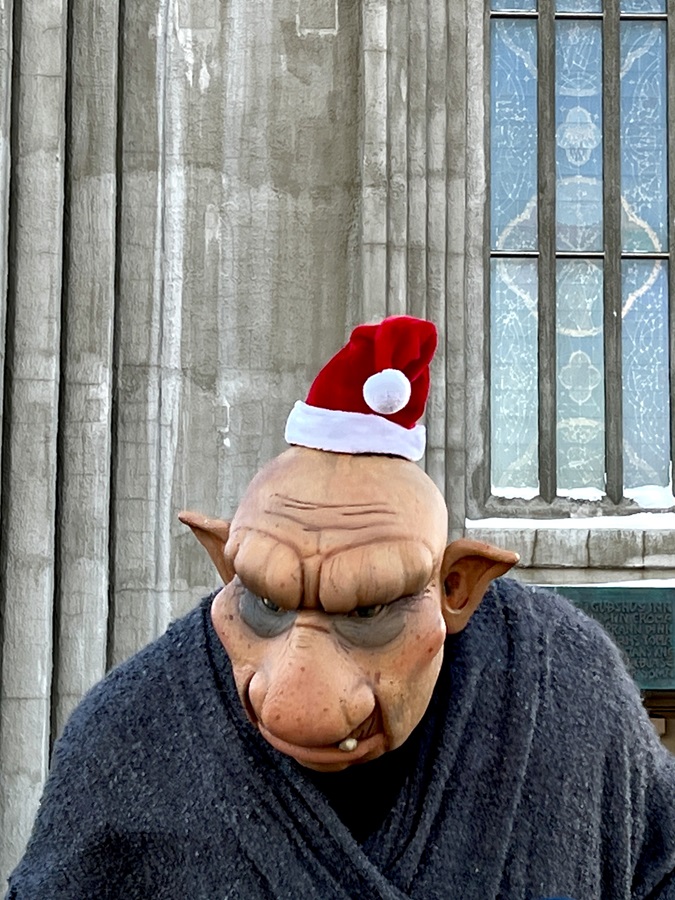
After delivering her safely back to our room I popped back out to quickly climb the tower of Hallgrimskirkja. The square in front of the church had been cleared of ice and snow, which was much very appreciated, not just by me but also the over-sized ogre posing for photographs.
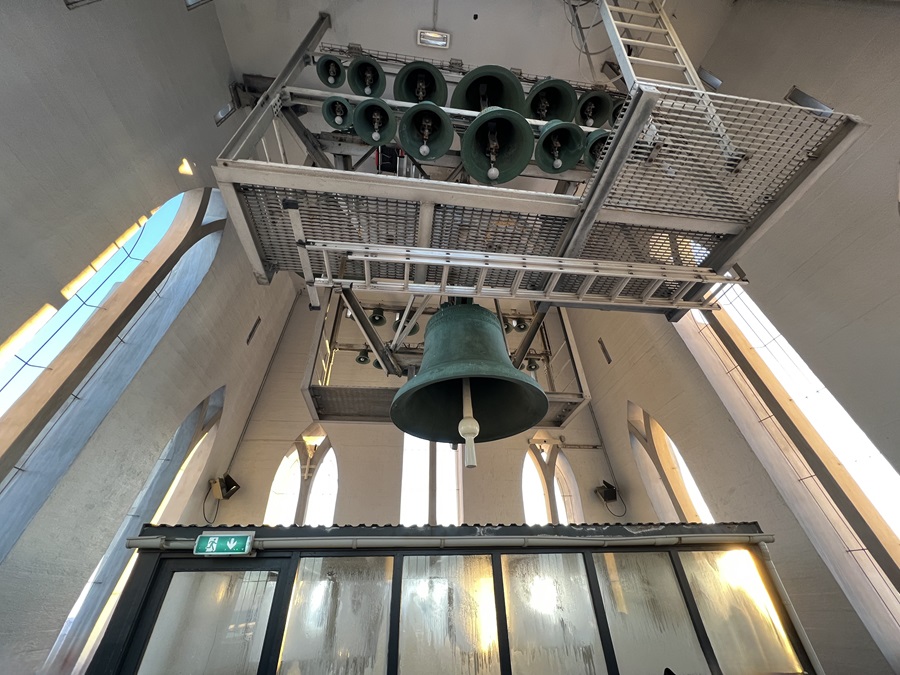
Inside the church, just to the left, there was an elevator to take everyone almost to the top. I came out at the level with the clock face. We hadn't noticed before that there was a clock on the spire. There were a few more steps to climb up before reaching the very top and the collection of bells.
There was 29 in total and collectively they were an instrument called a carillion, played either by keyboard or by an automated process, which I assume this was. The bells ranged in size, from a large main bell, to four rows of ever decreasing sizes.
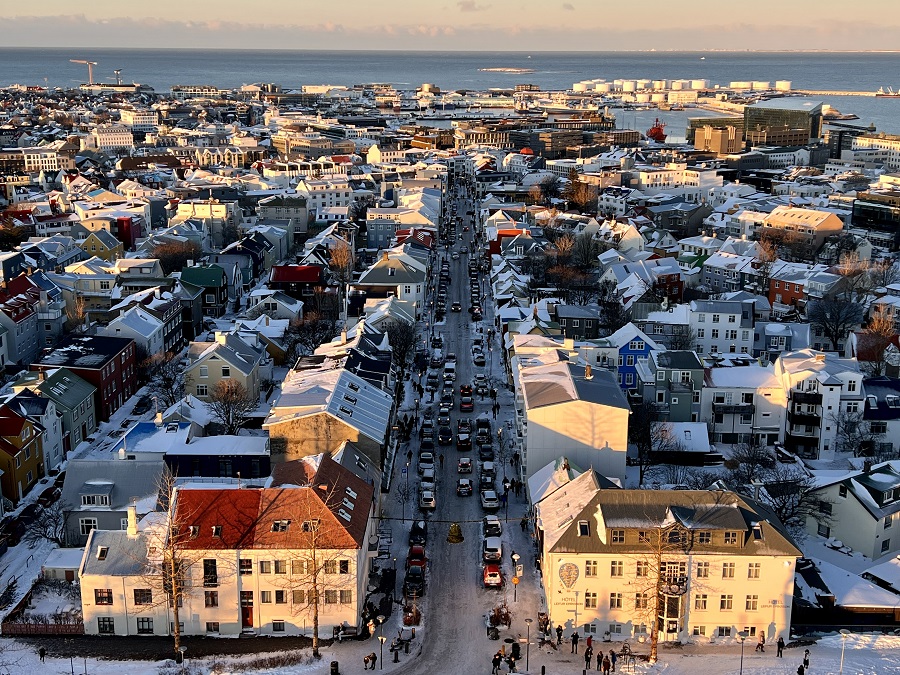
But I wasn't up there for the campanology, I was there for the sepctacular views over the city. The belltower was open to the elements, so it was bitterly cold. My fingers froze in an instance but I had to keep the gloves off to be able to take the photographs.
It was worth the pain to capture what I saw, looking straight down Skólavörðustígur, towards the harbour, the Harpa Concert Hall to the right, and what looked like an oil refinery in the distance.
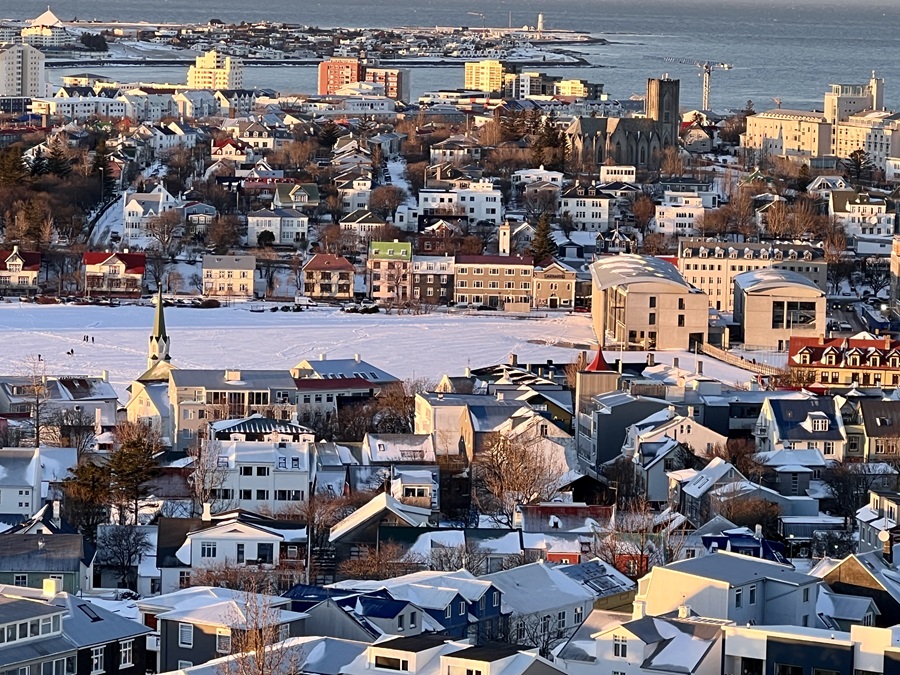
Moving to another window I got a change of view. This time towards the frozen Tjörnin lake, with the modern, almost industrial looking, Reykjavik City Hall on its shore. A little further away was Landakotskirkja, the Cathedral of Christ the King. I didn't hang about. I quickly scanned the view with my own eyes, quickly took a snap shot, then moved on before frostbite set in.
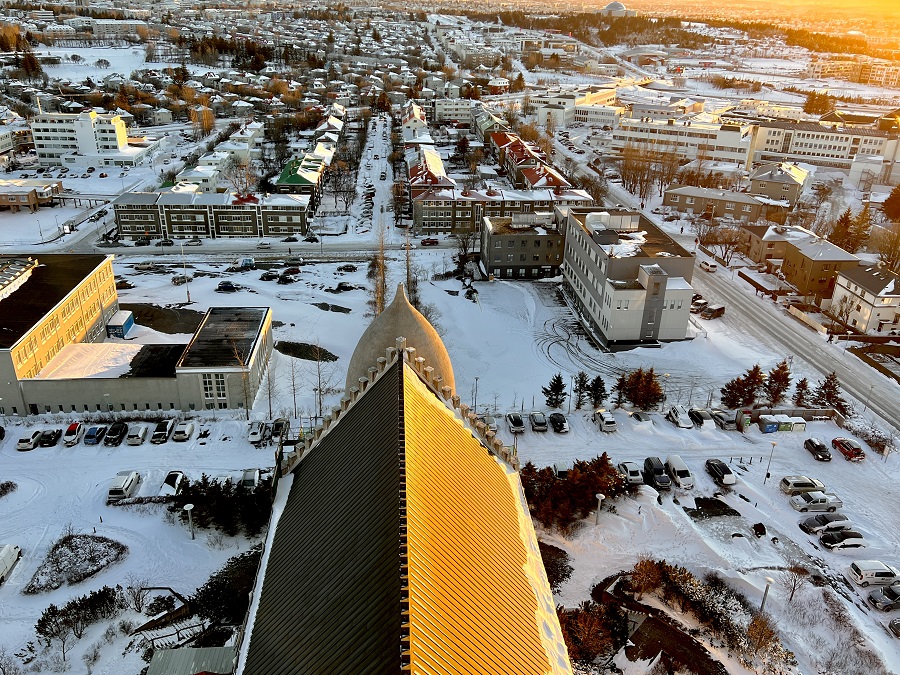
From the opposite side I looked over the Hallgrimskirkja itself. The roof tiles glowed brightly with the light of the low sun and at the end was the dome of the sanctuary. Some say it looked like a viking's helmet. Thankfully it's a myth that vikings wore helmets with horns. Imagine two horns sticking out of the sanctuary!? That would have been more like the church of the antichrist! (Incidentally they say the misconception comes from the 19th costume designer for a Wagner Opera called Der Ring des Nibelungen.) At 2pm the bells rang out a deafening peal. It was time to leave.
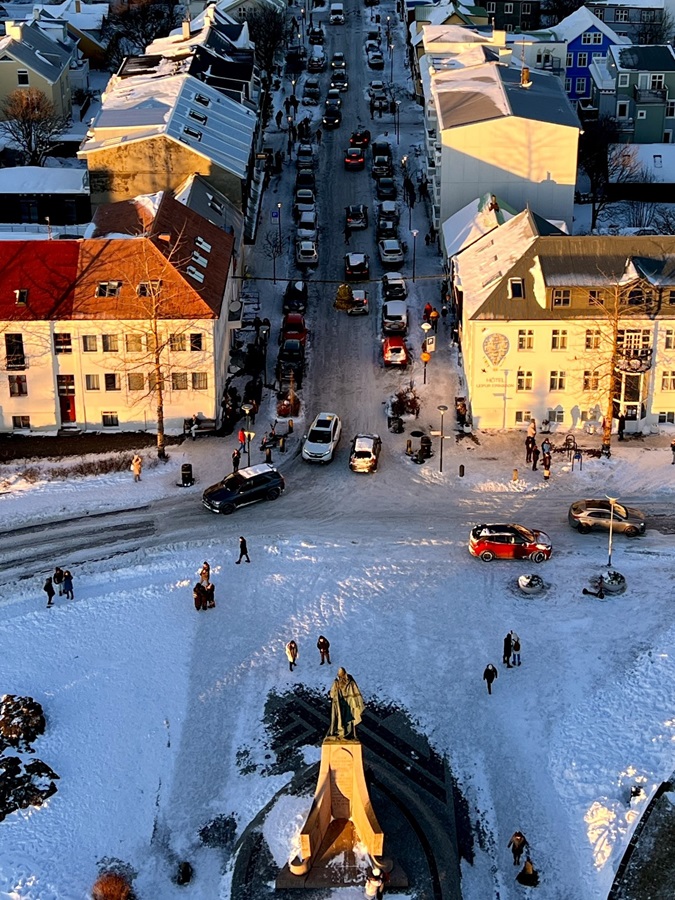
Back down at ground level I looked up to where I had just been, spotting the clock and the windows above it. At 74.5 metres the tower was the tallest building in the whole of Iceland until 2008 when an office block in Kópavogur was built 3.5 metres taller!
I took a closer look at the inscription below the statue of Leif Erikson. It was gifted to Iceland from America to celebrate a thousand years of the Alþingi - the Icelandic parliment. It also acknowledges the discovery of Vinland, the name given to "some where beyond Greenland", and the fact that "Leif the Lucky" was probably the first European to step onto the American continent.
Back at the apartment Julie had been busy finishing a Christmas project, which was an Elf stocking to fit at the base of chair leg. It looked fantastic!
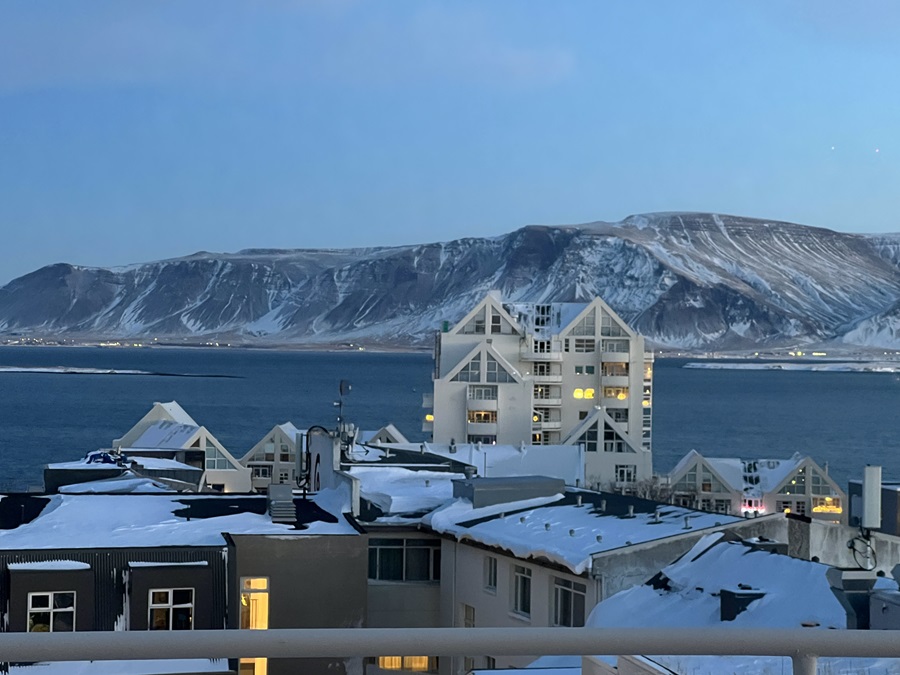
The view out of the window was also becoming fantastic. The light was just turning that shade of purple that often happens just before the sun sets. As I stood mesmerised by the sheer beauty of it all I remembered that the World Cup final was being played today. It was usually a summer tournament but because it was held in the desert of Qatar it was moved to December. A quick internet search and I found out it was taking place that very moment.
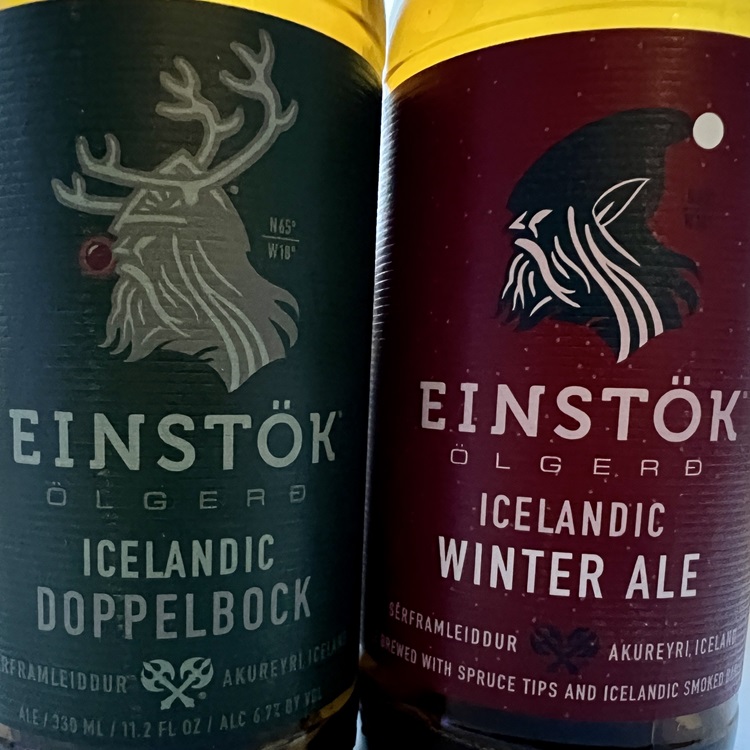
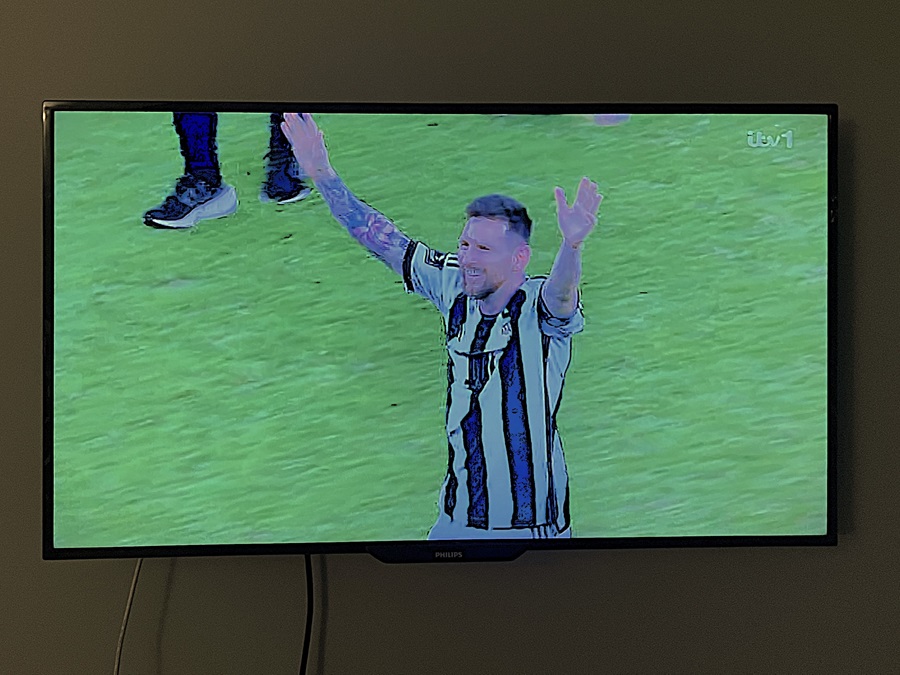
A frantic channel flick brought me to ITV's live coverage! I cracked open my Einstök beers to watch the game as Julie continued with another elf stocking. It was France v Argentina, billed as Messi v Mbappe, the respective best players of the rival teams. It was an exciting game with the South Americans racing to a 2-0 lead, through a penalty by Messi and a goal from former Manchester United player Angel di Maria. It looked like it was all over with ten minutes to go but then France got a penalty awarded. Mbappe stepped up and scored. Then a minute later he scored again! There were incredble scenes on and off the pitch. The 90 minutes ended 2-2, so it was extra time. It was like watching two heavyweight boxers slugging it out. Argentina struck first through Lionel Messi only for France to be awarded another penalty. Mbappe got his hatrick. So the game finished 3-3 which meant it was down to a penalty shoot-out. Messi and Mbappe slotted theirs away first. The next French player had penalty his saved and then the next French player, Tchouaméni, with all that pressure on his young shoulders, missed the goal altogether. With only two more penalities to be taken Argentina only needed to convert one more, and Gonzalo Montiel became the hero.
Argentina were crowned the World Cup Winners 2022. What an incredible climax to the game. I thoroughly enjoyed it and Julie had nearly finished another festive chair stocking!
Straight after the game finished and before Argentina lifted the cup, we heaed out for supper. A short distance from the apartment was the Bastard Pub, a gloriously irreverant name for a bar and restaurant!
The profanity theme continued inside with a poster on the wall of an oil painting of a wig wearing 18th century gentleman with "Where's my fucking beer?" graffitied over it. Incidentally the beer I had (a hazy ipa) was really good.
They served Bastard burgers called the Fat Bastard, Skinny Bastard or the Bastard of Louisiana. We found it very funny, although I'm sure the joke would wear thin after a few visits.
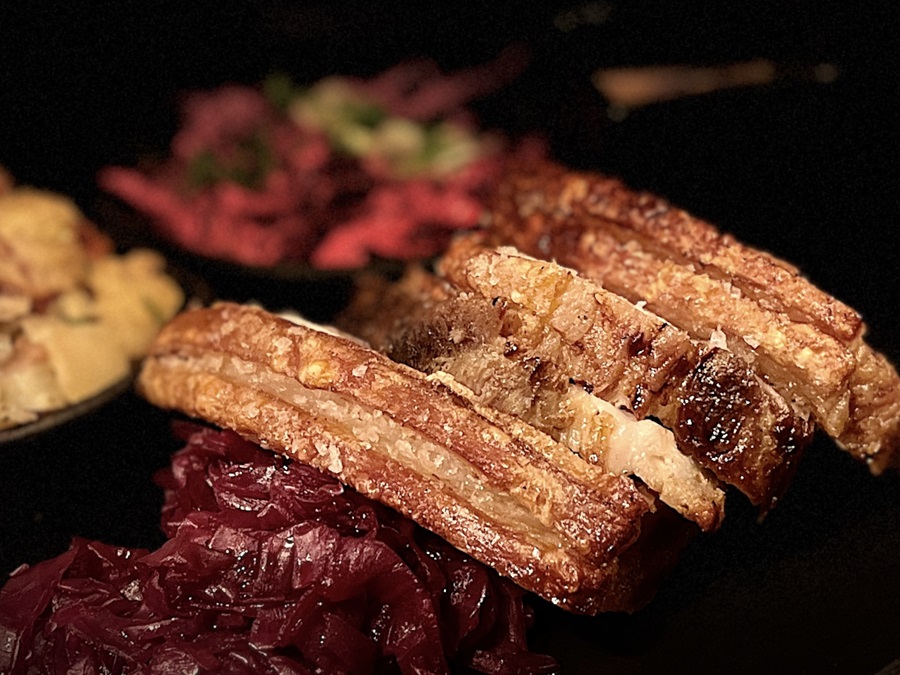
Neither of us ordered anything fould-mouthed, Julie opting instead for their delightful Belly Pork and I had the comforting baked camembert topped with honey roasted nuts, and served with a fruit and chili chutney. All very delicious. We soon returned to our apartment because a) it was cheaper and b) we had booked ourselves onto a late night tour in search of the Northern lights. Sat on the chairs watching rubbish on the telly we were unsure about going out so late at night. The pros and cons were discussed. We were leaving tomorrow but not until 8pm so we could sleep in. Julie was still feeling unwell and I was begining to get the same symptoms but it was an opportunity to tick off a bucketlist experience. We checked the safetravel app and whilst many roads were still closed it didn't look as bad. In the end I think if the apartment had been furnished with a comfortable sofa we probably would have stayed at home, but at 9:30pm we put our coats and boots on and walked down to bus stop #6 to catch our pickup.
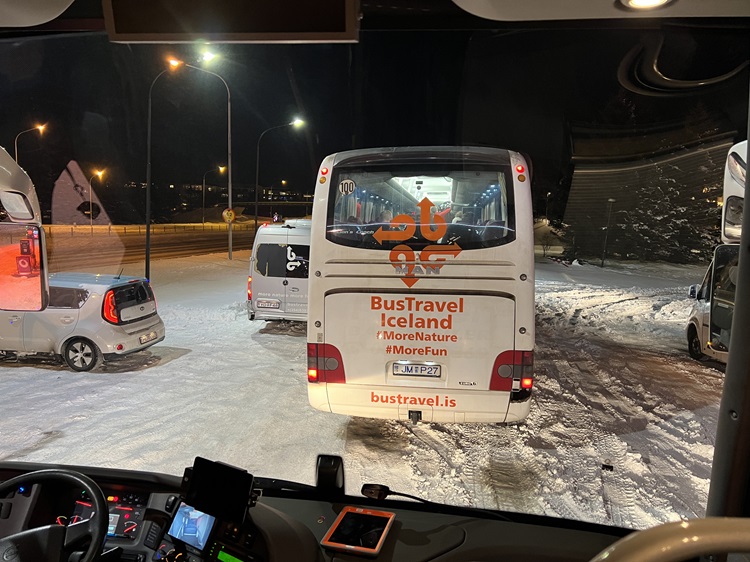
We boarded a large coach, then after two other collections we stopped at a garage on the outskirts of the city. A couple of other coaches arrived and we then played musical minibuses as we all got allocated then reallocated into smaller transport. Eventually, at about 10:30pm we were all ready to leave. After about five minutes we came to a stop. "This is a popular spot!" announced our driver/guide in an Eastern European accent. He spoke as if he learned English by watching TV commercials. Each sentence was a statement, with a short punchy delivery ending with an elongated last word, like "The sale is now ooooooonnn!!" Most peculiar. Anyway, we saw nothing and we moved on, taking the ring road North through the town of Mosfellsbær. The roads were clear which was a relief.
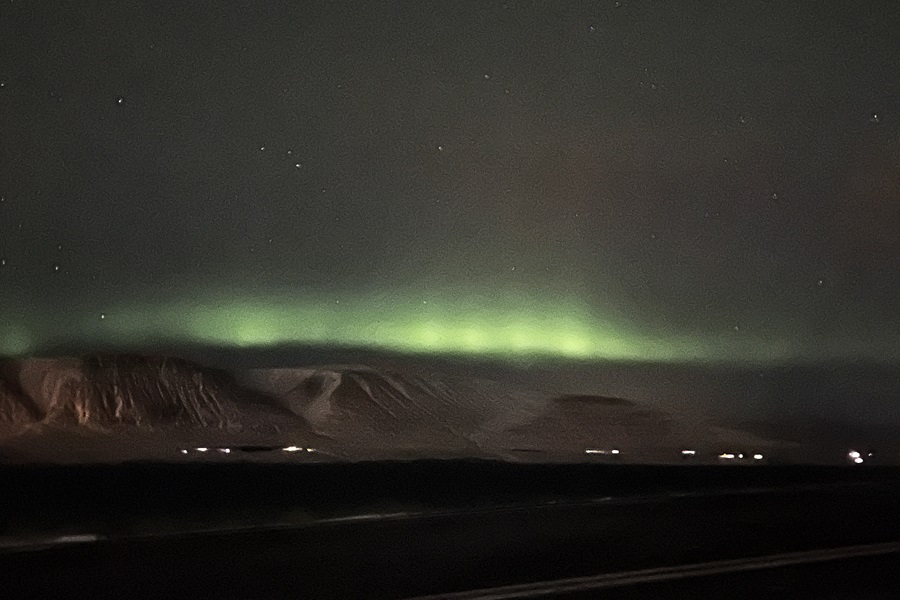
We turned off the ring road just before Hvalfjörður tunnel, and the town of Arkanes. After a few minutes heading East on route 47 we pulled over. Our driver was getting excited. "We have something!" he announced. But there were several other buses parked on the side of the road. All of us got off the bus to have a clearer view. To the North, above the Akrafjall mountain range there was a faint glow, hardly noticable with the naked eye. The camera, with its longer exposure, could pick up more of the green haze but it was all a bit underwhelming.
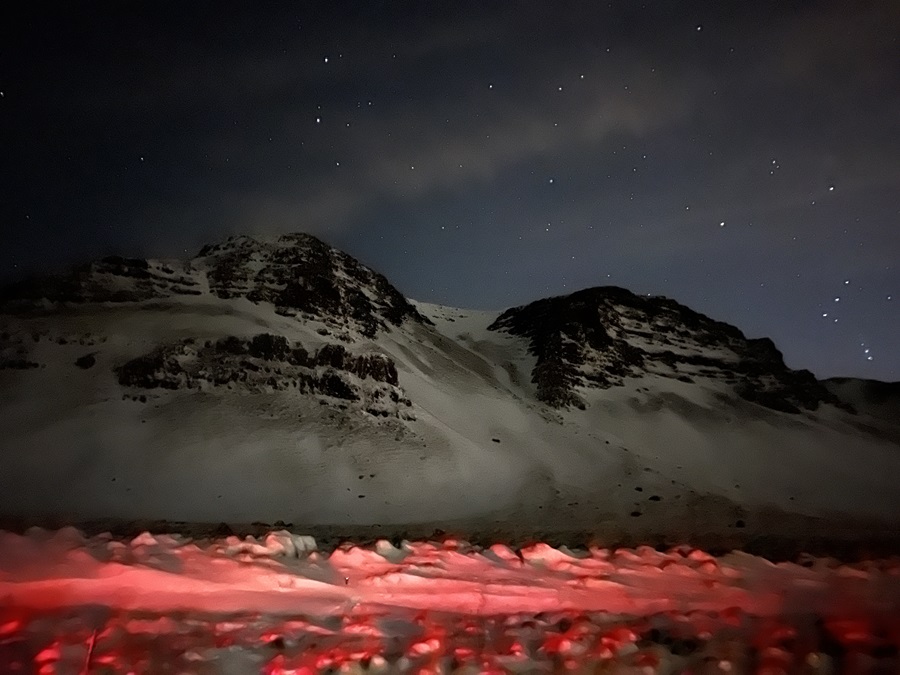
I turned my attention to the clear sky and the ridge behind us. It was a lovely starry night. The back lights of the buses gave their own red aurora. The temperature had now dropped to -11C so we didn't stay outside for too long. Julie and I were the first back into the minibus. We continued East, driving for a further twenty minutes to Kjósarhreppur where we pulled over again, this time down a small track. There was just enough room for the minibus to get off the main road.
Off we all got and walked down the track towards a gate. The minibus lights were switched off and we looked North. Now this was a better aurora. Even with our own eyes we could see a thin green band, although the camera still captured a more intense show. There was a house in the foreground lit up brightly with a warm orange tint but instead of detracting from the view it actually enhanced the colour scheme. In trying to get a clear shot without anyone in the way I stepped to the right, just on to the verge, but I stepped into a ditch up above my knees in snow. The wind was whipping in now and my fingers were getting numb. I was happy with the photos I had captured so we both returned to the warmth of the minibus. To celebrate our aurora borealis experience our driver cracked open his flask of hot chocolate and shared a large bag of chocolate covered cinder toffee. It was time to slowly return to Reykjavik. By the time we had dropped everyone off at their respective bus stops it was 1:30am when we reached our apartment. Tired but feeling it had been worth the effort. Next Day >>> |
|
©Copyright 2000 - 2026 Colin Owen |