(not my) Last Supper
Wednesday 19th
October 2016
|
|
Pearl
(not my) Last Supper |
|
|
|
Despite not turning off my alarm and waking up early and hungry, eating a yogurt and a banana, I managed to get back to sleep. The curtains did a good job at keeping the daylight out. It was 11am by the time we began our next 30 years of marriage.
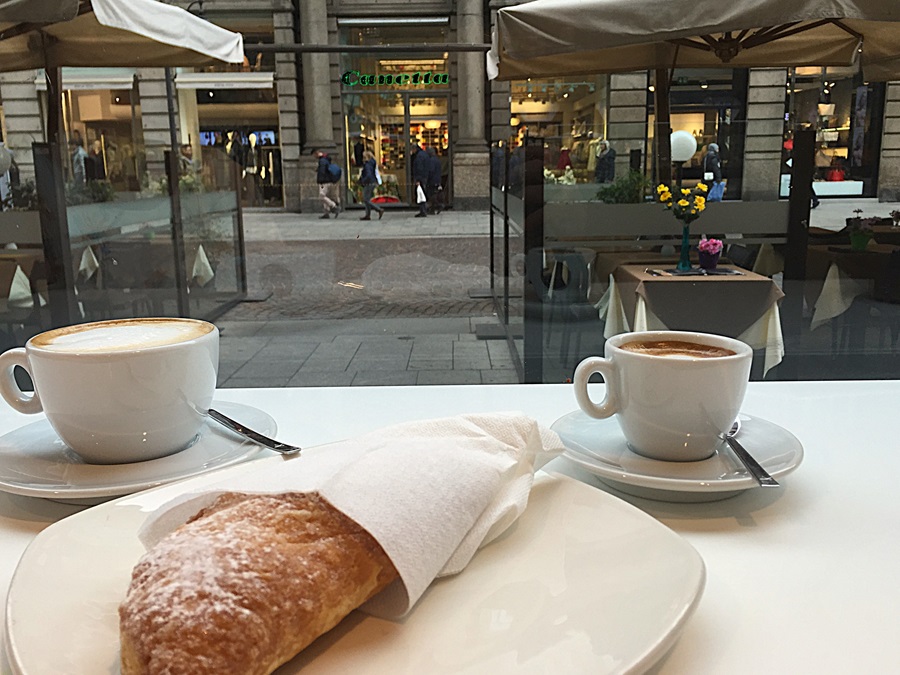
Following the now familiar route towards Piazza del Duomo, we then turned left instead of right, walking up Via Dante. It quickly became a pedestrianised street which made it a much more pleasant stroll. We stopped for a coffee at Caffe Spizzico. It was slightly overcast today so we sat inside rather than out on the pavement. A little hungry we both had a pastry with our coffees. I had an apple turnover with my cappuccino which was the perfect sugary rush I needed and Julie had a croissant with her "Italian" coffee. I'd not heard coffee called an Italian before. Having two shots of espresso coffee watered down was what we would call an Americano but I suppose this was different in that it only had a splash of water added. I tried some and it was the perfect balance.
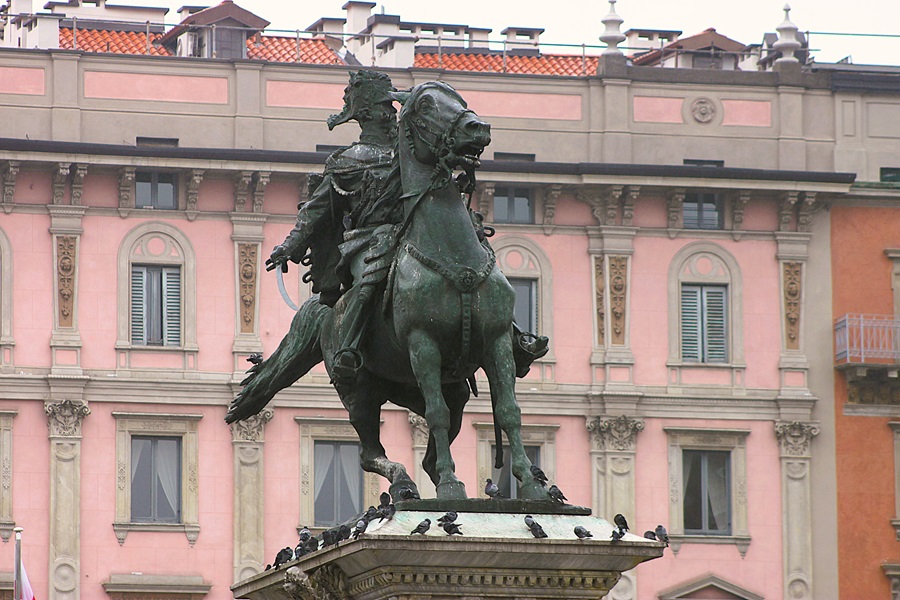
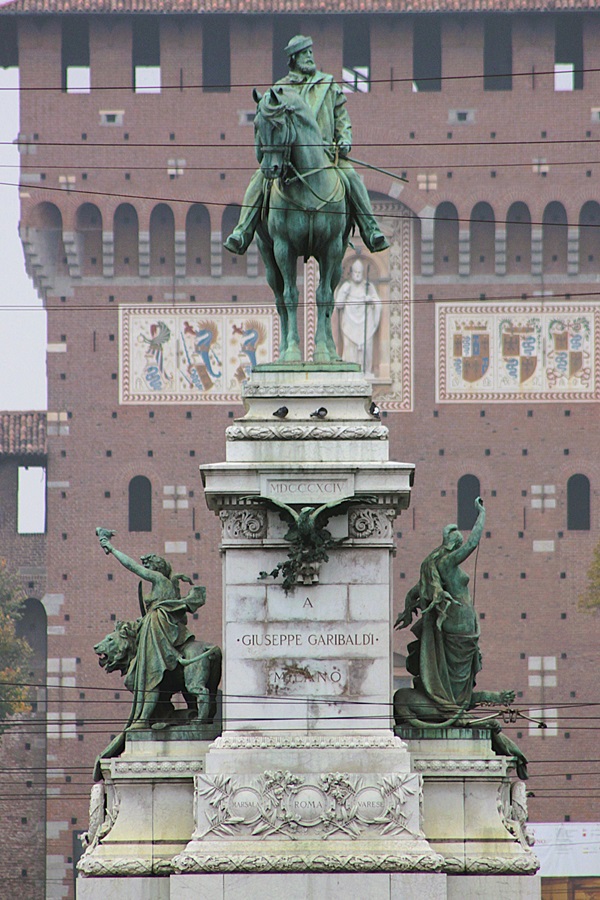
Moving on, we continued up Via Dente towards the red brick Castello Sforzesco. The main tower, Torre del Filarete was quite an imposing sight. Before reaching its walls we had to navigate across the peculiar roundabout of Largo Cairoli. Busy with cars on the outside and then trams on an inside track. At its centre was a statue of Guiseppe Garibaldi the Italian general and revolutionary who not only inspired a famous biscuit but also played a major part in the Risorgimento, the unification of Italy in 1861.
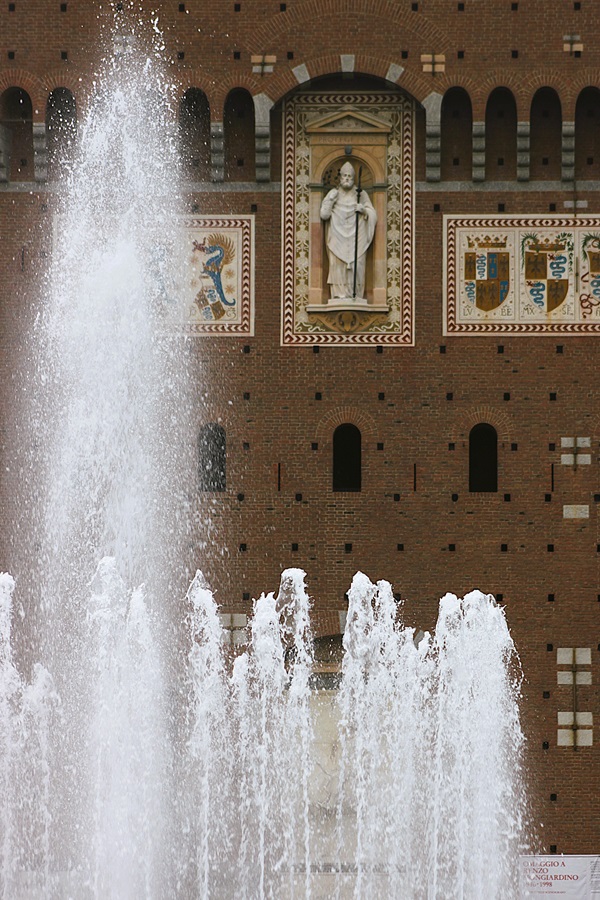
Beyond Garibaldi was a fountain. It didn't have a fancy name, it literally was called the "fountain in the Castle Square". It was no Trevi, that's for sure.
It was just a simple water feature but what it lacked in ornate embelishments it made up for with an abundance of water shooting up several metres. It generated plenty of noise as the great volume of water was constantly splashing back down.
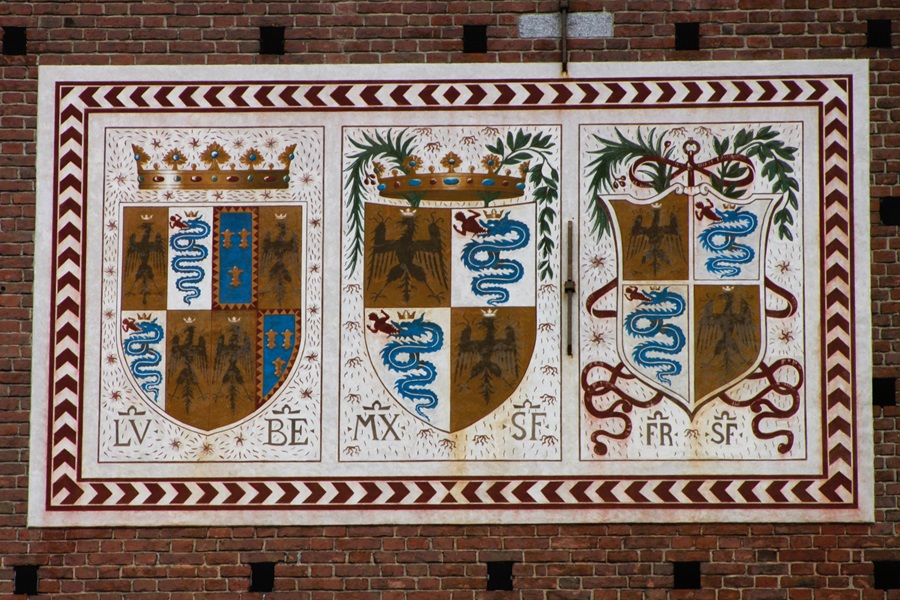
Eventually we stood at the gates to Castello Sforzesco and looked up at the main tower. It looked in remarkable condition for a 15th century castle but that's because the Filarete Tower was a modern reconstruction, rebuilt in 1905. Set into a niche in the centre was a statue of St. Ambrose, the patron saint of Milan. On either side were numerous coats of arms of the Duchy of Milan, almost identical with just some subtle variations, like in a game of spot the difference. They all contained a blue snake, swallowing a child. The image, known as a biscione, was adopted by the Visconti family as early as the 13th century. In 1395 Gian Galeazzo Visconti became the first Duke of Milan. He was followed by his two sons Galeazzo Maria and Filipo Maria who both succeded him. The Visconti lost their grip on power in 1447 when Filipo died without an heir. It encouraged a revolution and Milan briefly became a republic. They destroyed the Visconti fortress that stood here. Three years later Francesco Sforza, the husband of Filipo's illegitimate daughter Bianca Maria Visconti, seized control back to the Duchy and rebuilt the castle.
The coats of arms on the Filarete tower represented the Sforza dynasty from Francesco Sforza the fourth Duke of Milan, his son Galeazzo Maria Sforza and then his grandson Gian Galeazzo Sforza, who died at the age of 25, assasinated by poisoning. His uncle, Ludvico Sforza, was suspected to be involved but he became the 7th Duke of Milan regardless. Medieval Europe was rife with such plots and assassinations. It was easy to see from where Games of Thrones got its inspiration.
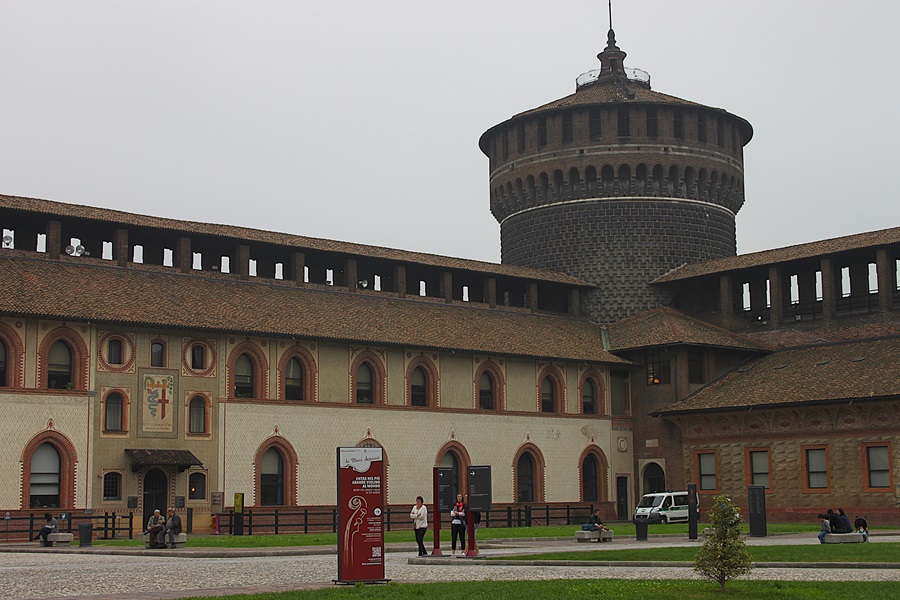
We walked through the gates and entered Cortile della Armi, a large inner courtyard where kinghts of the realm trained and tournaments were held. What exists today was rebuilt by Francesco Sforza from the ruins of the Visconti fortifications destroyed by the short-lived republic. In two of the corners there was a large round tower, Torre del Carmine and Torrione di Santo Spirito. These were original 15th century fortifications, built with walls seven metres thick and a diameter of 20 metres. They looked formidable. Entry to this area was free of charge.
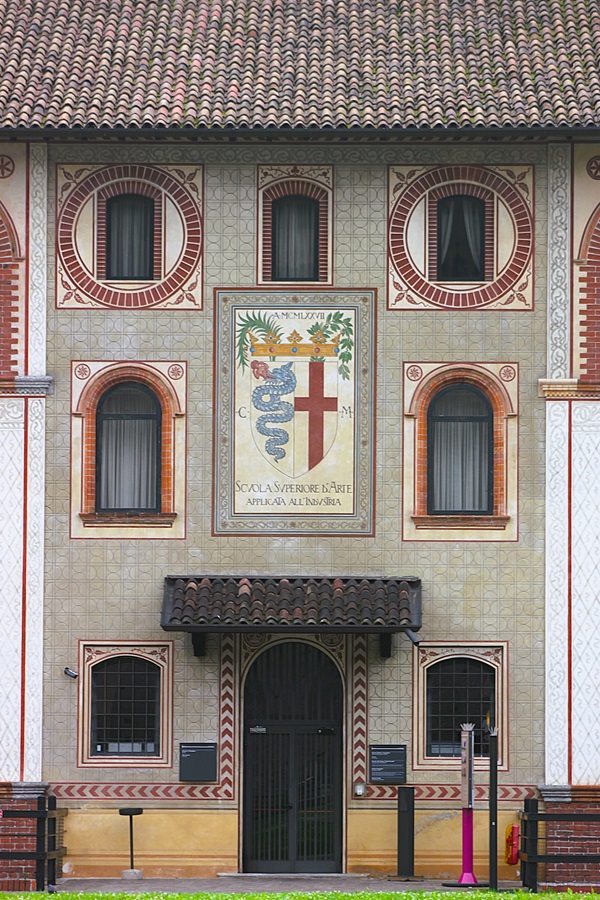
There were several museums housed inside the castle's many halls and rooms, like the Museum of Ancient Art and Armoury, Museum of Decorative Arts, the Archaelogical Museum and many more. We chose not to visit any of them because we were quite content to walk around the courtyard looking at the collection items on display out in the open. Above the door to one of the museums was another variation on the Sforza crest. This had the biscione snake on one side and on the other, the red cross of St.George, which not only is the national flag of England but also of Milan. This combination is actually still used today by Alfa Romero, the famous Milan based car manufacturer.
One of the items displayed was a marble statue of St. John Nepomuk. He was a 14th century Bohemian priest, executed by King Wenceslas IV, and then declared a martyr. His cult grew especially following an Ottoman siege of Vienna in 1683 where his spirit performed miracles, endearing him to the Hapsburgs court. When the Sfroza dynasty came to an end in the mid 16th century it was the Hapsburgs who took over control of Milan. They brought with them their prefered saints and the statue of St. John Nepomuk eventually settled here at the castle.
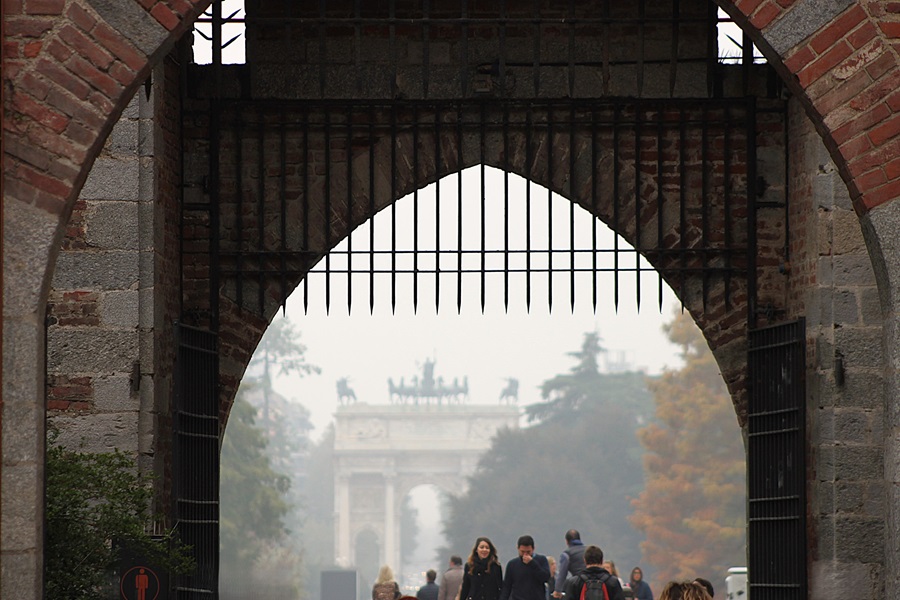
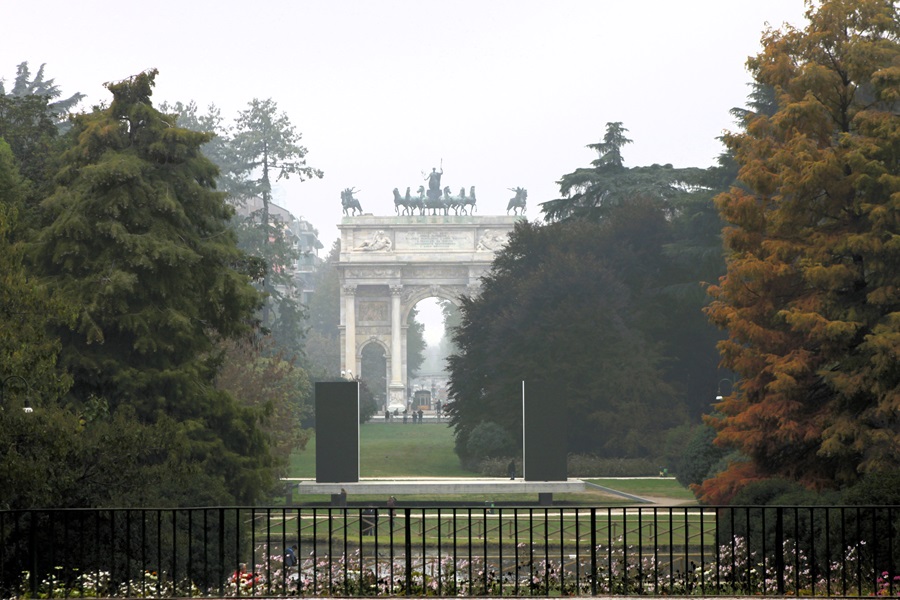
We left the parade ground, walking out through the gates to the Parco Sempione, a large park that had an imposing truimphal arch in the distance. The arch was comissioned by Napolean to celebrate a decisive victory at the Battle of Jena.
However in 1815 it all came crashing down for Napolean after the Battle of Waterloo and he never got to see the arch finished. It was completed by the Hapsburgs and renamed Arco della Pace , the Arch of Peace. We stood for a while looking out over Parco Sempione before turning around and heading back inside the castle.
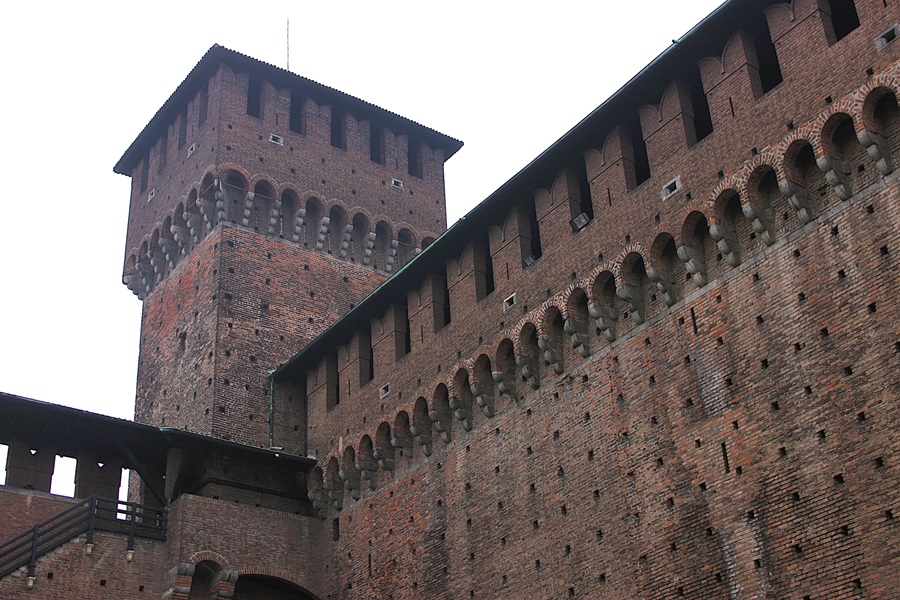
Inside on our right the walls of the fortress looked impregnable with the Torre di Bona rising up like a battleship in the middle of it all. Then looking to our left we saw La Corte Ducale a narrow courtyard which had a slight arabic feel to it with a long pool down the middle towards the colonade at the end.
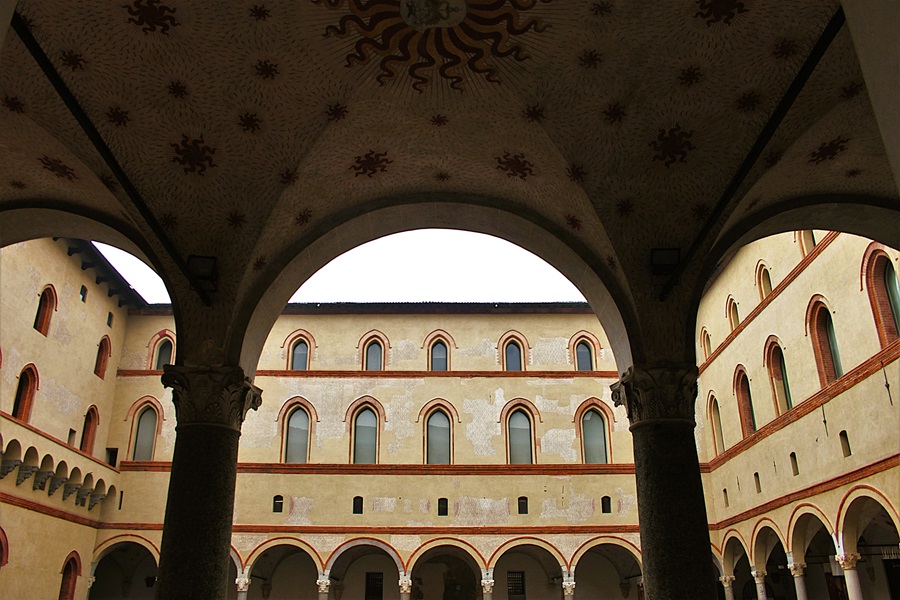
Back to our right again, we popped our heads inside the beautiful Cortile della Roccetta, a small courtyard with arcades wrapping around three sides. The vaulted ceiling had these red and gold blazing sun motifs emitting wavy rays of sunshine.
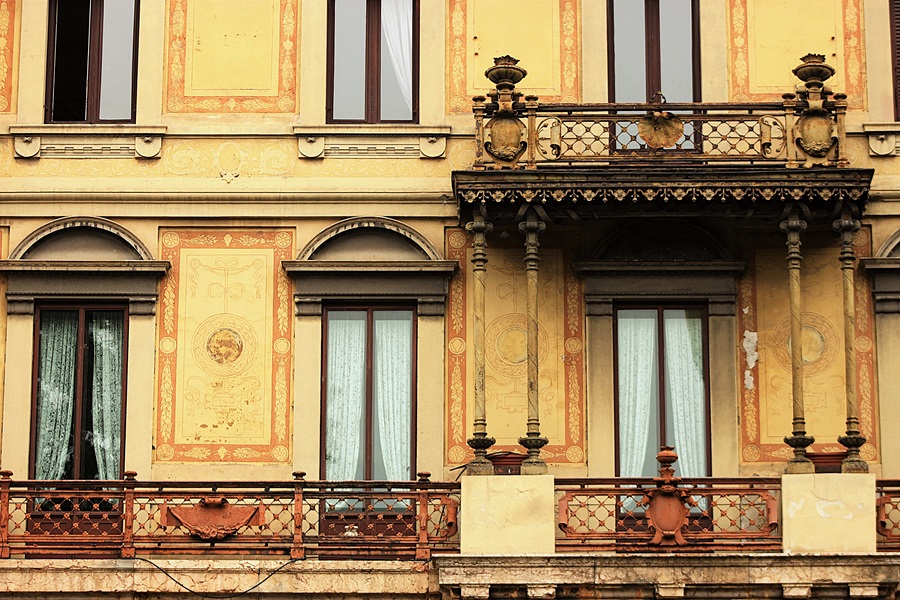
We left Castello Sforzesco, crossing the road towards the grand townhouses with their ornate balconies overlooking the castle.
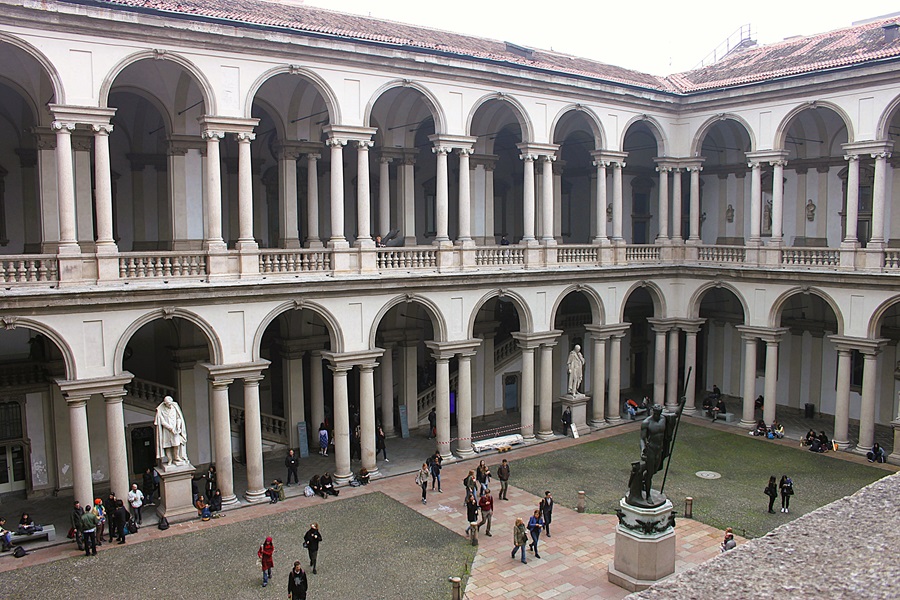
With our trusted Google maps in hand we were on our way to find Palazzo Brera, a former Jesuit college and now home to two arts and science academies, a library and a public gallery. It was a good ten minute walk from the castle. Once we found Via Brera we couldn't miss it. The palazzo itself was enormous.
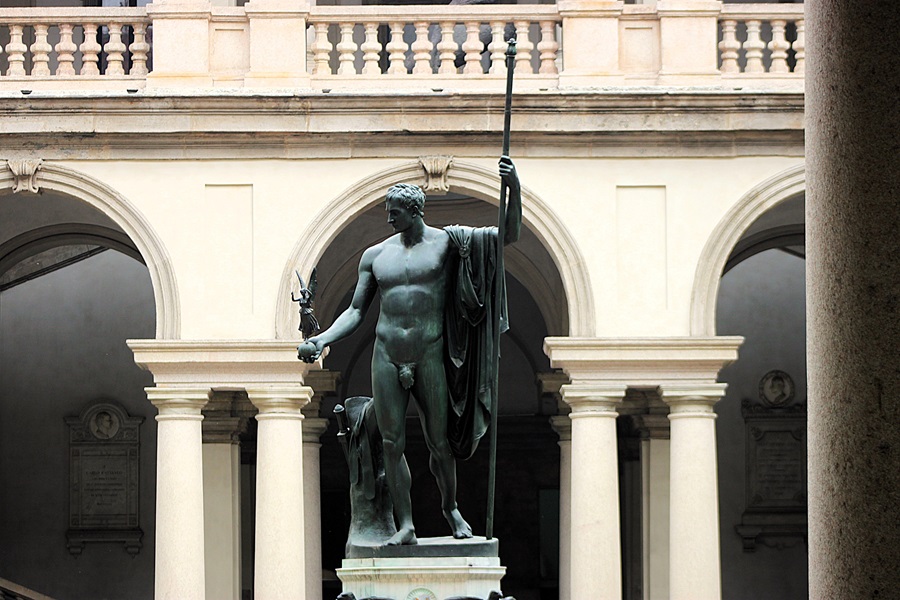
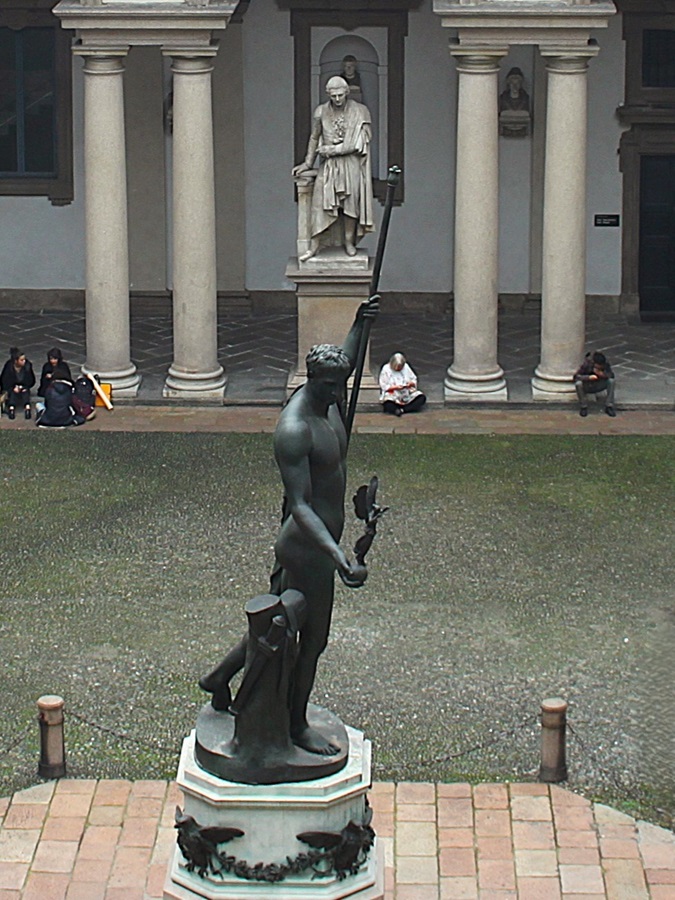
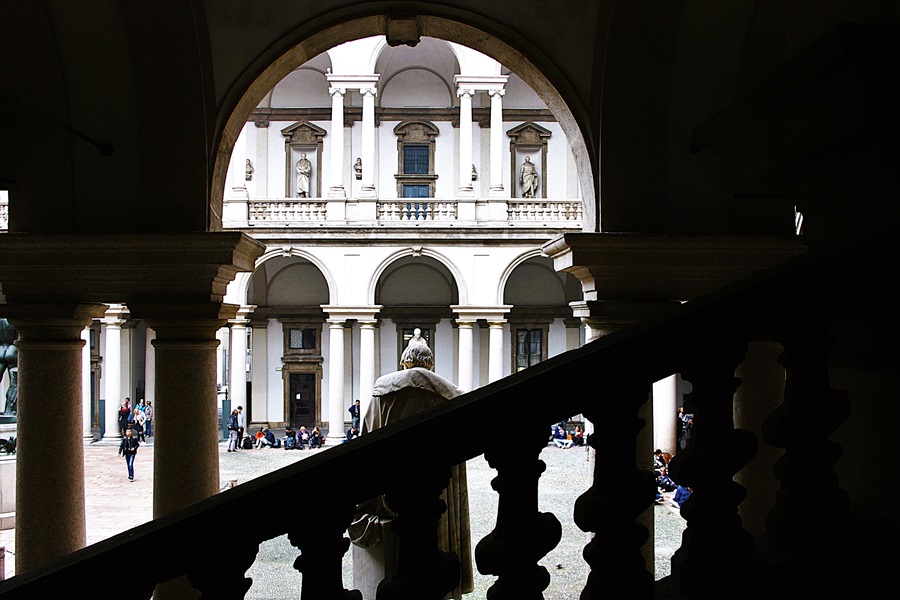
The first thing we saw when we walked through its huge portico entrance was a bronze statue of Napolean as Mars the Peacemaker. The original was a marble statue carved by Antonio Canova at the request of Napolean. It turned out he didn't like it, complaining it looked too athletic. After the Battle of Waterloo the British Government bought the marble statue from the Louvre in Paris and then gifted it to the Duke of Wellington. This bronze copy was cast only five years after the original was completed and has stood in the centre of Palazzo Brera since 1859!
We walked around looking into the rooms where students were busy in class. In one room they were busy working on a marble statue, not with a chisel but a hand-held grinder. I then headed up the stairs to the balcony for a good view. Julie was content to join many others sitting down on a short step around the edge of the courtyard. She sat at the foot of a large statue of Count Pietro Verri an 18th century economist, amongst other things.
From the balcony I could really appreciate the double pillars (or coupled columns) holding up the arches. I kept on telling myself it was a "much better view" to justify all my effort of walking up the staircase but it was just a different view, that's all.
I soon returned back down and joined Julie at the foot of Count Verri where we watched people come and go until it was time for us to go to.
Back out on Via Brera we followed the street towards the centre reaching the Scala theatre within no time. I had checked on-line yesterday what performance was on and they listed a ballet called "Giselle". We didn't fancy that. But when we checked the poster outside tonight they were performing the opera La Nozze di Figaro (The Marriage of Figaro) by Mozart. If only we had known in advance. That would have been an incredible experience.
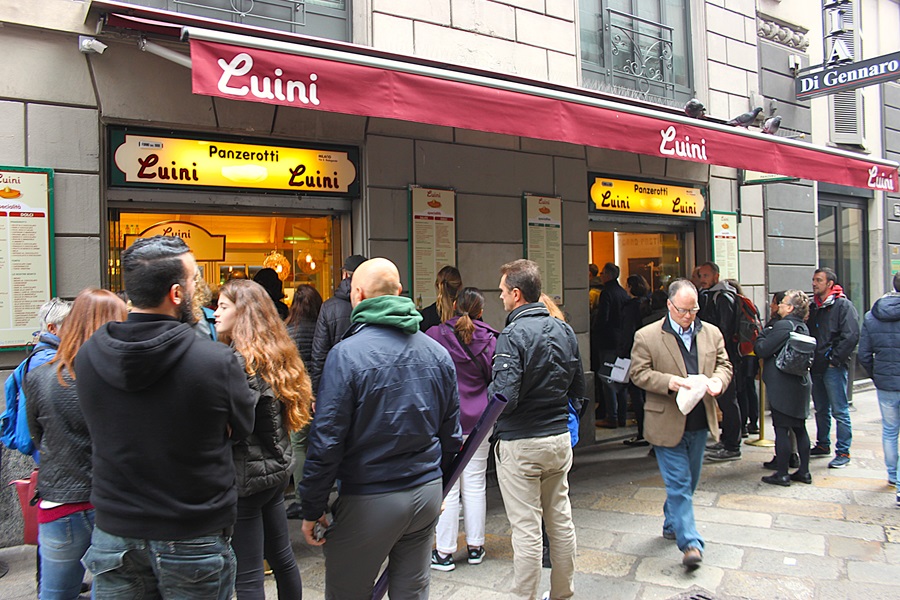
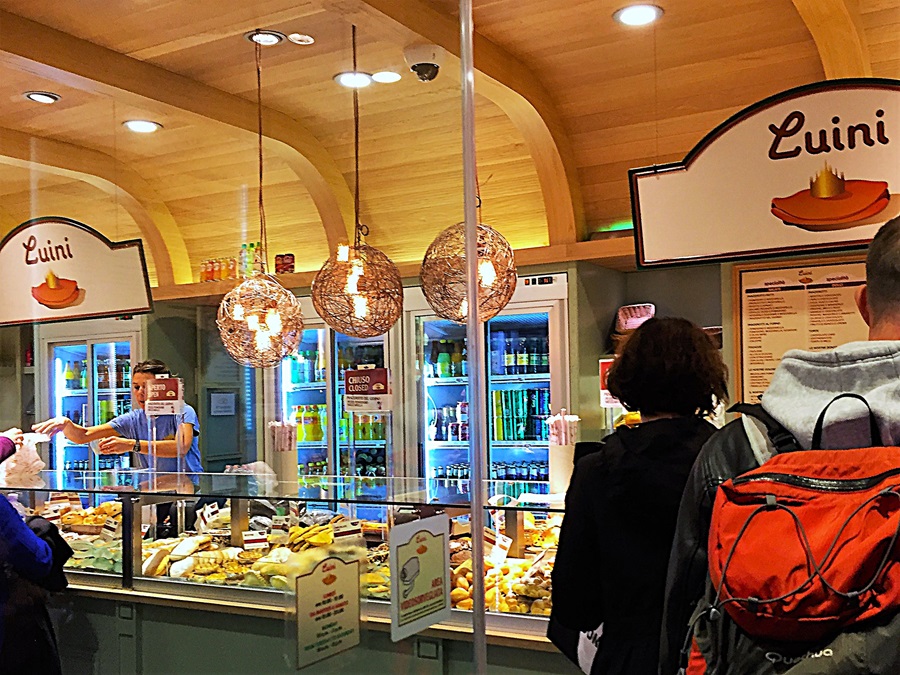
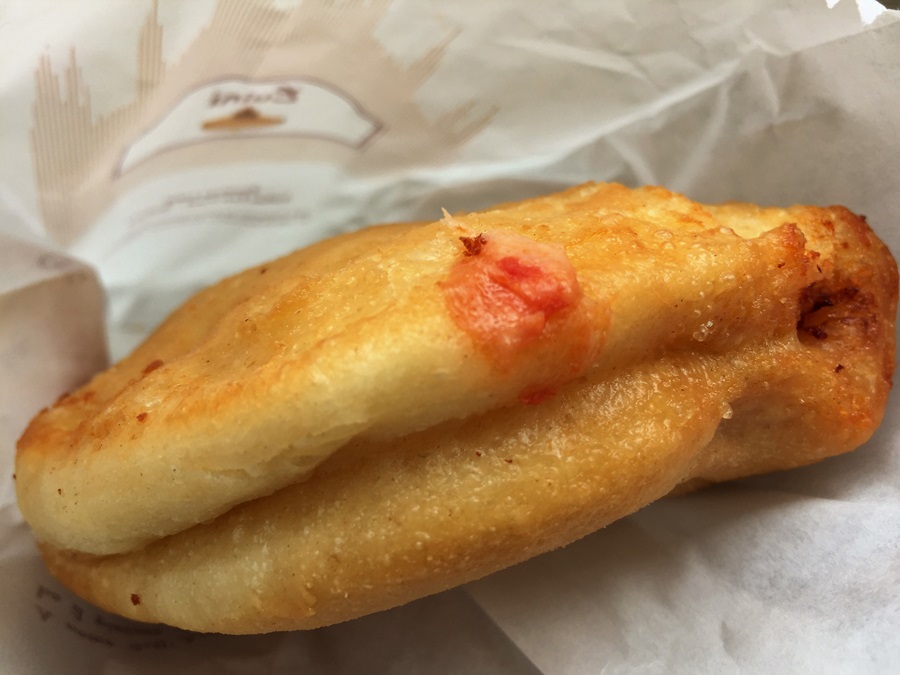
It was now 1pm and time for some lunch. We had heard about Luini, a restaurant selling panzerotti, a small deep-fried folded calzone pizza for want of a better description. They are traditionally from the Apulia region and we remember eating some in Altamura last year.
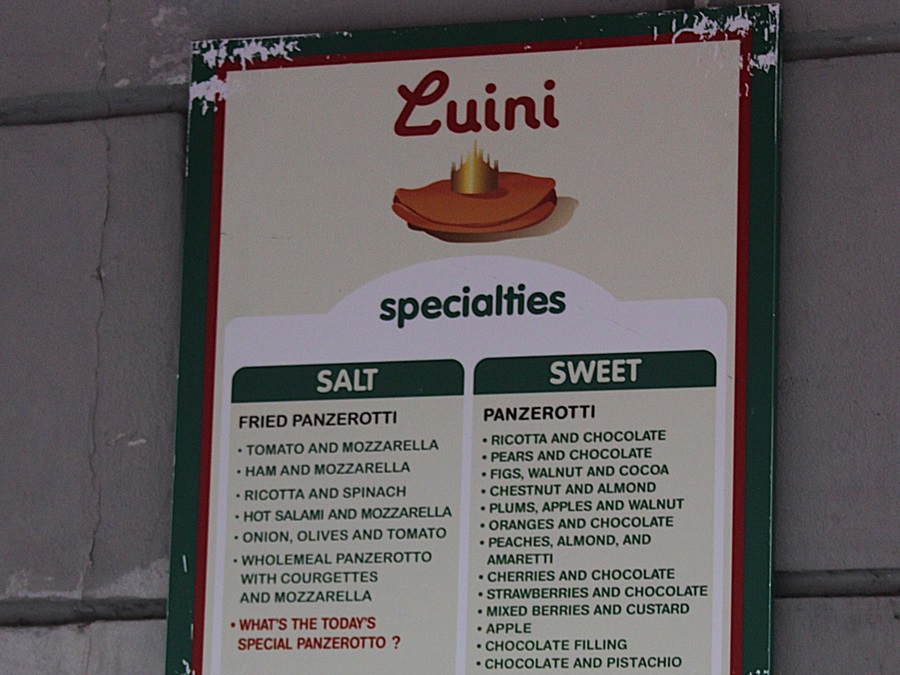
We joined the back of a long queue, that's how much I wanted to try these delicious snacks. It also gave us time to check-out their menu. They did sweet variations but we were here for the more common savoury (or the salt as they described it). I was spoilt for choice, for a change. Out of the six choices four did not have meat. I really like the sound of the wholemeal panzerotto filled with courgettes and mozzarella. They even had a vegan option of onion, olives and tomato but I decided to go more traditional with either the tomato and mozzarella or spinach and ricotta filling. They also had a daily special which was again tomato and mozzrella but with the addition of pesto.
The nearer we got to the counter the more excited I became. I was literally drooling at the sight and smell of all the panzerotti. Looking at the size of the little fried pizza I was going to order two but I still hadn't decided which filling. I wanted to try them all!
When it was my turn to order I went tomato and mozzarella and the daily special with pesto. Julie opted out when she saw the potato and onion topped foccacia. That had her name written all over it! We did what everyone else was doing and ate them, there and then, in the street. They tasted amazing. I could easily had eaten another two.
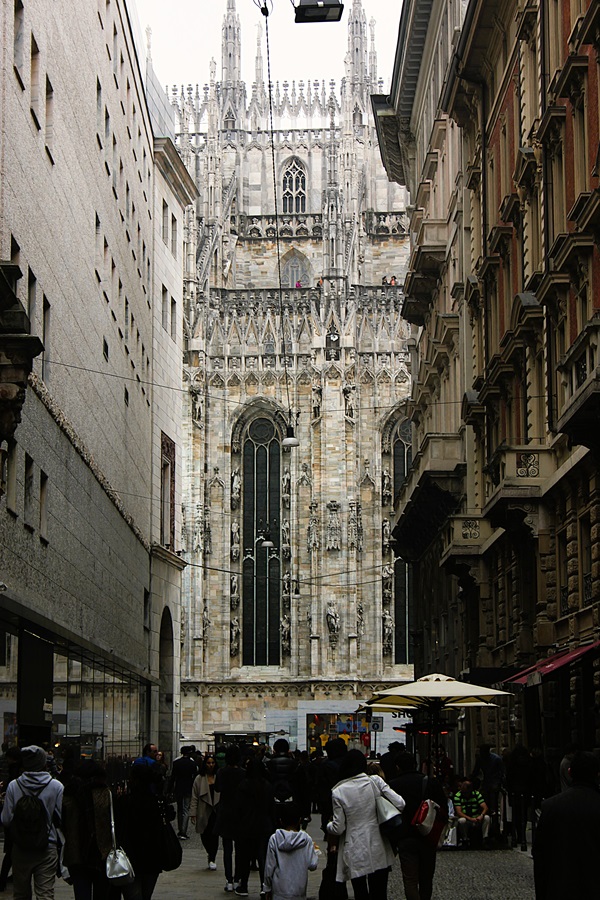
After our lunch we returned towards the Duomo. We came to the ticket office and decided to pay €11 each to not only go inside the cathedral but also to climb up to the roof. The was a premium €15 ticket to take the lift up but Julie didn't fancy being inside a crowded elevator. So we took the 165 steep steps spiralling up and up.
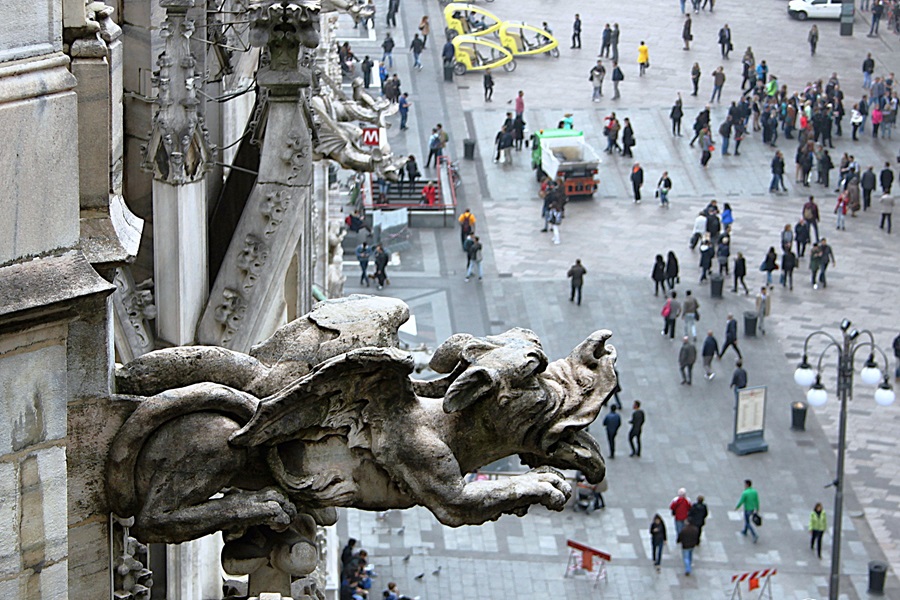
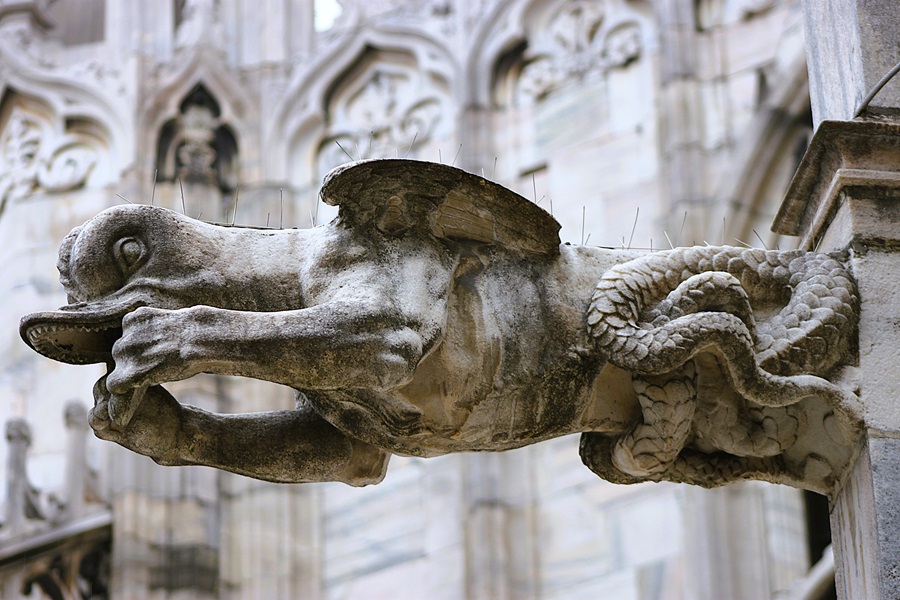
All the windows or openings had been blocked up so we couldn't judge how high we were climbing. When we emerged at the top it was quite a surprise how high up we had come in a short space of time. The first thing that caught our attention were these dragon-like winged gargoyles jutting out.
I often wondered why churches would have such grotesque statues looking down on the masses. I know they serve a practical purpose as downspouts to send the rain water as far away as possible from the founations of the walls but I suppose the deformed figures serve to remind people of the consequences of sin and evil.
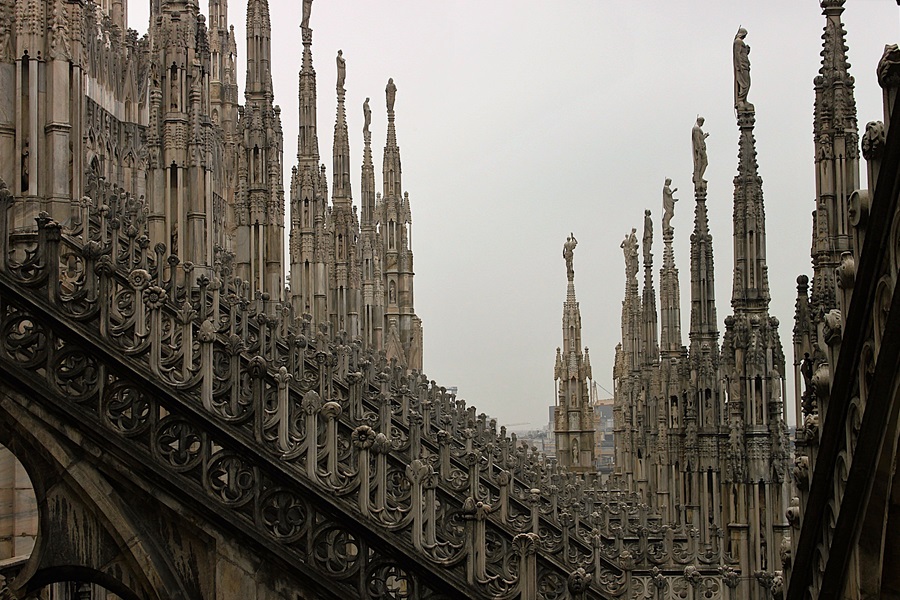
We moved on, walking up alongside the impressive flying buttresses, an architecural feature that supported the walls. It was a spectacular view. Not only because of the decoratively carved arches but the forest of spires and statues. Since 2012 the cathedral has been running an "adopt a spire" promotion to raise funds for the constant maintenance of the cathedral. A strange concept really. We wondered what you get in return, updates from your favourite saint?
We slowly made our way along the length of the roof. It felt odd literally walking on the actual roof. There were no control barriers, so we could wander all over the place. However for the most part we stuck to the safety of the spine down the middle.
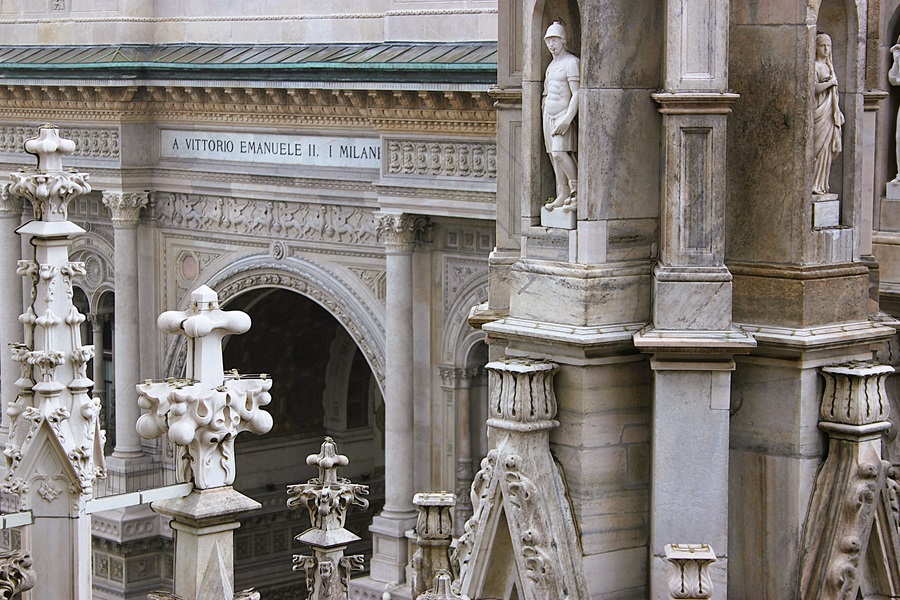
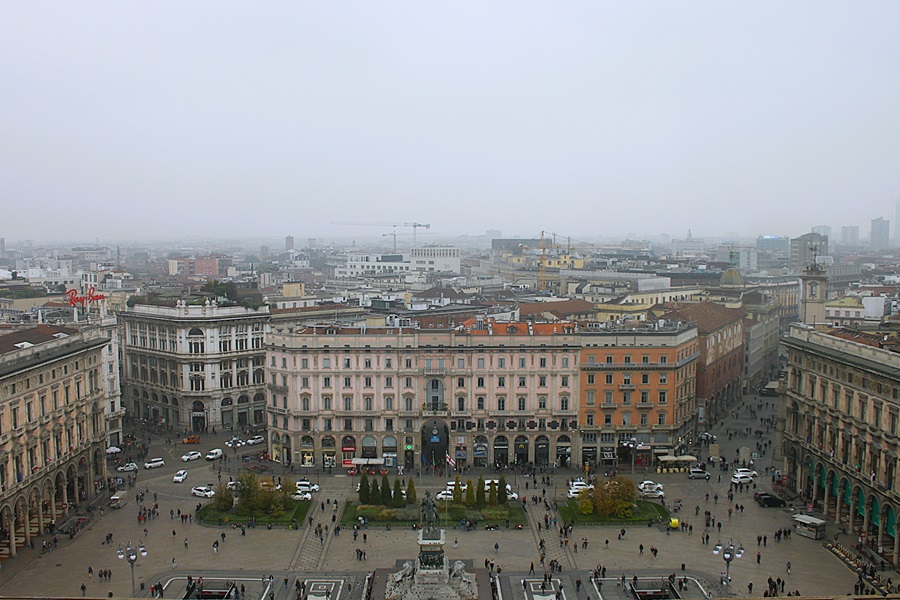
Despite being on the roof of the tallest building in central Milan there wasn't much of a view. It was strangely uninspiring. It was mostly an odd mash of rooftops, nothing of note. The best views were of the buildings directly opposite, which for the most part was the Galleria Vittorio Emanuele II.
It made us realise how striking was the entrance to the Galeria. What we couldn't see from ground level was a feature above the arch, a small canopy in jade green with a support below in a golden colour which made it looked more Chinese pagoda in design.
When we reached the end of the roof, we poked our heads between the spires and looked out over the piazza below. The sky's overwhelming gloominess added to our ever decreasing wonder. It was all a bit disappointing.
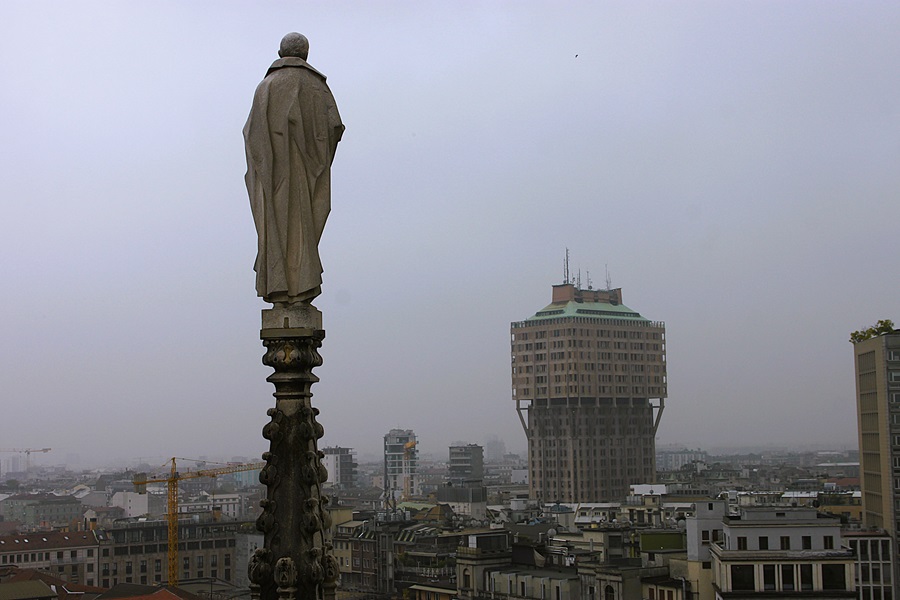
However, looking South, beyond St. Camillus de Lellis, was a little more interesting. They appeared to have ignored the old "thou shall not build taller than Duomo" rule, with a fifties monstrosity and Milanese landmark, looming tall. I've read the undeniably unique skyscraper of Torre Velasca described as a "mushroom" which made it sound almost appealing, which it was not. It was definitely more "battleship" which brought to mind Torre di Bona, the tower from the Castello Sforzesco.
Oddly enough the Torre Velasca wasn't actually taller than the Duomo. Ignoring the antenna, the top floor of tower was only 75 metres, whereas the cathedral, all the way to the top of the spire and golden statue of the Madonna was 108.5 metres high. It made us realise how significant of a structure the Duomo was in fact.
We returned across the roof, back along the spine all the way towards the golden Madonna perched on the tallest spire. She didn't look especially large but she was in reality 4m tall! Despite the disappointment of the view made us realise that the real attraction to climbing up onto the roof of the cathedral was not the promise of a panorama but to get get up close to the spectacular architecture.
It was time to leave. We had seen all that there was to see. The entrance and therefore the exit to the spiral staircase from the roof was outside, rather than inside the cathedral, so when we left we found ourselves back out in the square. If we had all the time in the world our next step would have been inside the Duomo, especially as it was starting to rain. However, we had time-allocated tickets to see Milan's most famous fresco, so we had to get going. We left Piazza del Duomo, in a quick march, returning in the direction of Castello Sforzesco, turning by the Caffe Spizzico and a Tiger store full of cheap plastice toys. From there it was still a considerable trek to where we needed to be.
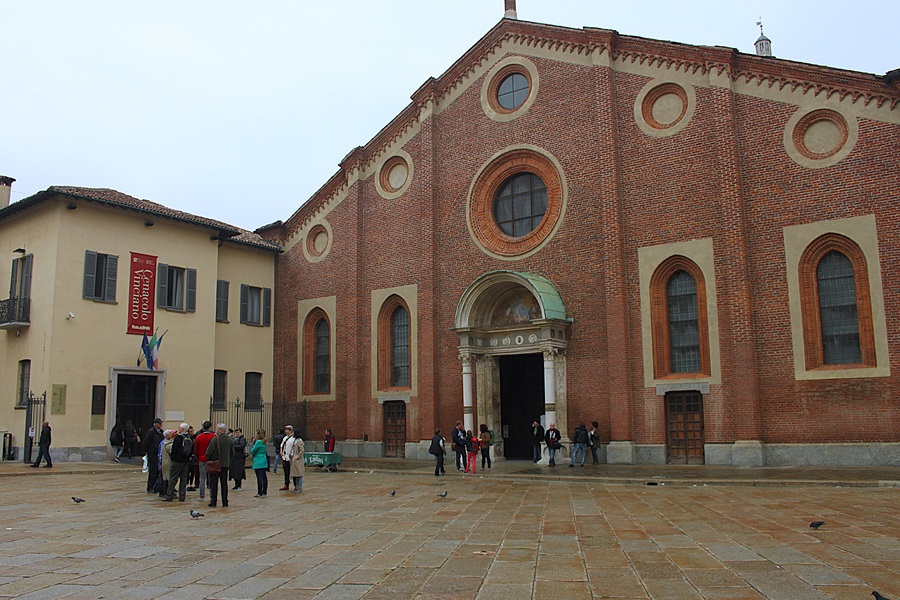
It took us a lot longer than we thought, but half an hour later we eventually arrived at the lovely red brick Basilica di Santa Maria delle Grazie on the side of the street. Despite being in the right place we weren't here to visit the church. We were here to see The Last Supper, one of the most famous frescoes ever painted, which was actually in the convent's refrectory next door.
We had bought out tickets through a third party reseller so we were waiting for a representative from Musenet to turn up. Our booking confirmation said 16:15 entry but recommended arriving 30 minutes earlier. We were an hour early! Whist we sat outside waiting, we got duped by a chugger (charity mugger). They were collecting "names for a petition" towards drug abuse education. Before I knew it I had a pen in my hand and a credit card shoved in my face. "I'm sorry but I don't have much money" I said, genuinely apologising. He rolled his eyes and said "So you have come to Milan without any money?" That really wound me up. Cheek bastard. So I shoved my hand in my pocket, grabbed some shrapnel, and tossed it over his table. All €1.37 of it. Thankfully before it got out of hand our guide appeared. She introduced herself as Manuela. There was about 24 of us waiting for her. We entered the reception area and were all given an audio guide. We moved on and waited our turn to enter an elaborate glass entrance. Due to the damaging effects of humidty and moisture on the mural in the refectory room, it was now a sealed climate controlled environment. Whilst we paitently stood in the corridor Manuela drew our attention to some black and white photographs on the walls. There was on of when the refectory took a direct hit from allied bombing during the Second World War. By some miracle the fresco survived, protected by a wall of sandbags. Suddenly, the glass door opened. It was our turn to enter. We all stepped inside the first compartment and the door closed behind us. There was a short suction noise from the air lock then the noise of a fan. It felt like we were being dehumidified. We stood for a minute whispering to each other. Once the cycle completed the door opened automatically and we entered a second chamber to go through a similar process. The numbers allowed inside were carefully controlled and limited to only 15 minutes, so we waited for a signal from staff inside the refectory before we were released.
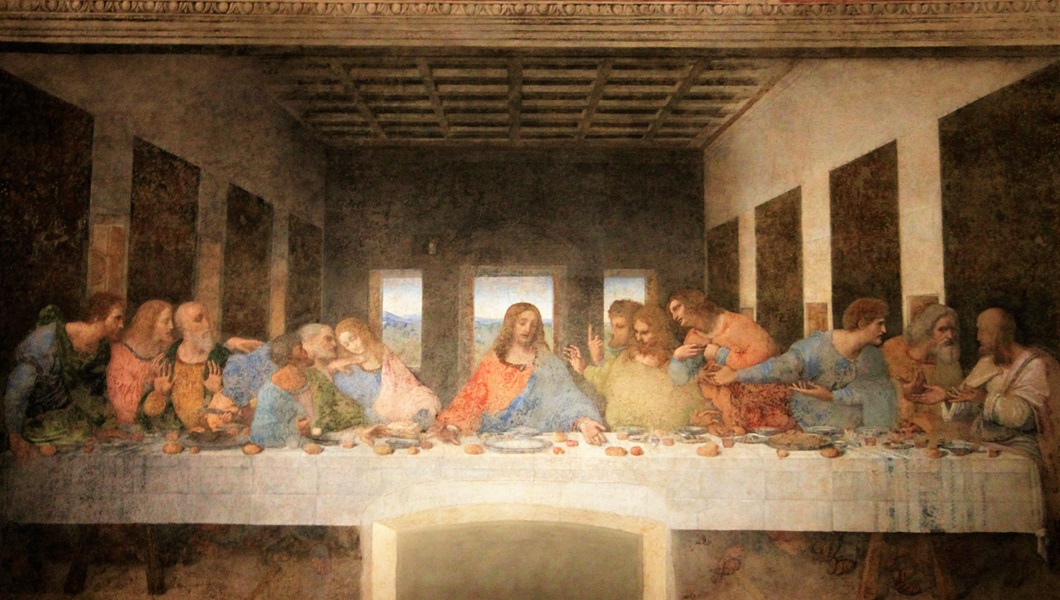
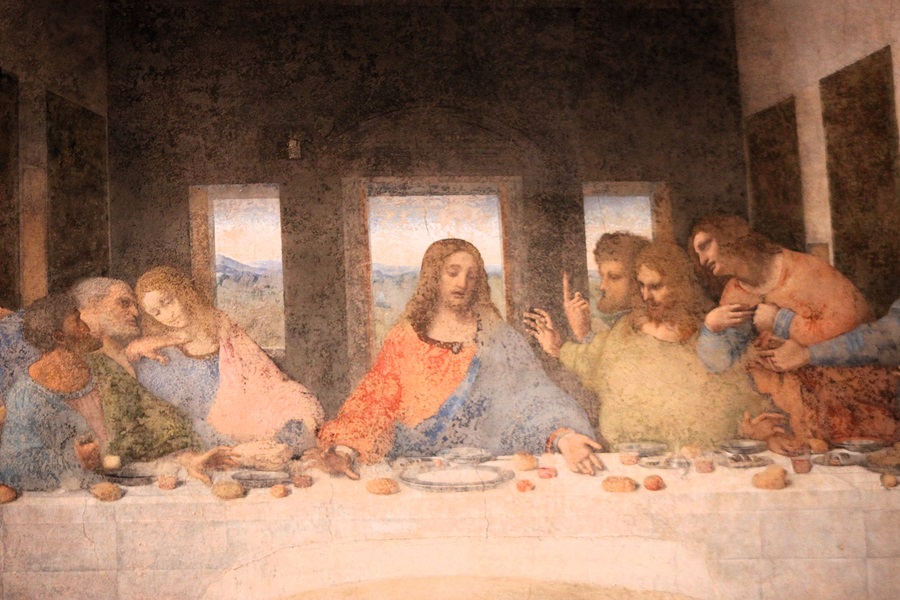
And there it was, to the right as we walked in, the Last Supper by Leonardo Da Vinci. It immediately took my breath away. To be standing there, seeing it with my own eyes was an unforgettable experience.
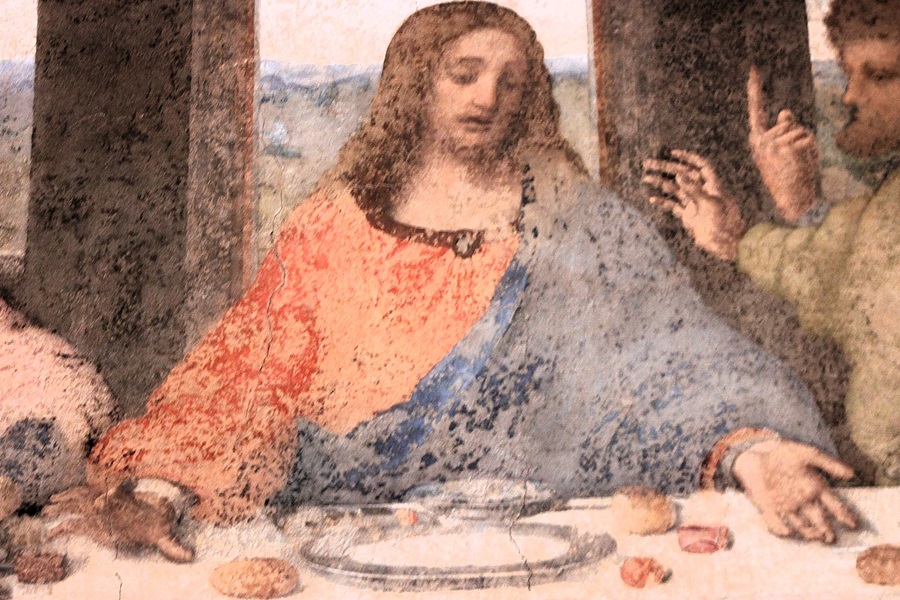
The scene depicts the biblical tale of when Jesus gathered his disciples together before entering Jerusalem to face the authorities, specifically the moment after Jesus told them that one of them will betray him. They appeared to sit in cliques of three. To the far left we began with Bartholomew, James the Less and Andrew. Then in the next group was Judas Iscariot to the front with Peter and John behind him. To the right of Jesus was Thomas behind James the Great and then Philip. Then sat at the end was Matthew, Jude and Simon.
Looking closer at the apostle John it wasn't difficult to see why there was a conspiracy theory (if you could call it that) popularised by Dan Brown's book "The Da Vinci Code" that suggests the disciple could actually be Mary Magdalene. He had very effeminet features.
Looking closer still and you could see that despite a recent restoration completed in 1999 the condition of the painting was still dire. However, given the circumstances it's a miracle that there's anything resembling a painting here at all. When it was completed in 1497, over five hundred years ago, It was already begining to deteriorate. Leonardo Da Vinci used a different technique to the usual fresco painting, with oil onto a dry plaster wall. When moisture and humidity was introduced it began to flake. In 1652 the fresco was so unrecognisable they even cut a new door through the wall
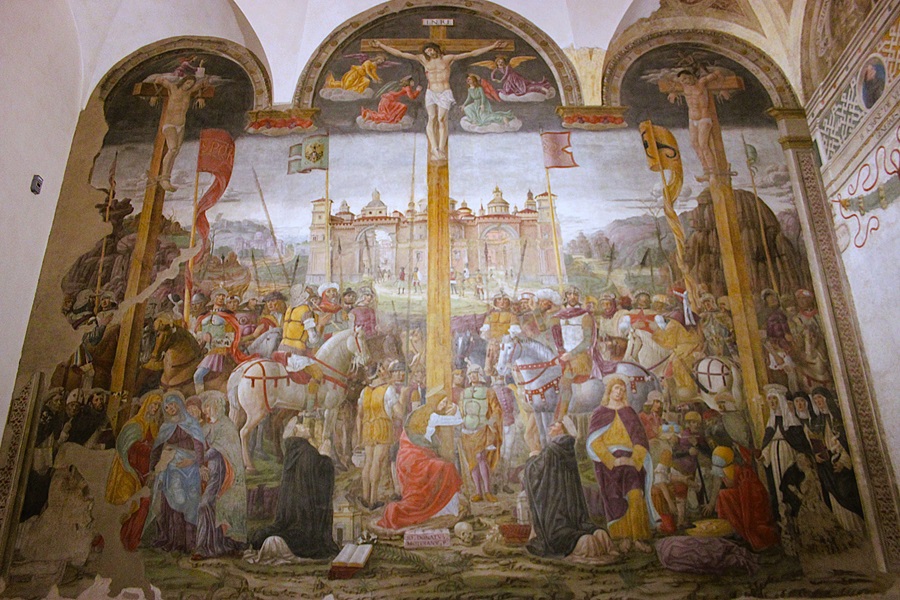
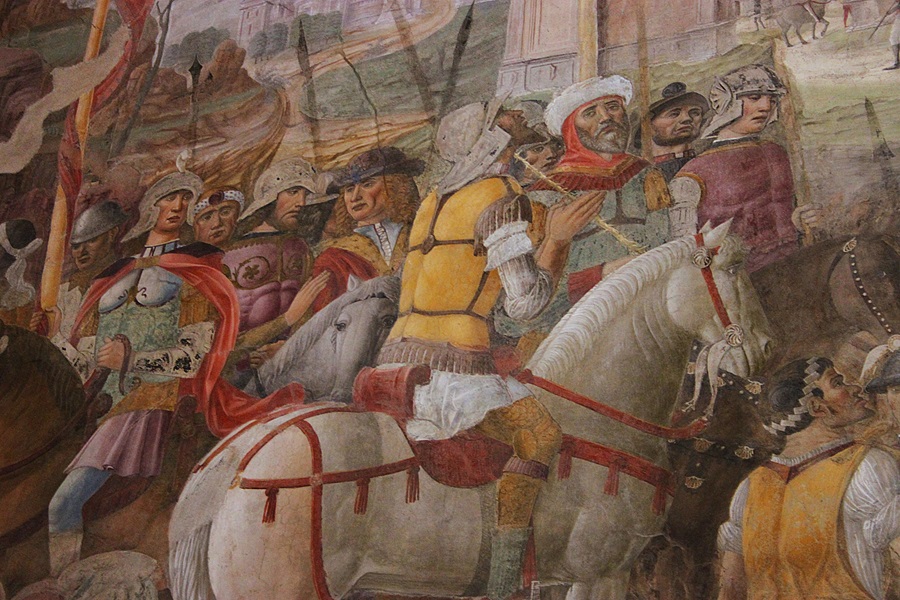
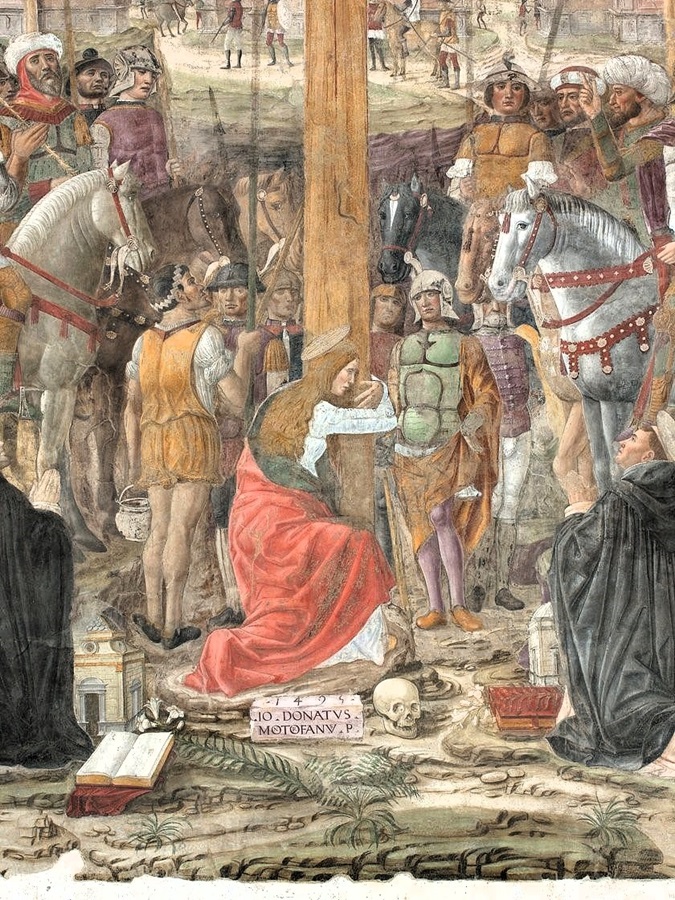
On the opposite side of the refrectory was another mural, the crucifixion of Jesus. By all accounts this scene was just 15 hours after the Last Supper took place! It was painted by Giovanni Donato da Montorfano in 1495, two years earlier than the Last Supper.
Painted in the traditional method on wet plaster it has survived in much better condition. Of course, as with all such artwork, there has been a process of restoration but it looked like it was painted yesterday!
It was a busy scene on Calvary with soldiers and thieves, the Virgin Mary was there somewhere but the eyes were drawn to Mary Magdalene on her knees embracing the base of the cross. It was interesting how the penitent prostitute had become the central figure. And that was it, out fifteen minutes was up. We were ushered out.
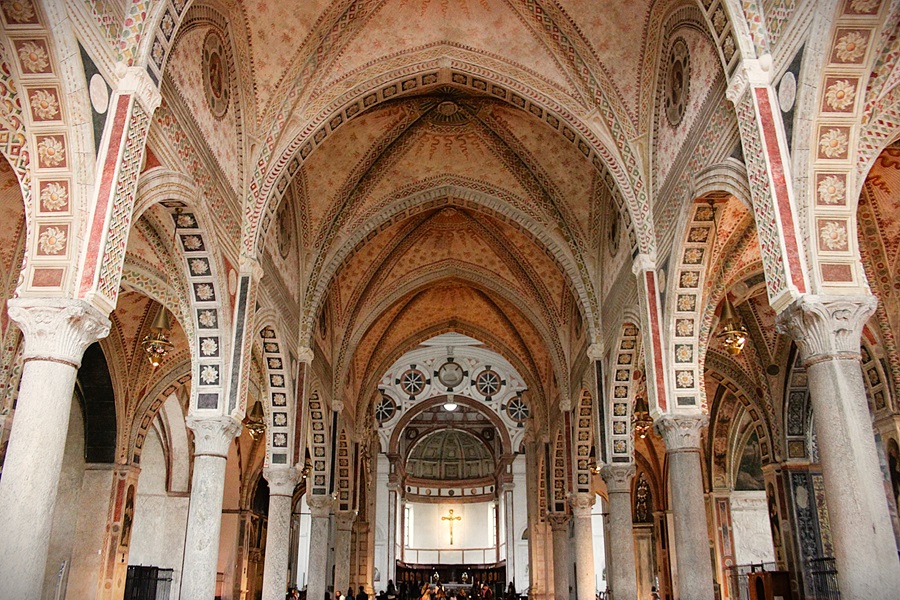
Before leaving the Basilica di Santa Maria delle Grazie we popped inside the church. The interior was beautiful with hand painted motifs of rossettes and flames.
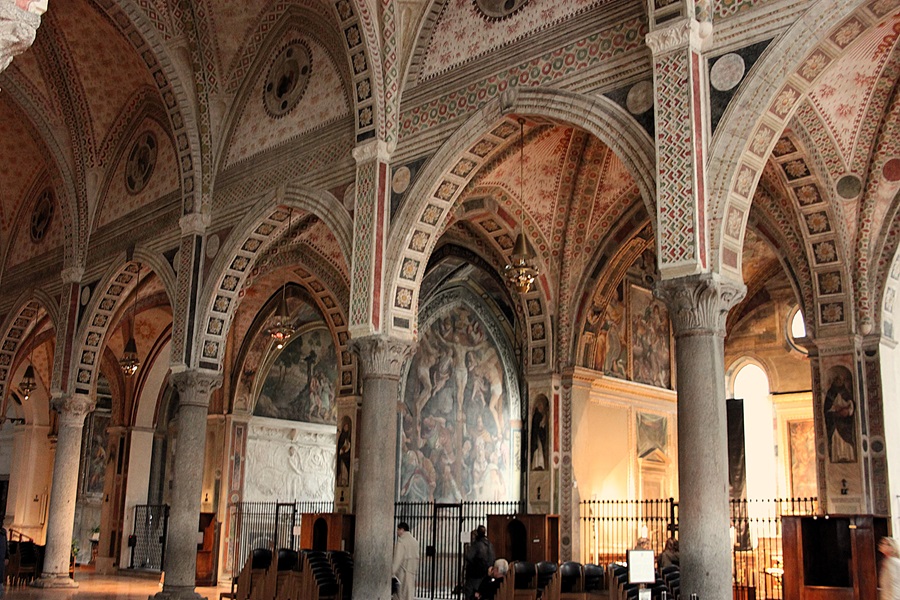
However the most stunning were the fourteen individual chapels in the naves. These were the private chapels of many of Milan's most prominent families. They were lavishly decorated with frescoes.
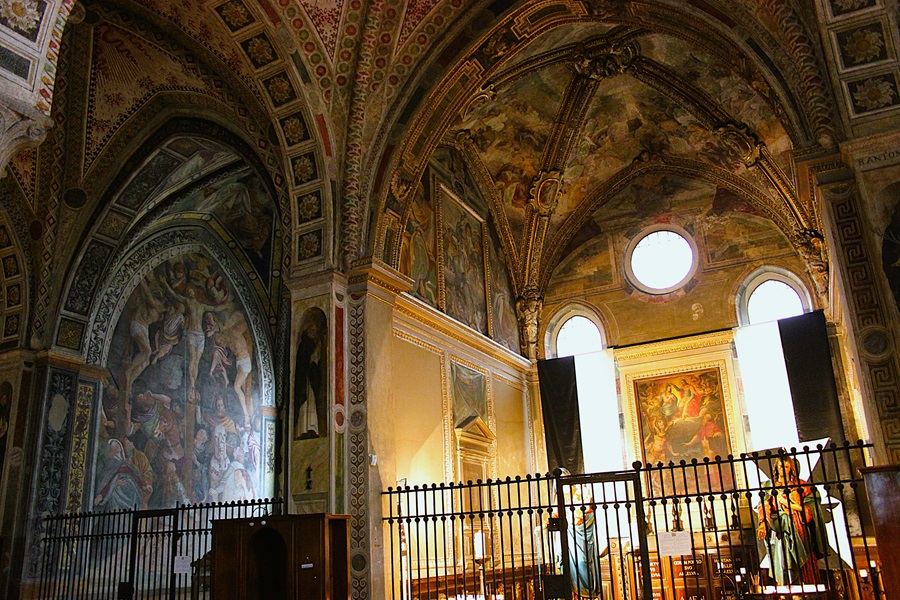
Possibly the most impressive of them all was the Cappella Santa Corona with masterpieces adorning the walls and the vaulted ceiling. During Napolean's time many of the paintings, such as Titian's "Crowning with Thorns" (now in the Louvre) were looted.
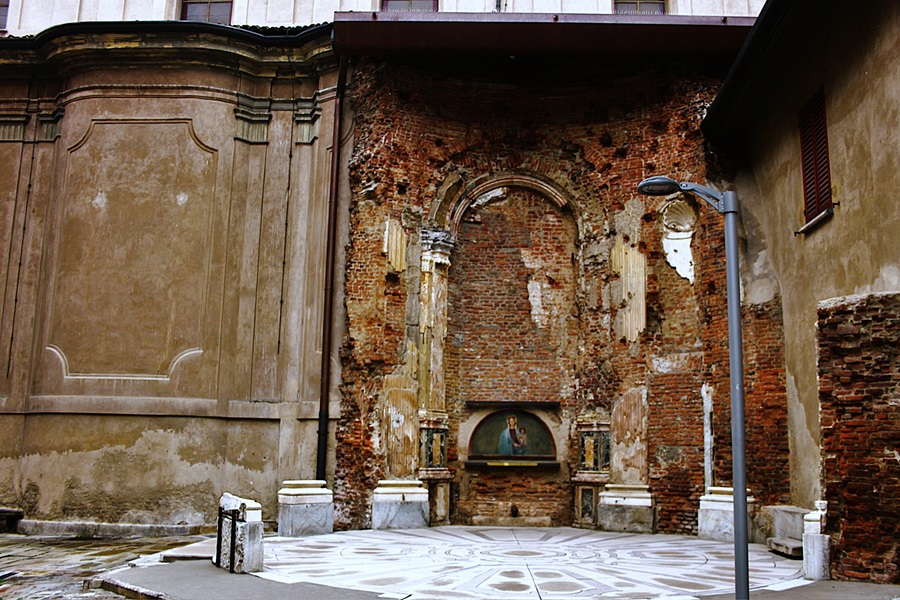
We had been on our feet all day so when we left the Basilica it was time for a siesta. The route back to our hotel took us past the ruined church situated outside in the open, it stopped us in our tracks as we walked along Via Santa Maria alla Porta. The remnants of the naive with a beautiful fresco were a poignant reminder of the bombardment of Milan in 1943. It was known as Madonna del Grembiule. Madonna of the Apron. Legend has it that a miracle happened here in 1651 when the church was in the process of being rebuilt. A young labourer with lame leg uncovered a fresco of the Madonna with Child. Dirty with the dust of demolition he wiped the painting clean with his workmans apron. Hours later he was cured from his lameness.
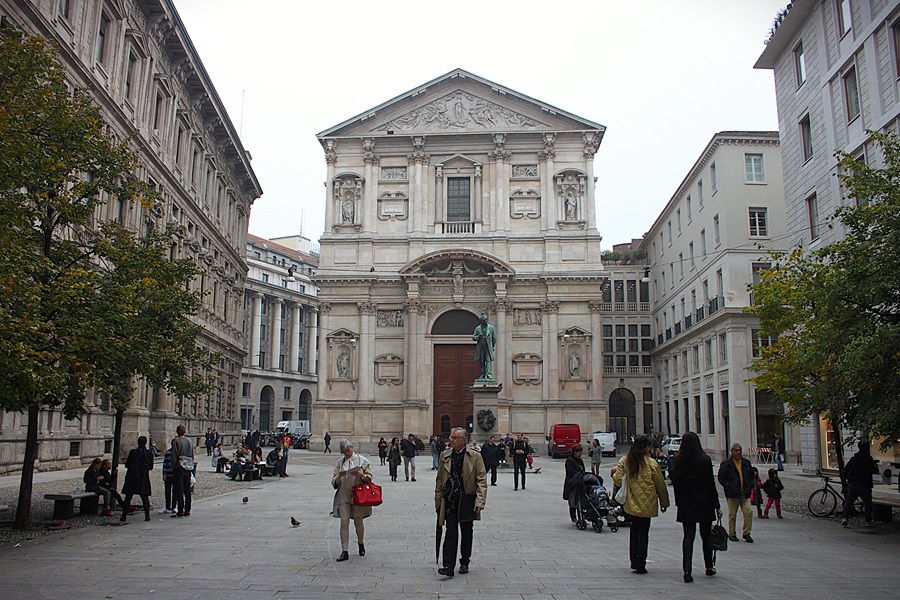
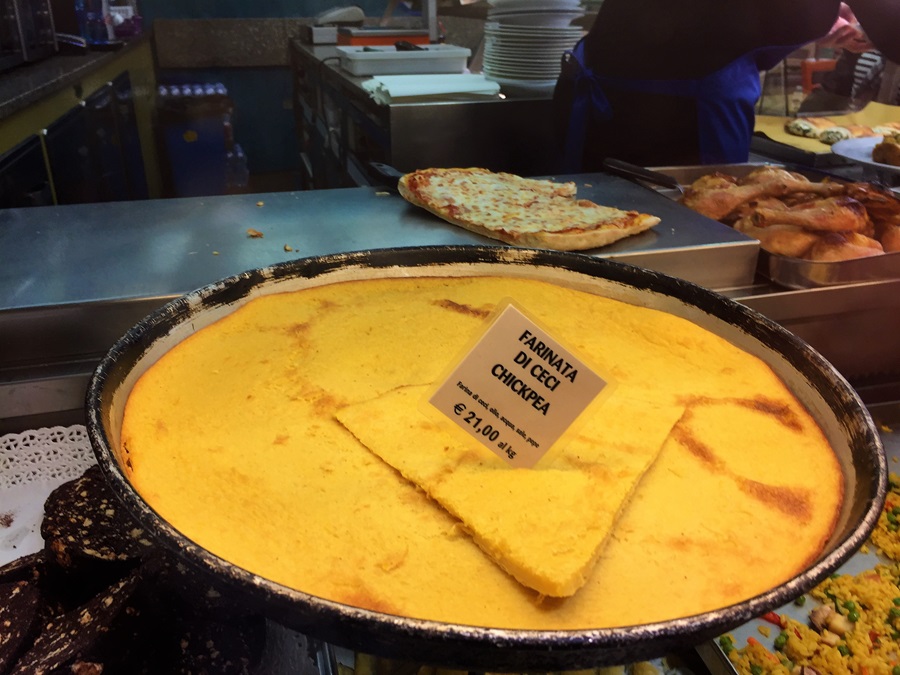
After a couple of hours of chilling in our hotel room we headed back out for our last evening in Milan. Our dinner reservation wasn't booked until 8:30pm so we had some time on our hands. We ended up walking down Via Torino. We passed a cafe on the corner of Piazza San Giorgio selling a Ligurian speciality called farinata di ceci, a chickpea pancake. I wasn't especially hungry and we were in the region of Lombardy and not Liguria but I still had to try it. To be honest it was a bit bland. It could have done with more seasoning or a herb to add flavour.
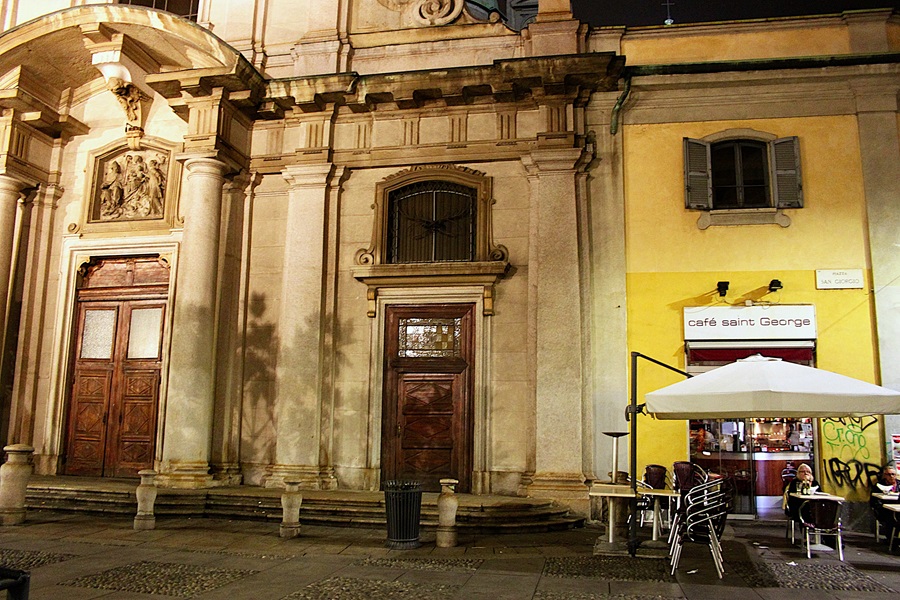
We sat outside in the square, next to the church of San Giorgio. It was a strangely peaceful spot despite being steps away from the busy Via Torino. It looked like Cafe Saint George was closing with most of their tabels and chairs already stacked up for the night. We didn't stay long.
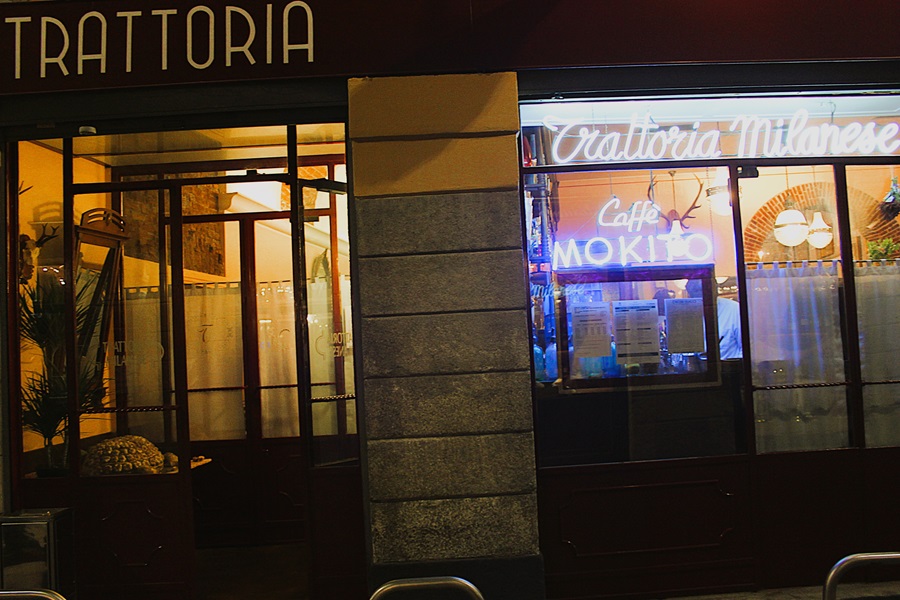
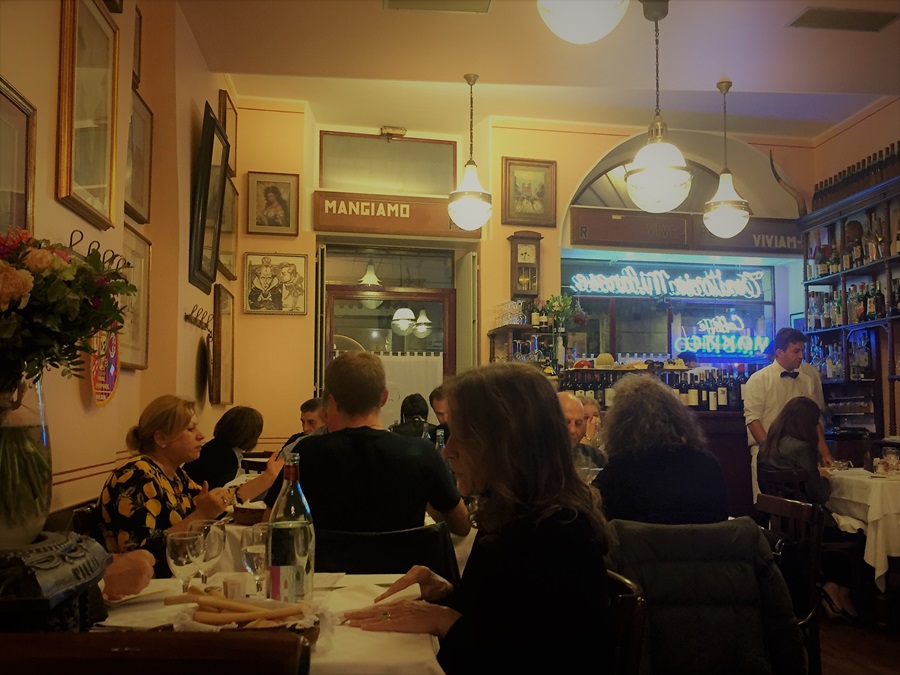
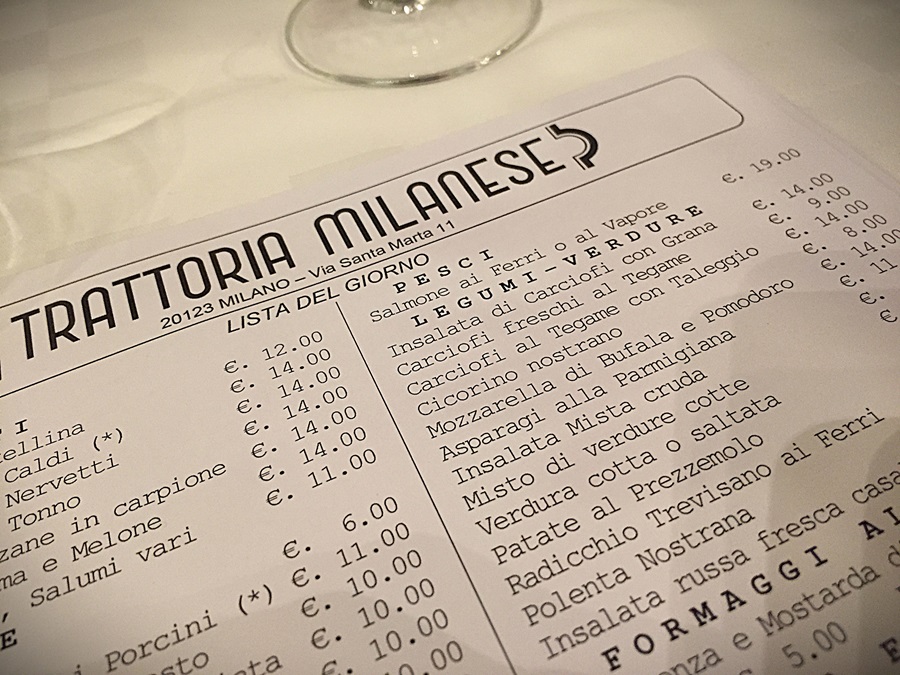
We returned to Via Santa Marta to the restaurant opposite our hotel, Trattoria Milanese. We were a little early for our reservation but we were in luck, our table was waiting for us.
The tabels were tightly packed and the restaurant was full. They couldn't have squeezed in anymore diners but it all added to a great atmosphere. "This is our Last Supper ... " I began to say but before I could add "... in Milan" Julie said "No! This is not my last supper, oh, my God, we're going to die!". She was already begining to fret about tomorrow's flight. It never gets any easier for her.
They had a vast menu with plenty of non-meat choices, although whether some were strictly vegetarian was up for debate. With so much on offer I struggled to decide. I'm more accustomed to having only two or three options.
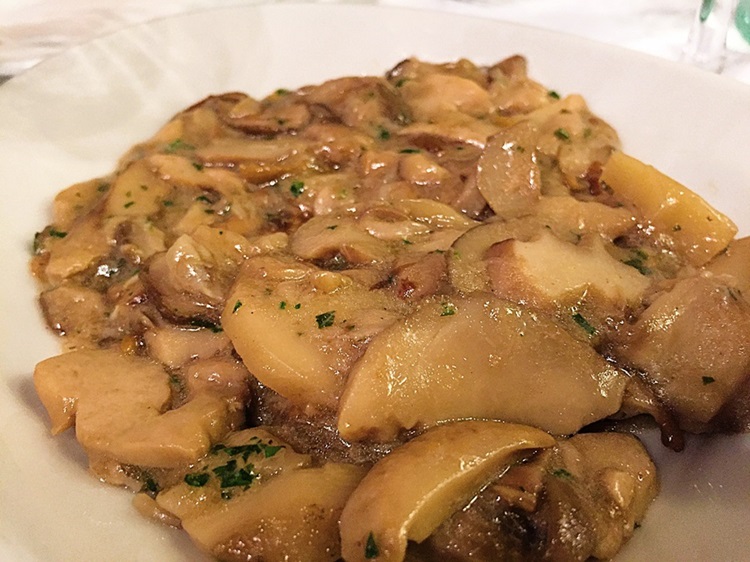
In the end I ordered to start, the piatto del porcini caldi, delicious mushrooms fried in butter with onions and parsley. It was just a small antipasti portion but with the rich flavours it was plenty big enough. For my second course I had trofie Genovesi al pesto, short-cut twisted pasta with some potato and green beans added for good measure, then coated in lovely basil pesto. I thoroughly enjoyed it. Julie, after some influence from myself, ordered the traditional costoletta alla Milanese, breaded veal cutlets. This version was a thin slice of the meat, similar to schnitzel. She was the least bit impressed. At least it was served with patate al prezzelmolo, potato with parsley which she enjoyed. The meal ended with a great tiramisu. The dollop unceremoniusly plonked onto the plate didn't look great but it tasted amazing. We paid our bill and shuffled across the street to our hotel. We didn't stay out late tonight. Next Day >>> |
|
©Copyright 2000 - 2026 Colin Owen |


.JPG)